
For Spring 2027, the designer transforms the extravagant world of Marchesa Luisa Casati into a modern collision of lace, feathers, denim, color and cross-cultural craft.
FASHION | NEW YORK FASHION WEEK
Bibhu Mohapatra’s Spring 2027 runway did not arrive quietly.
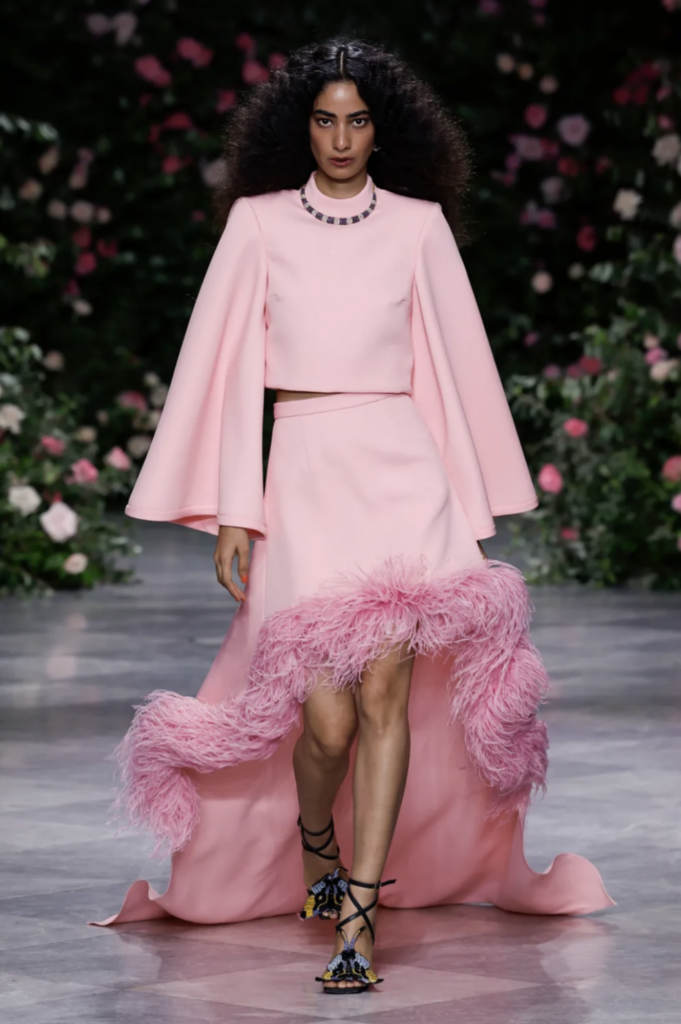
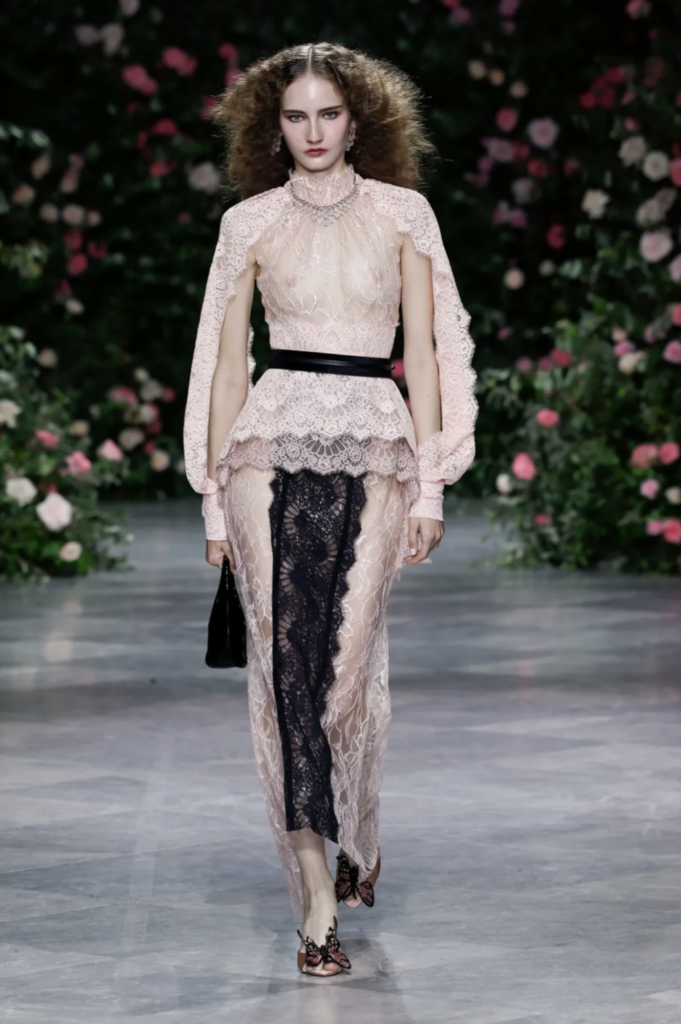
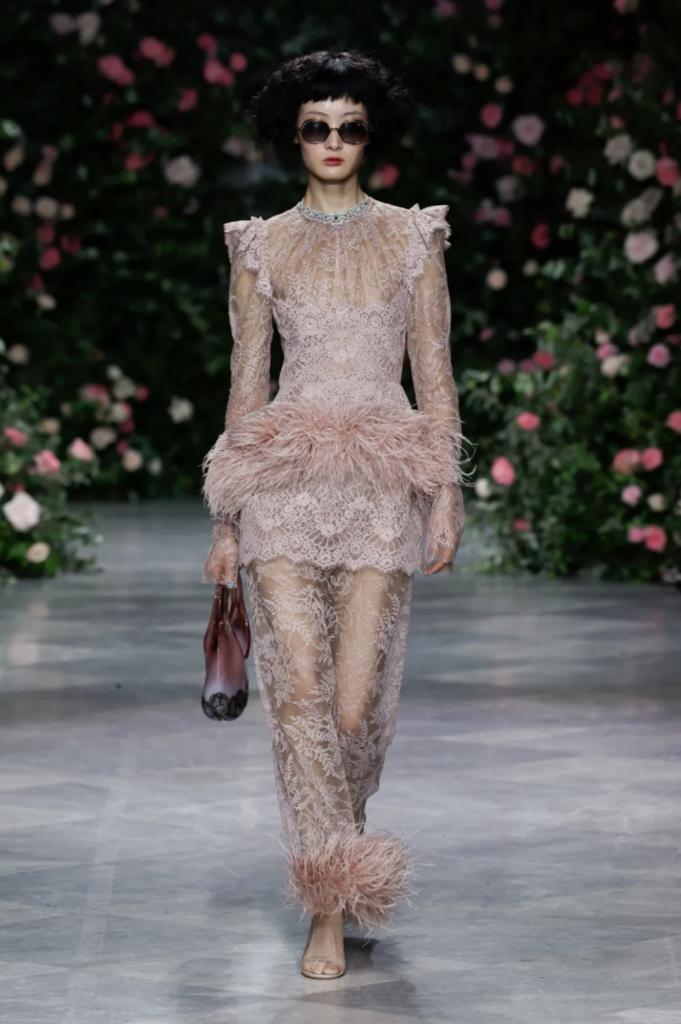
Presented September 14 during New York Fashion Week at The Pierre on Manhattan’s Upper East Side, the collection opened in pale candy pink, setting a tone that was romantic but hardly delicate. Expansive sleeves, feathered finishes, saturated color and increasingly elaborate combinations followed.
Behind the spectacle was Marchesa Luisa Casati, the famously eccentric Italian heiress and artistic muse whose carefully constructed image made her an enduring figure of early-20th-century culture.
For Mohapatra, however, Casati becomes less a costume reference than a permission slip.
A Woman Who Turned Herself Into Art
Casati built a reputation around the idea that life itself could become a creative medium. Artists repeatedly painted and photographed her, and her theatrical appearance became inseparable from the mythology surrounding her.
Mohapatra’s own collection notes position her as a woman who moved between cultures, artistic movements and environments with unusual freedom — an idea that becomes central to Spring 2027.
Rather than reproducing Casati’s wardrobe, the designer translates her appetite for excess. The clothes do the talking.
The World Meets on the Runway
One of the collection’s most compelling elements is its geographical range.
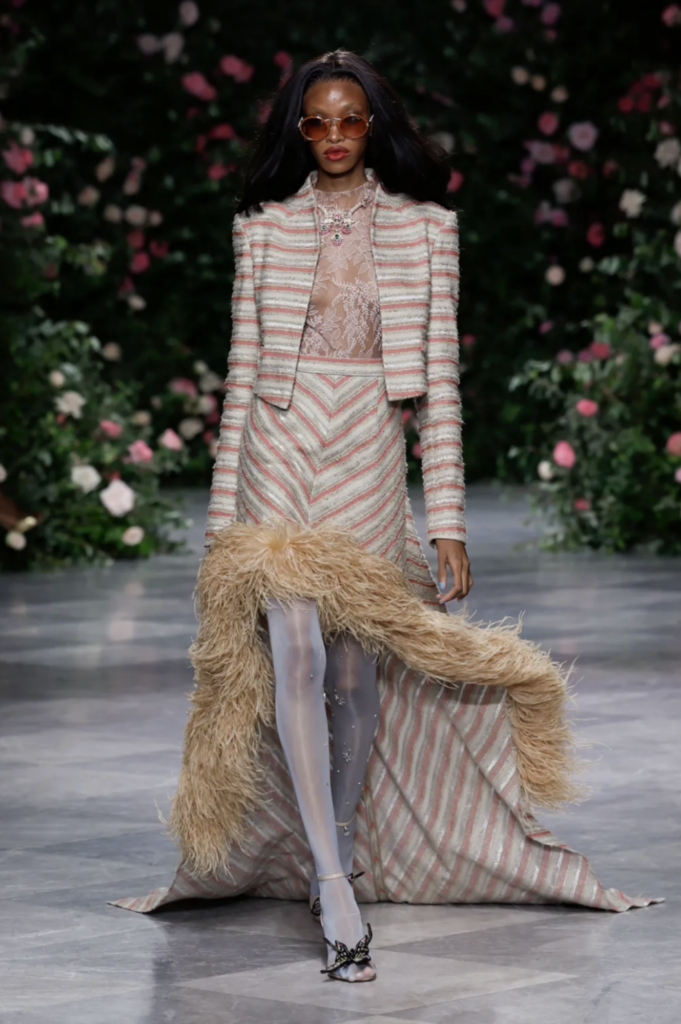
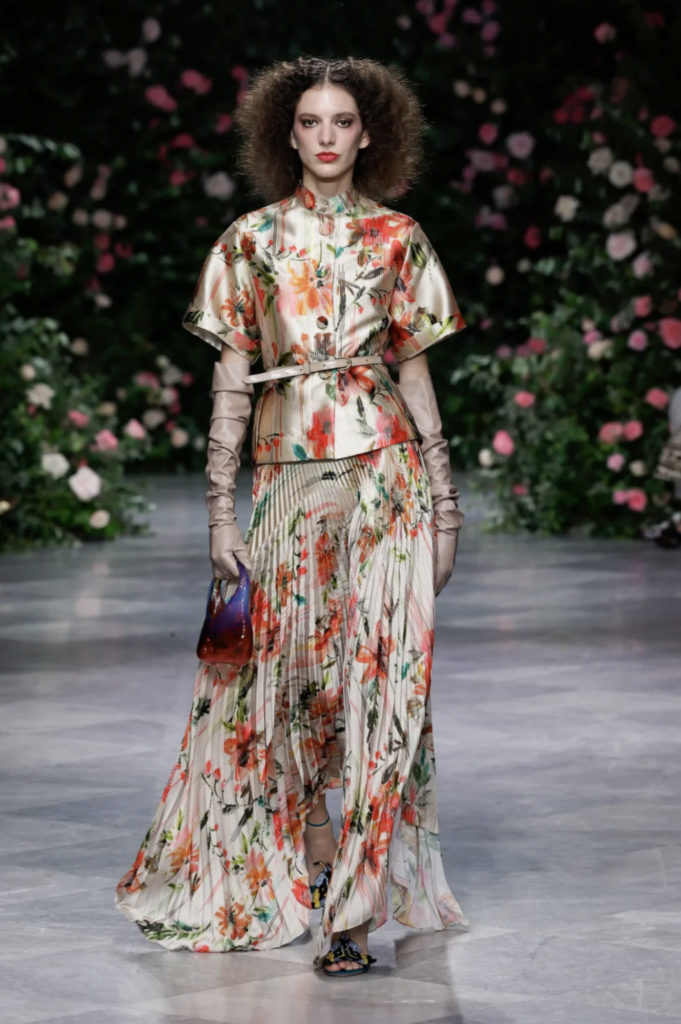
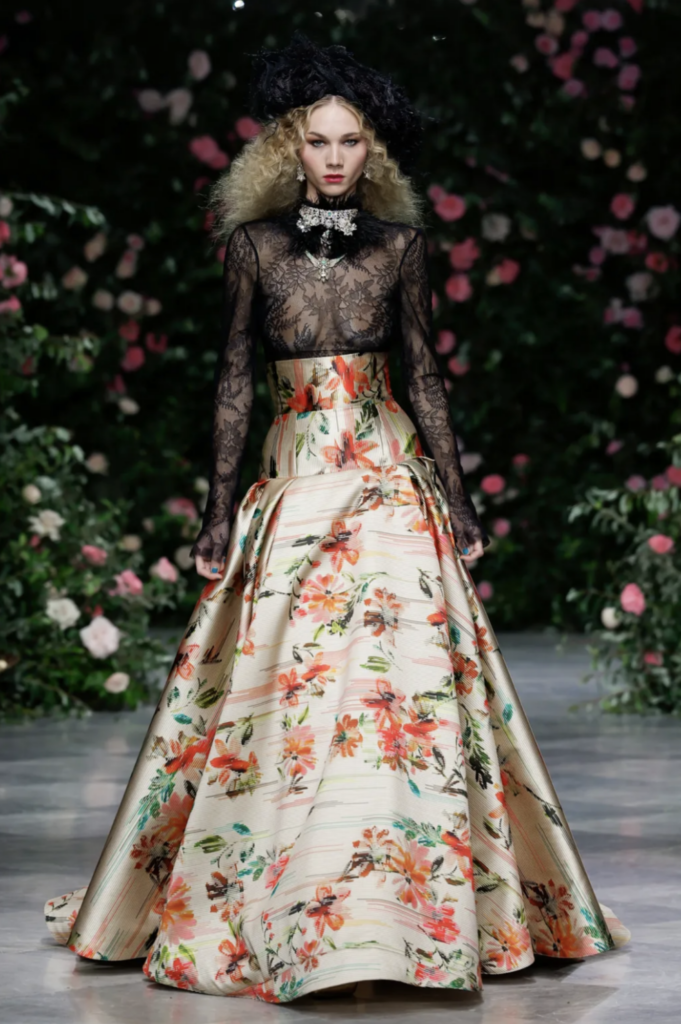
Mohapatra specifically brings together ikat silks from Odisha, needle lace associated with Spain, Venetian glass-inspired beadwork and the sculptural language of couture eveningwear.
That mixture feels particularly appropriate for a designer whose work has long operated between cultures.
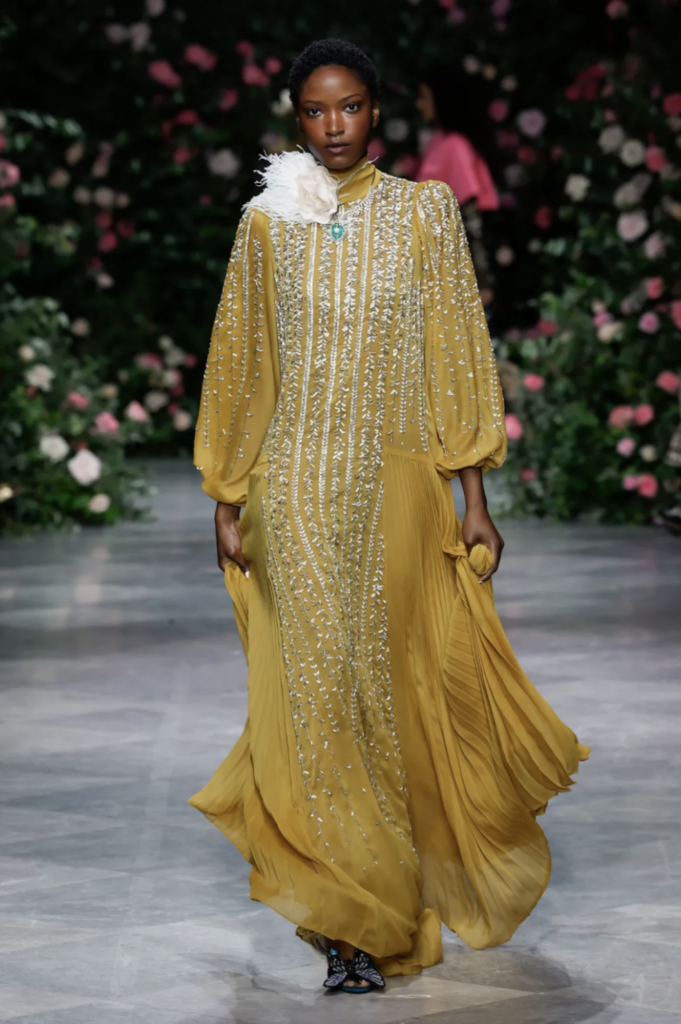
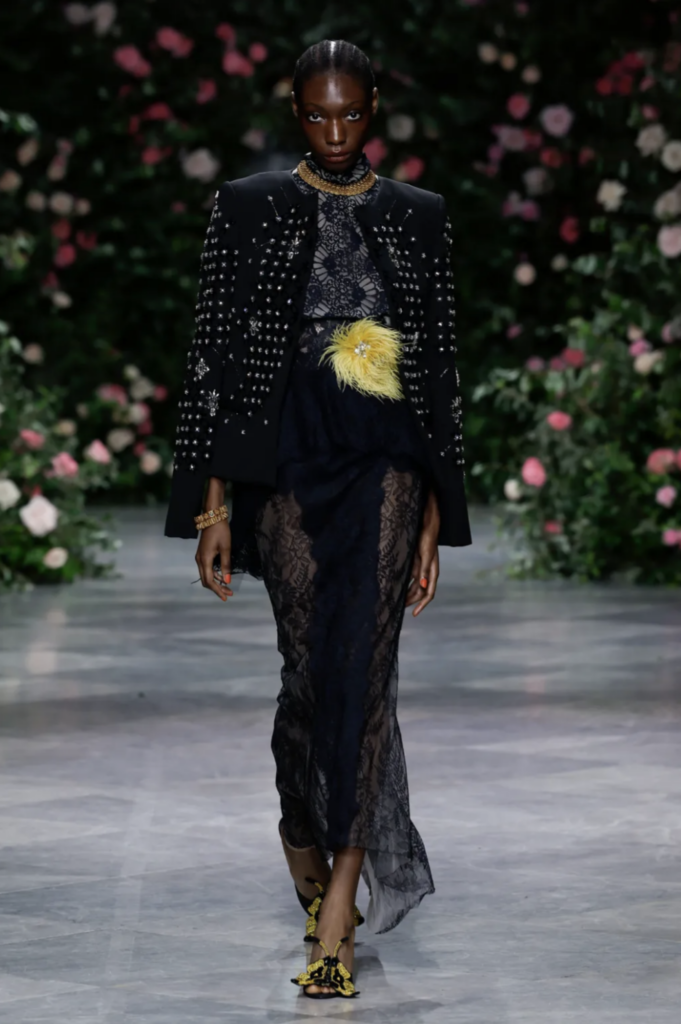
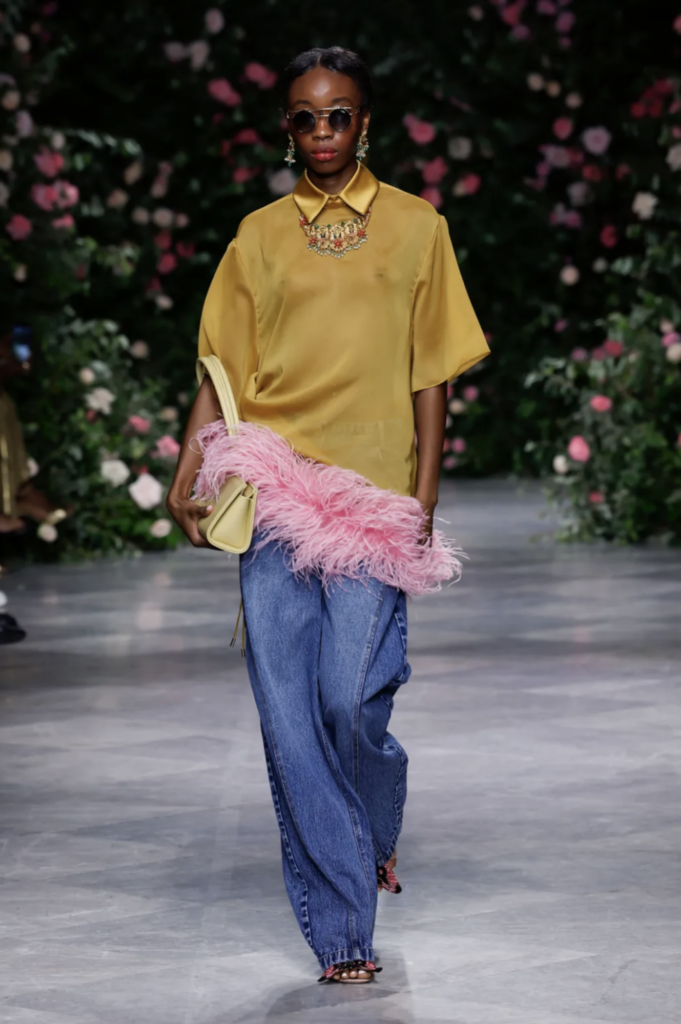
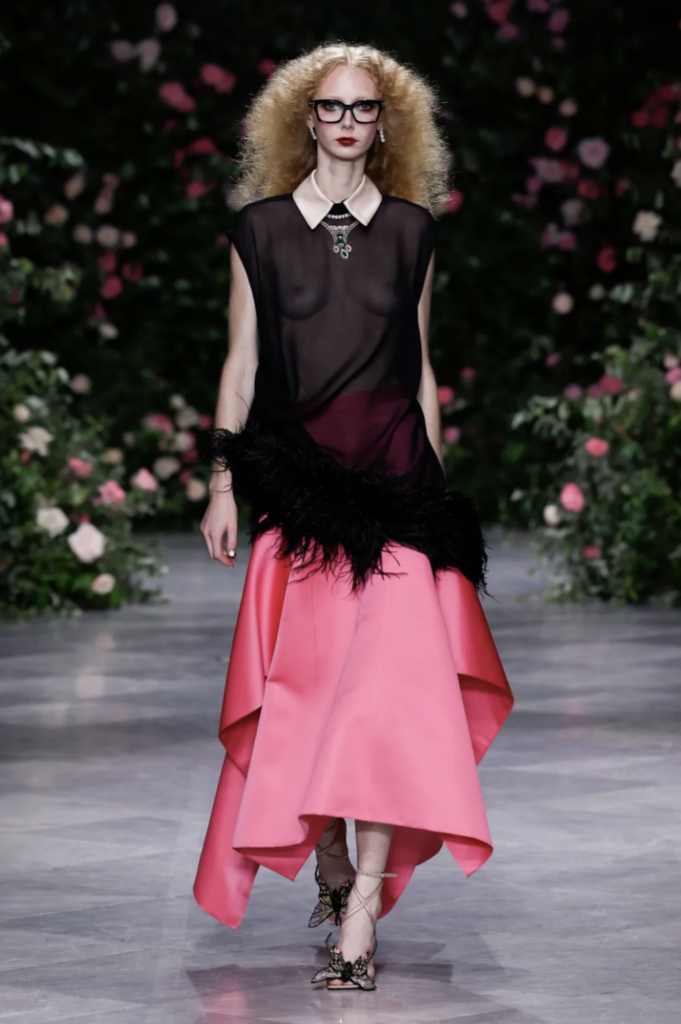
Then comes the color. Candy-floss pink established the opening statement, while marigold introduced another wave of saturation. Floral prints competed with – rather than simply decorated – the lush garden-like runway environment. Black lace and darker tailoring interrupted the sweetness.
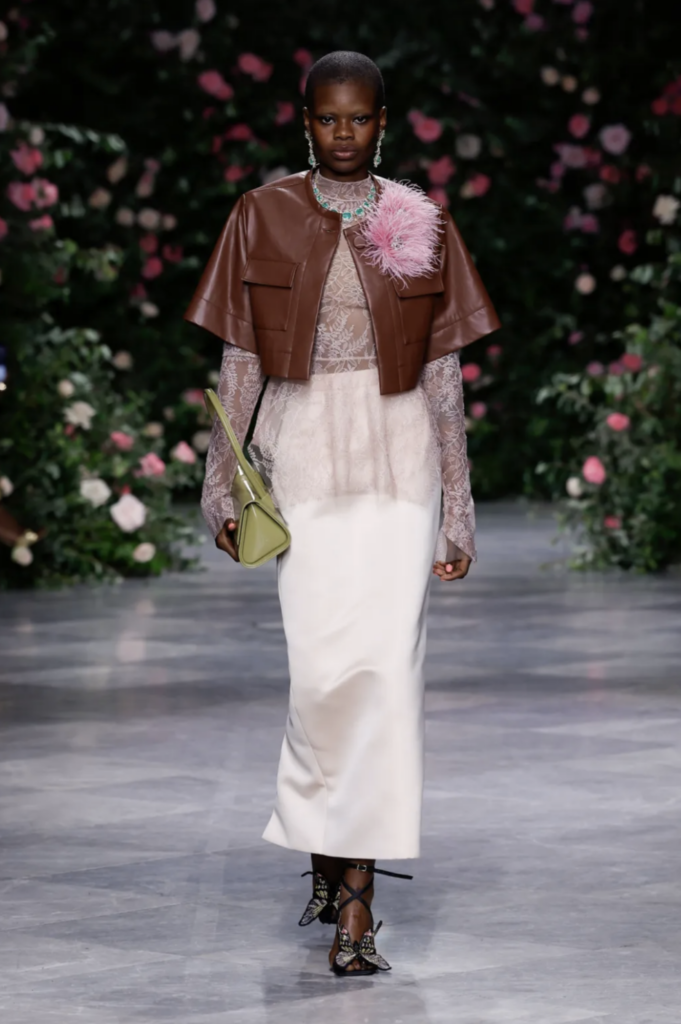
Feathers appeared almost like punctuation.
And Then There Was Denim
The collection becomes more interesting when Mohapatra interrupts the fantasy.
Alongside lace dresses, trains and embellishment came slouchier denim, shirting and more relaxed pieces. Vogue’s runway review noted a floor-length denim trench, a structured shirtdress and loose indigo jeans among the season’s offerings. That choice matters.
The modern luxury customer doesn’t necessarily maintain separate wardrobes for “occasion” and “everyday” dressing anymore. A jeweled necklace can sit above denim. Lace can meet leather. Feathers can appear against a comparatively straightforward shirt.
For PMG, that’s where the collection feels most current. Mohapatra isn’t abandoning glamour. He’s removing some of the rules around where glamour is permitted.
Small Details, Big Personalities
Even the footwear entered the narrative.
Beaded moth motifs appeared across the stilettos, while statement jewelry, sheer lace, feather placements and sharply controlled silhouettes rewarded a closer look. Mohapatra described the moth motif as something positive and prophetic, giving a tiny accessory detail its own place within the collection’s larger optimism.
Against the garden setting, those details created a world that felt somewhere between salon, fantasy and modern runway.
But the clothes remained the point.
Spring 2027 Is About Presence
Fashion has spent several seasons negotiating restraint, minimalism and the language of so-called quiet luxury.
Mohapatra’s Spring 2027 proposition moves in another direction.
There is pleasure in ornament here. Pleasure in dressing up. Pleasure in allowing clothing to occupy physical space and attract attention, and perhaps that’s the most contemporary thing about it.
The collection does not suggest that every woman needs to become Marchesa Luisa Casati. Instead, it takes something more useful from her story: the possibility that getting dressed can still be an act of authorship.
For Spring 2027, Bibhu Mohapatra wants the woman — not just the dress — to be remembered. Photos: Umberto Fratini / Gorunway.com