
There are fragrance houses that sell perfume, and then there are houses that attempt to build an entire visual and emotional universe around scent. THoO belongs firmly in the second category. Short for The House of Oud, the Italian niche fragrance brand has developed an identity where perfumery, art, design, travel and storytelling are treated as parts of the same creative language. Behind that vision is Andrea Casotti, an engineer, artist and fragrance entrepreneur whose approach has always involved bringing seemingly incompatible worlds together.
Casotti describes himself as someone shaped equally by method and creativity. His background includes engineering, street art and fragrance development, and he is also CEO of Italian fragrance company Creative Flavours & Fragrances. That combination helps explain why THoO feels so different from the traditional image of a heritage perfume maison. There is technical discipline behind the formulas, but there is also a willingness to be playful, strange, colorful and highly emotional. Casotti created The House of Oud as a vehicle for telling stories through raw materials and places, eventually expanding the concept into THoO as an even broader exploration of art, style and contemporary culture.
The original House of Oud concept grew from a meeting of Italian and Middle Eastern fragrance traditions. Casotti has spoken about combining an Italian approach to perfumery with the culture and rituals surrounding oud, while the brand subsequently expanded far beyond oud itself. By 2018, Casotti was already describing THoO as a broader storytelling platform built around what he called creative “cross-fertilization,” bringing different perfumers, ingredients, cultures and artistic references together.
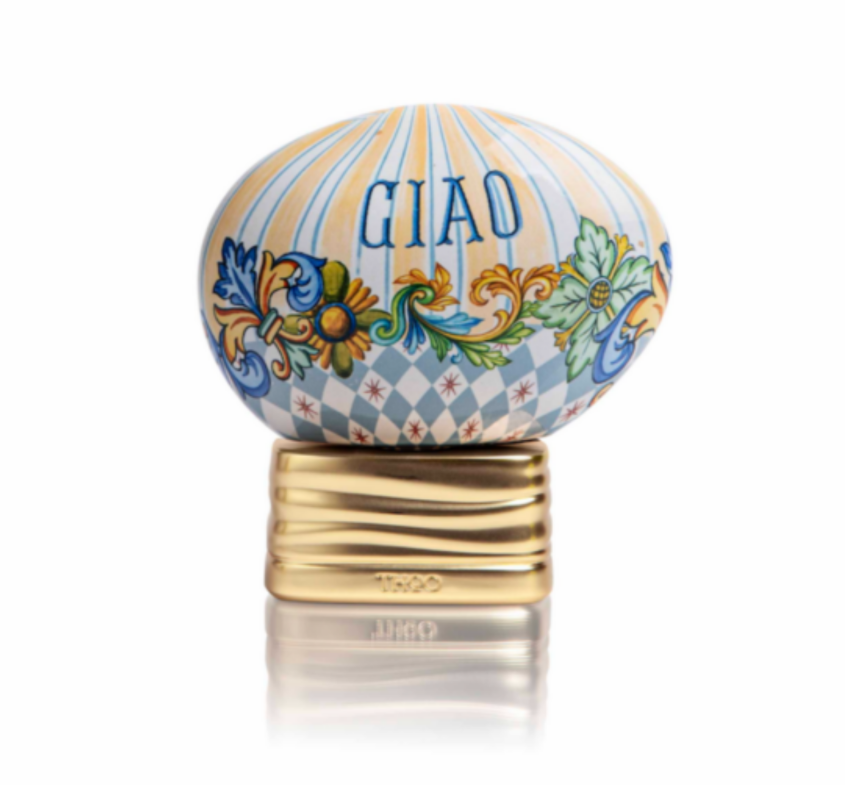
That philosophy is visible before a THoO fragrance ever touches the skin. The house has become known for sculptural bottles that reject the conventional rectangular perfume silhouette, often using dramatic finishes and surfaces that make the packaging feel closer to a collectible design object. For THoO, the bottle is not simply packaging. It is part of the narrative, and the visual identity is meant to carry the same energy as the fragrance itself.
The house’s current Crazy Collection takes that instinct even further. THoO describes the collection as sparkling, eccentric and deliberately unpredictable, combining unconventional olfactory formulas with equally expressive bottles. It is within this world that two 2026 releases, Amore and Ciao, offer particularly compelling interpretations of Italian life.
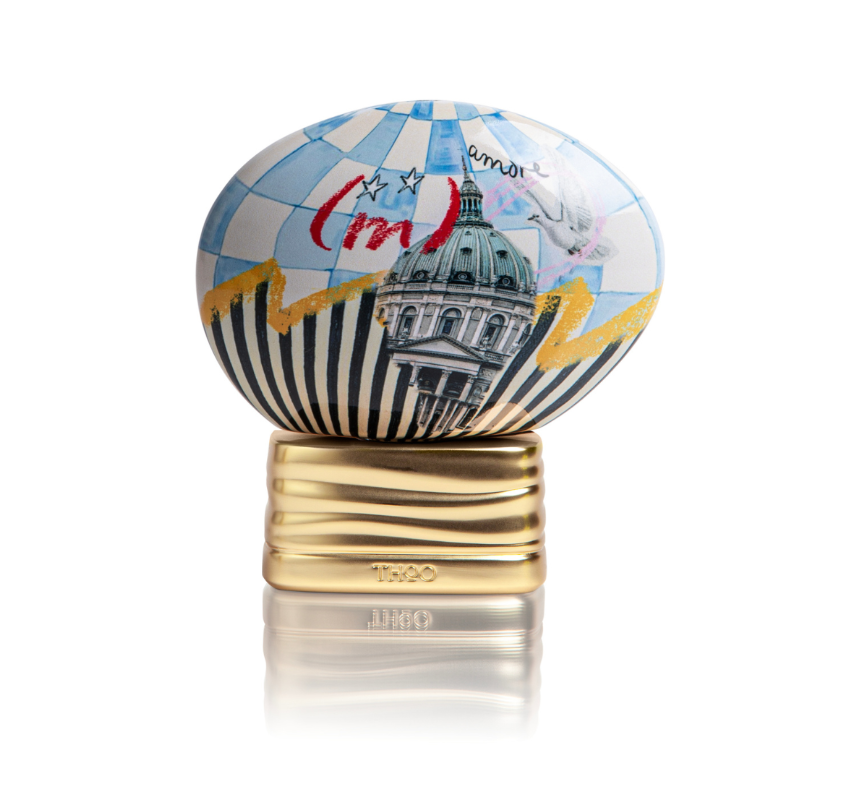

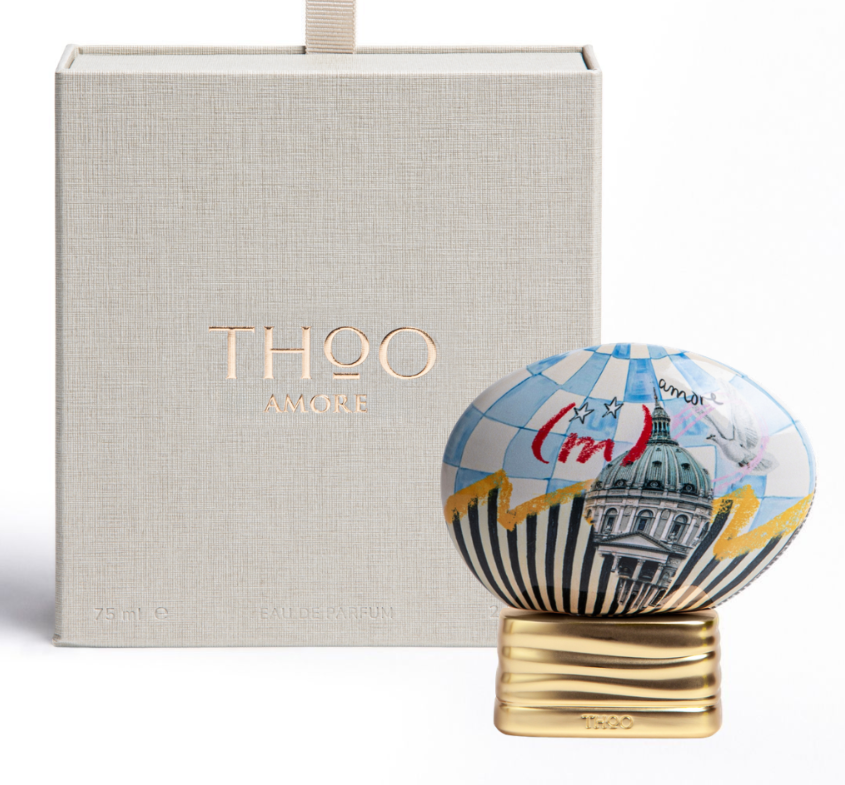
Amore begins with a simple idea that is anything but sentimental: love is interesting because it is imperfect. THoO frames the fragrance around the phrase “I love you for your flaws,” creating a composition that deliberately places softness against freshness rather than allowing either side to dominate. Perfumer Cristian Calabrò opens the scent with milk and peppermint cream before moving into coconut, cashmeran and mint. Sandalwood, amber and musk form the base. THoO classifies Amore as a gourmand-aromatic fragrance and describes its central character as “milky mint.”
On paper, iced milk and mint could easily become novelty for novelty’s sake. Amore instead uses that contrast to communicate something more recognizable: the collision between elegance and disorder that THoO associates with Italy itself. The brand imagines summer evenings, crowded piazzas, spontaneous kisses, handwritten messages, card games and Roman streets after dark. Creaminess gives the fragrance intimacy while mint supplies energy, and sandalwood pulls those opposing ideas together without erasing the tension between them. The result is less about creating a conventionally romantic perfume than translating spontaneity into scent.
Then comes Ciao, and the mood changes completely.
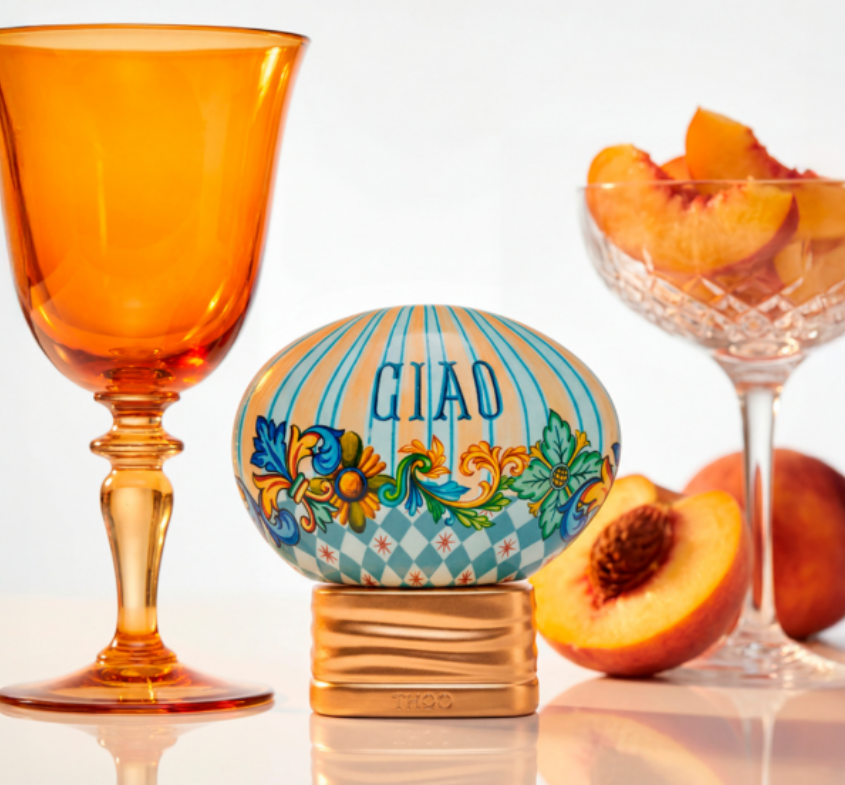
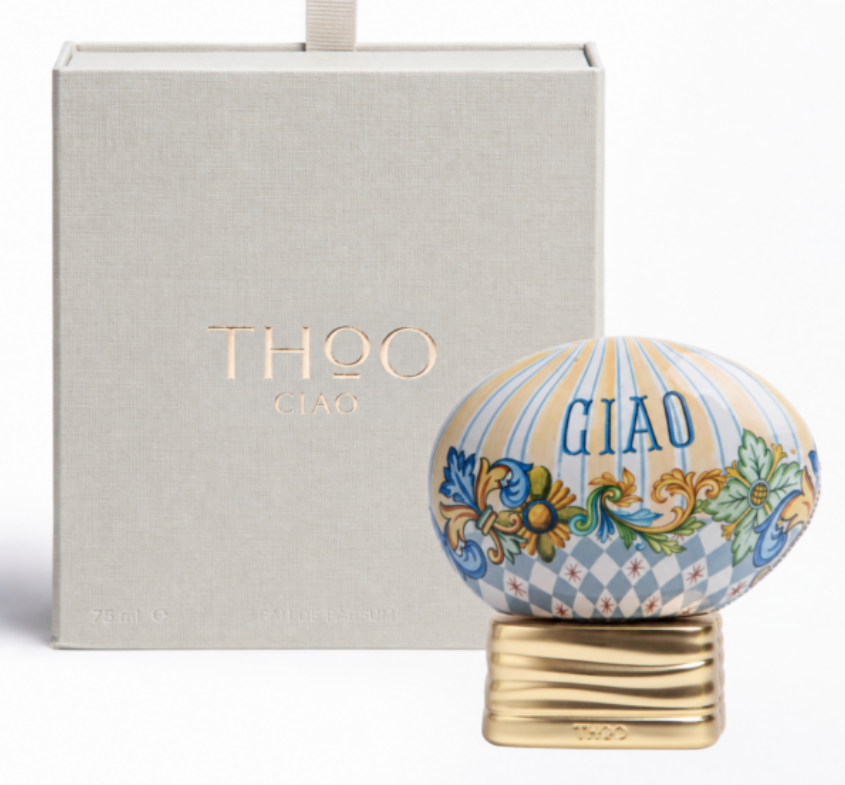
Where Amore is about intimacy and imperfection, Ciao is about arrival, connection and the unmistakable Italian ritual of the aperitivo. Released in 2026 and also composed by Cristian Calabrò, Ciao turns one of Italy’s most recognizable words into an olfactory scene: glasses meeting at sunset, conversation flowing across a terrace and the final golden light of the day hitting a chilled drink. THoO calls it “An Italian Moment.”
The opening combines bergamot, iced orange and orange blossom. At the heart are iris wood, white peach pulp and an Italian “bollicine” accord designed to suggest sparkling wine. Ambergris, fruity musk and patchouli provide the base. THoO describes the overall effect as a peachy amber and places Ciao in the gourmand-fruity family. The composition is bright and celebratory at first, but its sparkling character gradually gives way to something warmer and more sensual as it develops on skin.
Placed beside each other, Amore and Ciao reveal what THoO does particularly well. Neither fragrance is trying to reproduce Italy through predictable clichés alone. Instead, the house isolates moments: the messiness of falling in love, the coolness of mint against milk, the pop of sparkling wine, a peach at aperitivo, a city settling into evening. These are fragrances built around atmosphere.
That is also what separates THoO from a luxury market crowded with increasingly interchangeable bottles and familiar note combinations. The company is selling perfume, but it is also selling a point of view. Art, engineering and storytelling are allowed to collide, sometimes unexpectedly, and the resulting fragrances are not particularly interested in disappearing quietly into the background.
Amore and Ciao make that philosophy easy to understand. One is creamy, cool, impulsive and slightly rebellious. The other is sparkling, fruity, polished and social. Together, they show two sides of the same Italy: one experienced in the intimacy of a moment and the other shared over a glass with everyone around you.
For THoO, fragrance is not simply something you wear. It is a memory waiting for a setting.