
Patricio Campillo brings charro codes, memories of Chiapas and Mexican-made material innovation to a freer, brighter Spring 2027 collection in New York.
NEW YORK — Patricio Campillo’s relationship with Mexican identity has never depended on simply reproducing the past. With Spring 2027, the Mexico City-born designer continued to pull from the culture, landscape, craftsmanship and equestrian traditions that have shaped his label—but this time the result arrived with noticeably more freedom.
Presented during New York Fashion Week at Manhattan’s Downtown Heliport, “In Medias Res” unfolded against open sky and water in a collection centered on nostalgia: what remains after a moment passes, how memory changes it, and whether clothing can become a vessel for preserving some part of the experience. It was Campillo’s fifth season showing in New York.
A Memory of Chiapas Becomes Color
The season’s emotional starting point was personal.
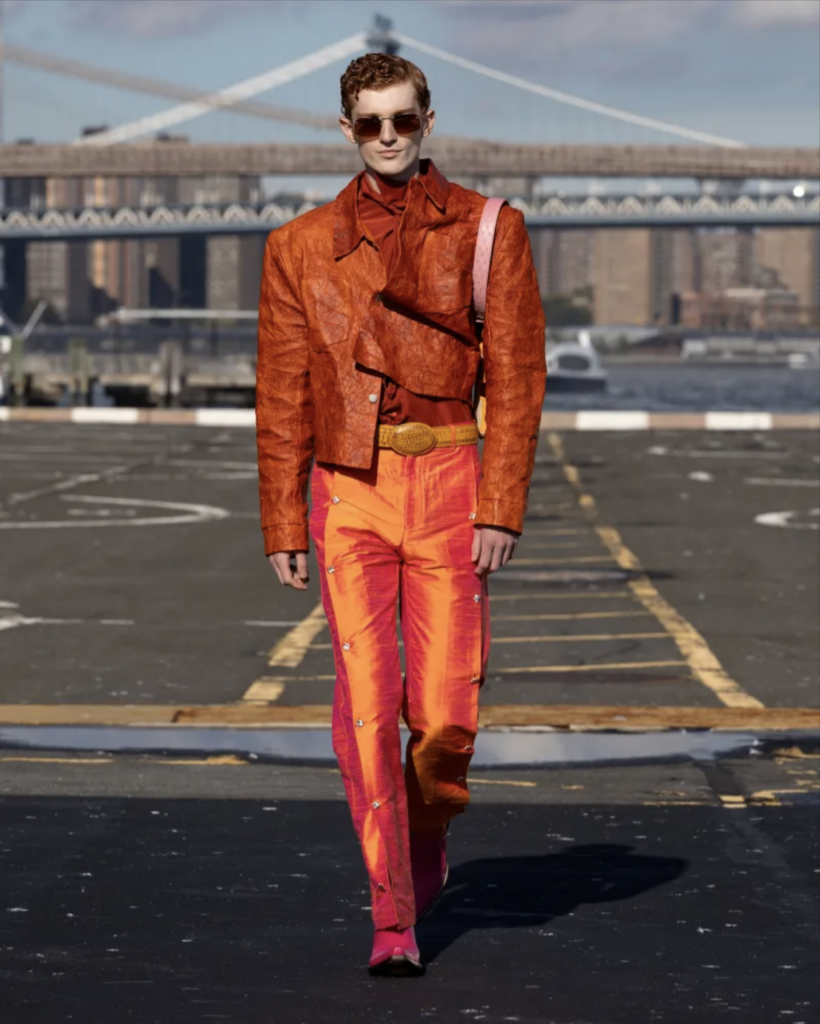
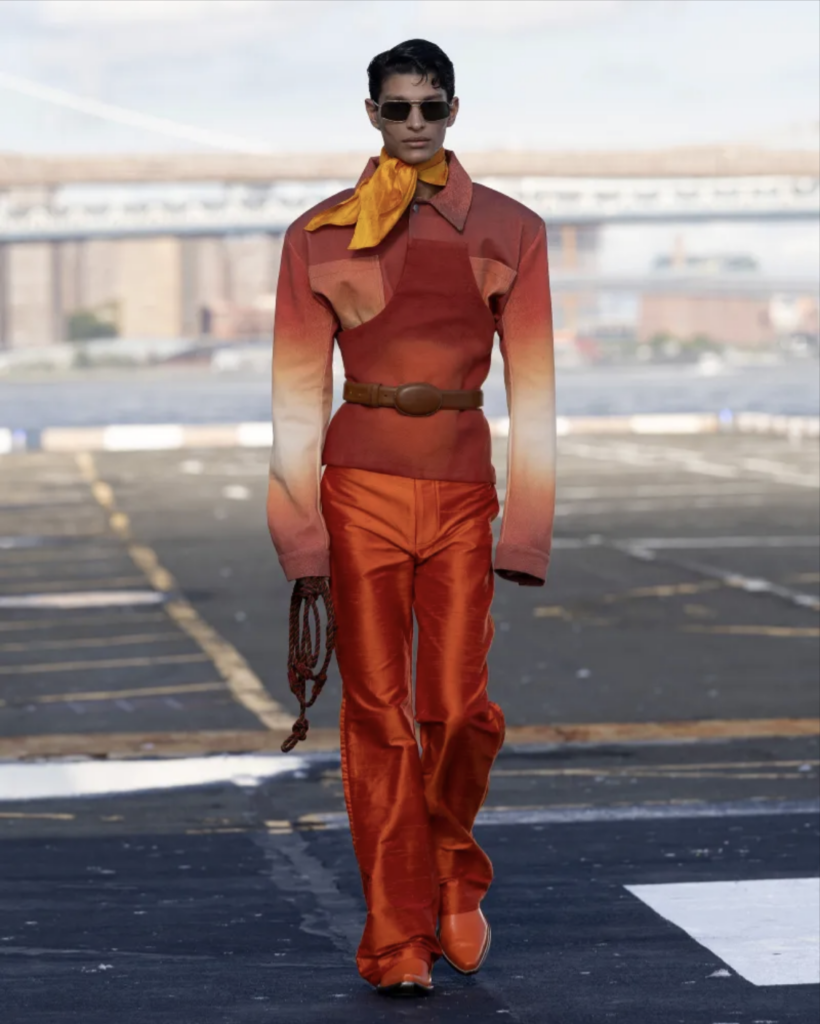
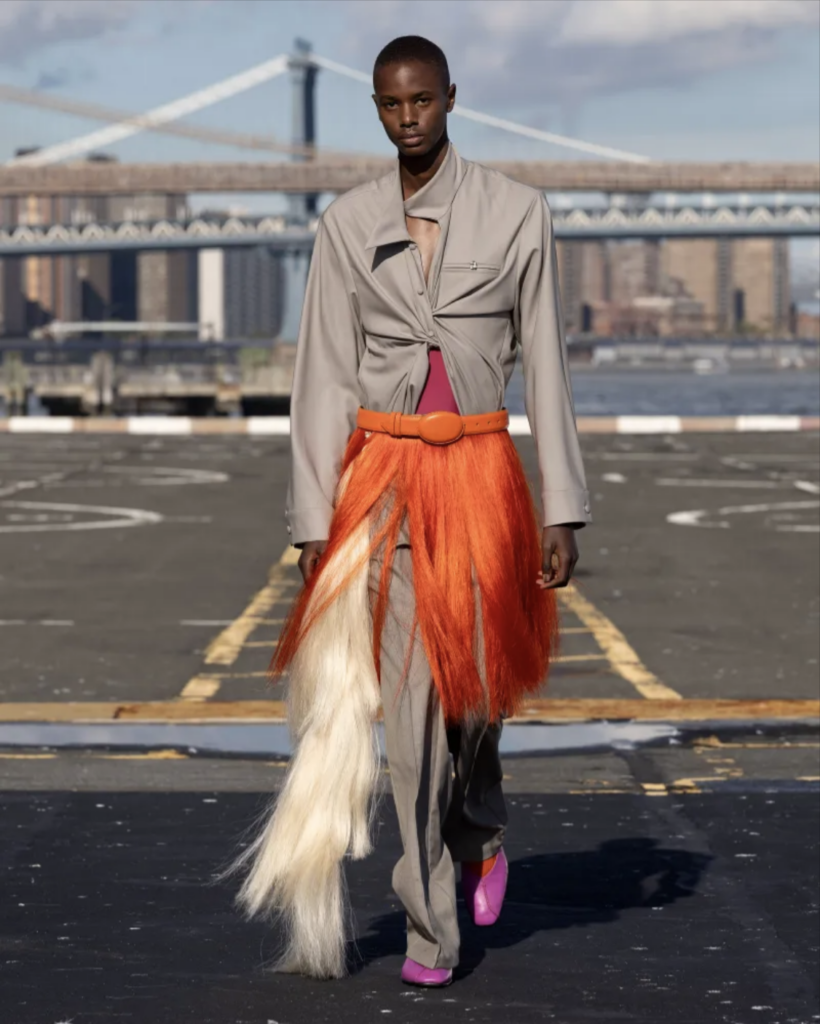
In a backstage interview with Vogue, Campillo recalled hiking with his mother in Chiapas and the sense of beauty, liberty and joy associated with the experience. That memory became especially visible through color: deep reds, pinks, yellows, marigolds and burnt oranges moved through the collection like changing light at sunrise or sunset.
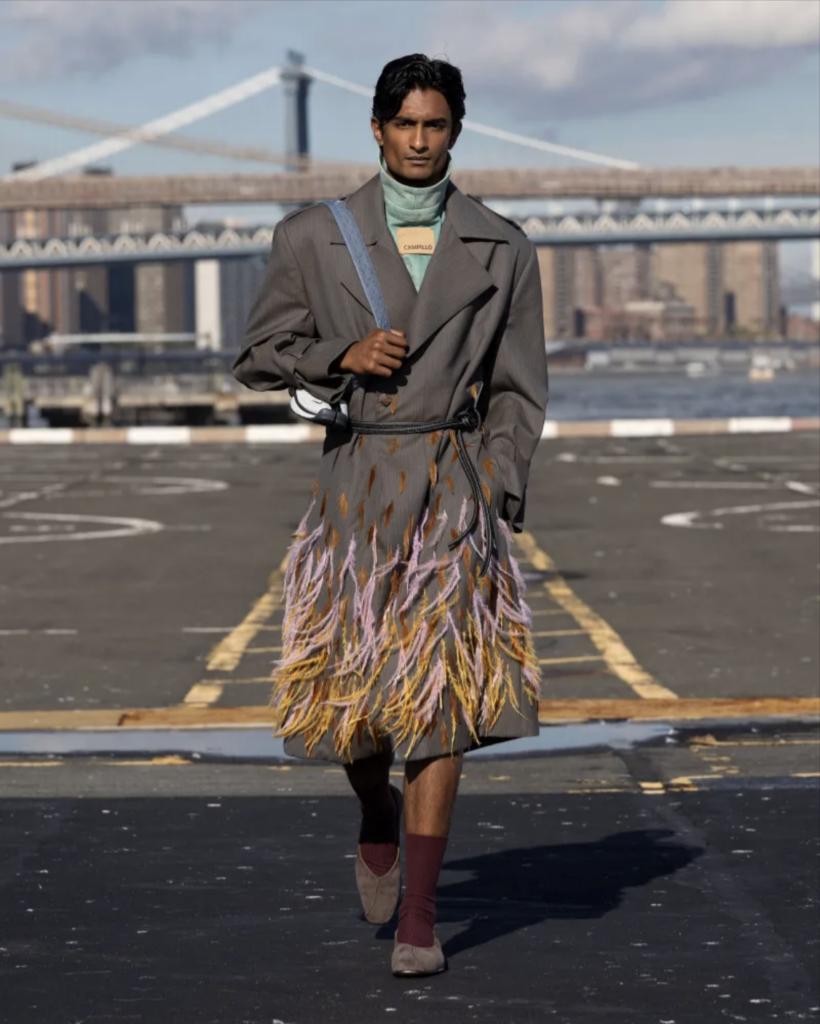
Those colors energized a wardrobe that moved between cropped jackets, short shorts, flowing shirts, flared trousers, graphic T-shirts and wrestling-inspired tanks. Rather than treating nostalgia as something solemn, Campillo allowed the collection to feel playful, and that is an important shift.
Campillo’s previous work has often carried a controlled tension between rigorous tailoring and cultural symbolism. Spring 2027 loosened that control without abandoning the craftsmanship underneath it.
Charro Culture, Reconsidered Again
Campillo was born and raised in Mexico City and has long identified charro culture and horsemanship as foundational references. His work repeatedly takes the visual codes of Mexican equestrian dress and moves them somewhere less expected.
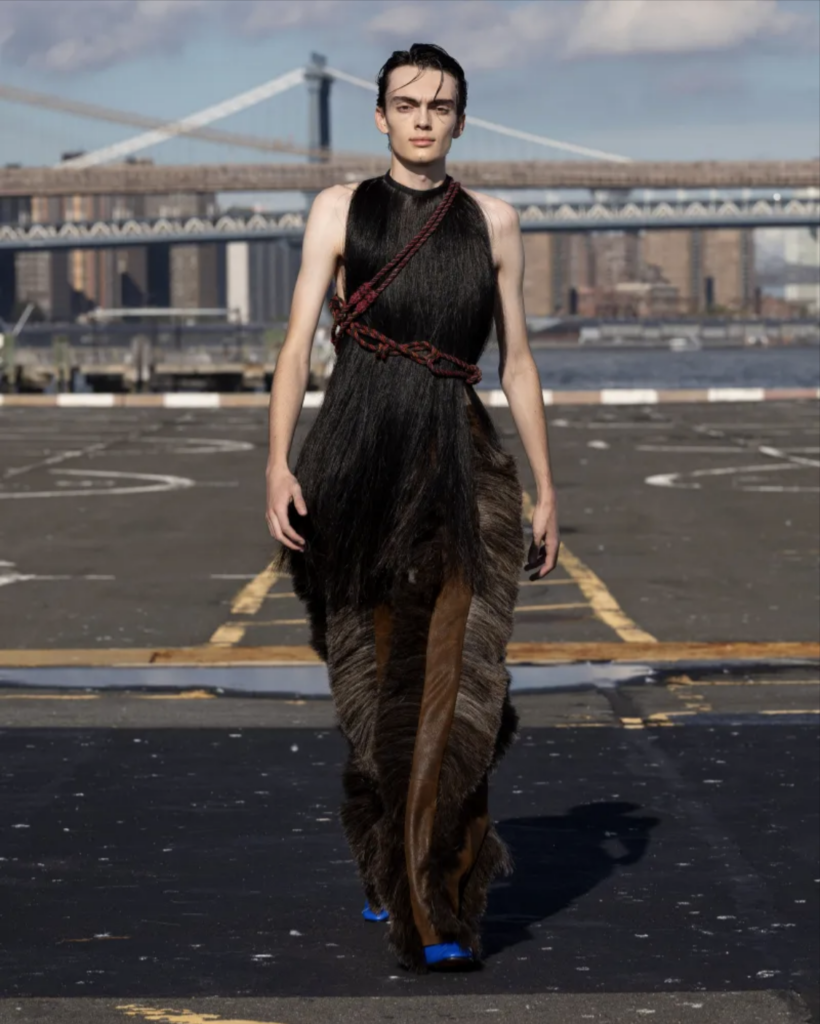
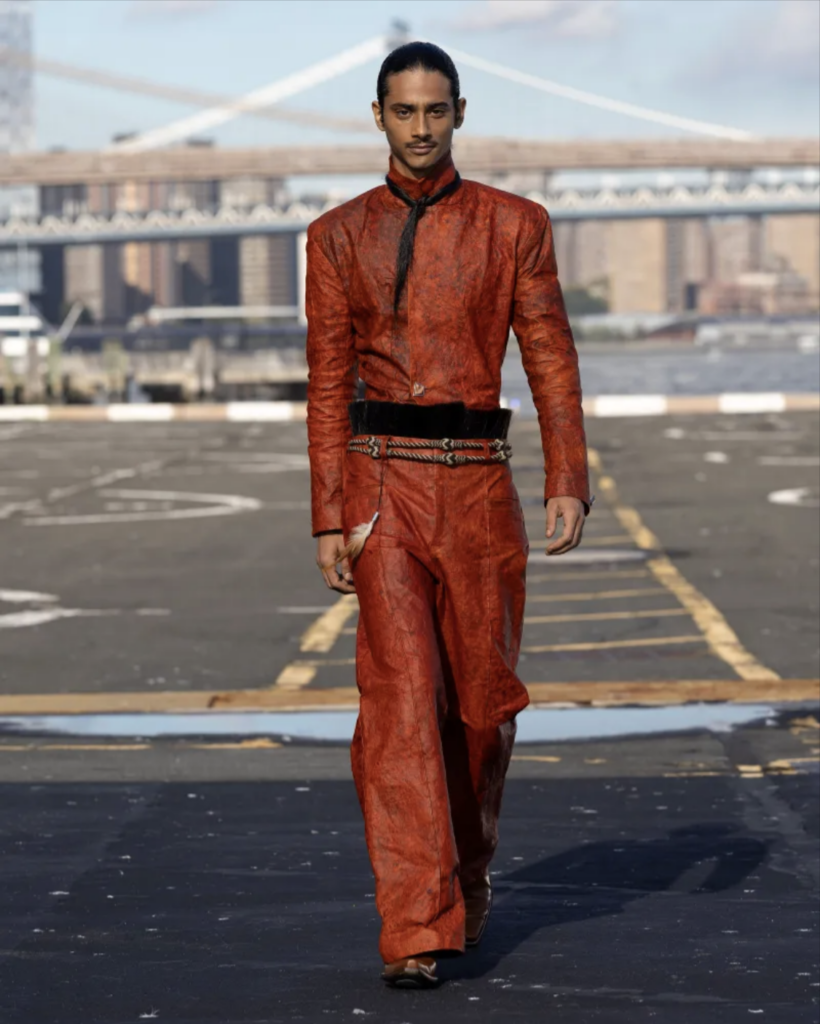
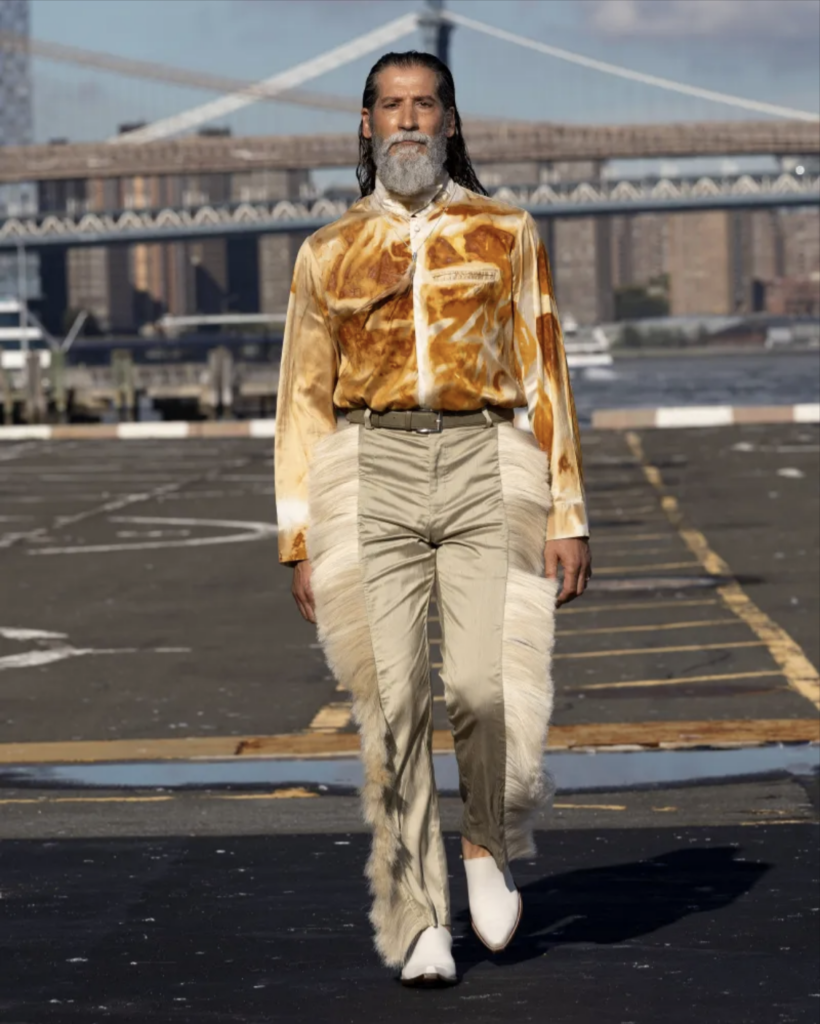
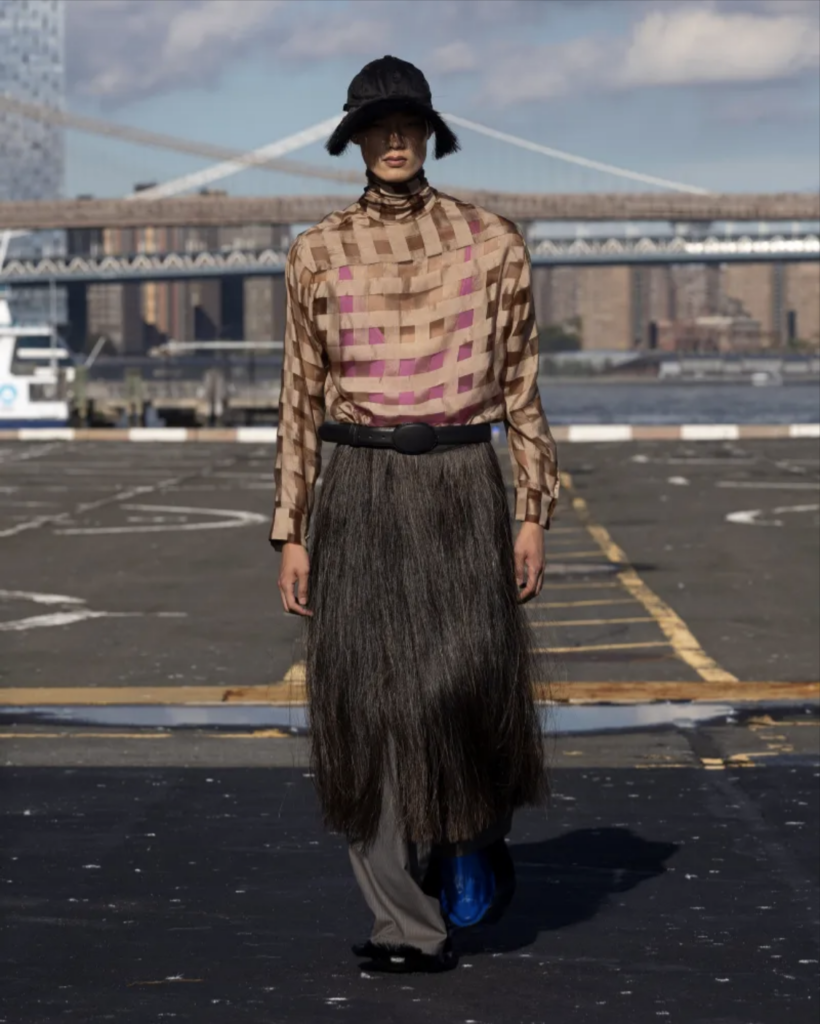
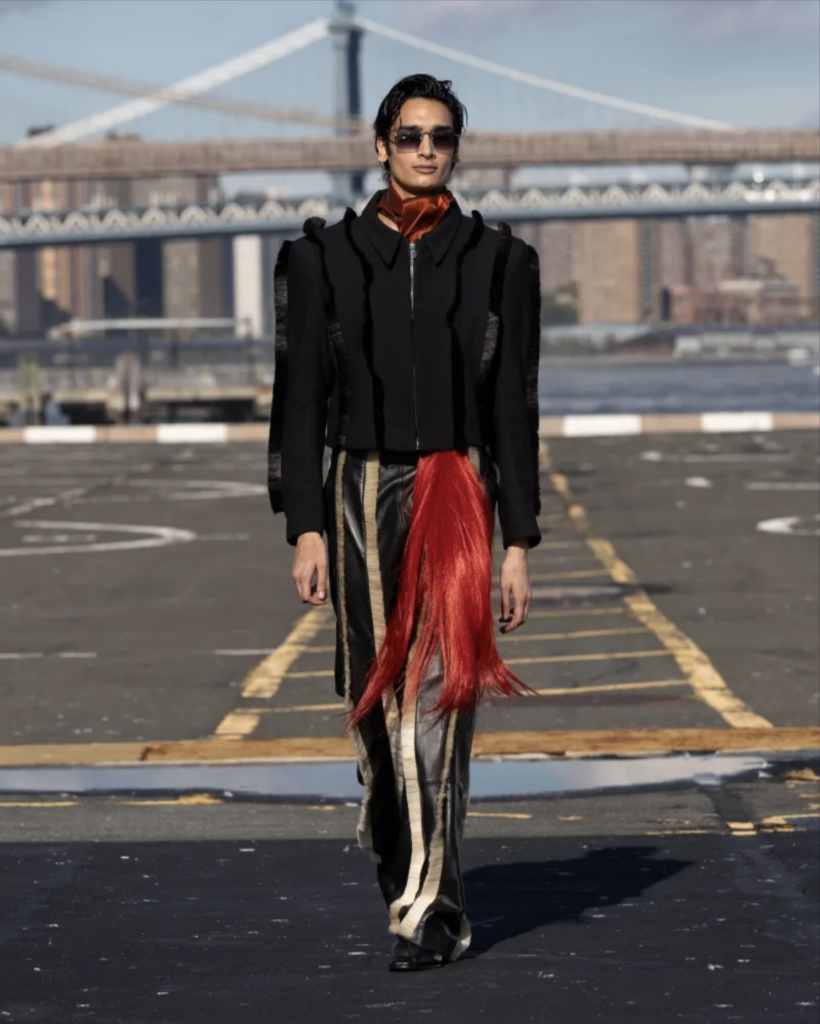
For Spring 2027, horsehair moved beyond small embellishment and became more visibly involved in silhouette. Antique horse bridles appeared as accessories and harness-like elements, while silver and sculptural onyx details introduced another connection to craft and permanence. Cropped and elongated tailoring played against draping and softer fabrications.
The effect is less about recreating traditional charro dress than continuing to pull apart its codes and ask what they can become.
When Heritage Meets Material Innovation
Some of the strongest experimentation happened at the material level.
Campillo used oxidation to alter silk, allowing natural rust effects to become part of the garment’s surface. More significantly, three Spring 2027 looks incorporated Celium, a bio-fabricated cellulose material developed by Mexican biomaterials company Polybion.
Celium begins with nutrients recovered from agroindustrial fruit waste. Bacteria convert those nutrients into cellulose, which is then refined into material suitable for applications including fashion. For Campillo, that means a Mexican designer referencing historical craftsmanship while simultaneously working with material technology being cultivated in Mexico.
That combination may ultimately be more important than simply labeling the collection “heritage.”


All photos: Courtesy of Campillo