
Born at Masala y Maíz, Paga Lo Que Puedas is asking whether restaurants can make room for more people without compromising the food, service or dignity of the experience.
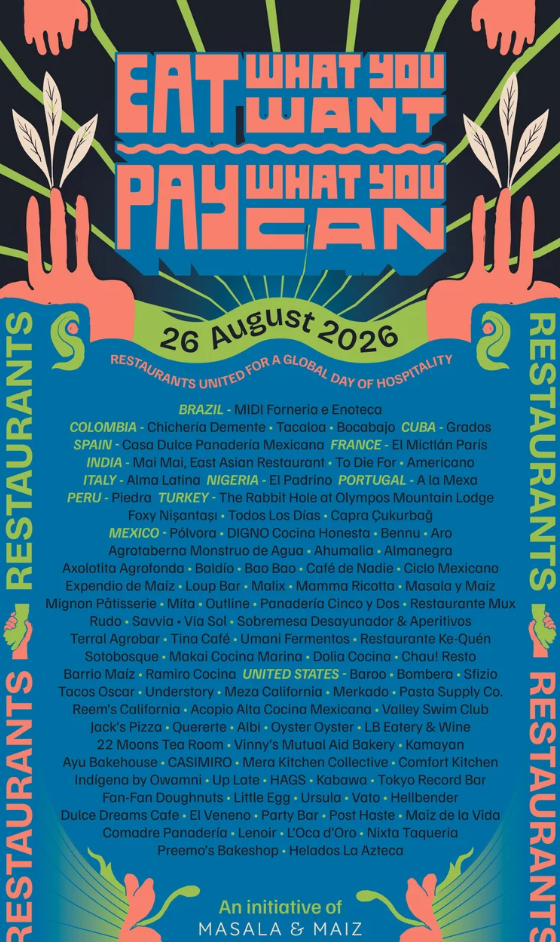
On August 26, 2026, restaurants around the world tried something that runs against one of the most basic rules of the business: they served their regular food but allowed customers to decide how much they could afford to pay. The initiative, Paga Lo Que Puedas — or Pay What You Can — grew from years of experimentation at Mexico City restaurant Masala y Maíz into a global hospitality action involving more than 100 restaurants. Kitchens kept cooking, dining rooms continued operating and guests received the restaurant experience without a fixed meal price determining whether they belonged there.
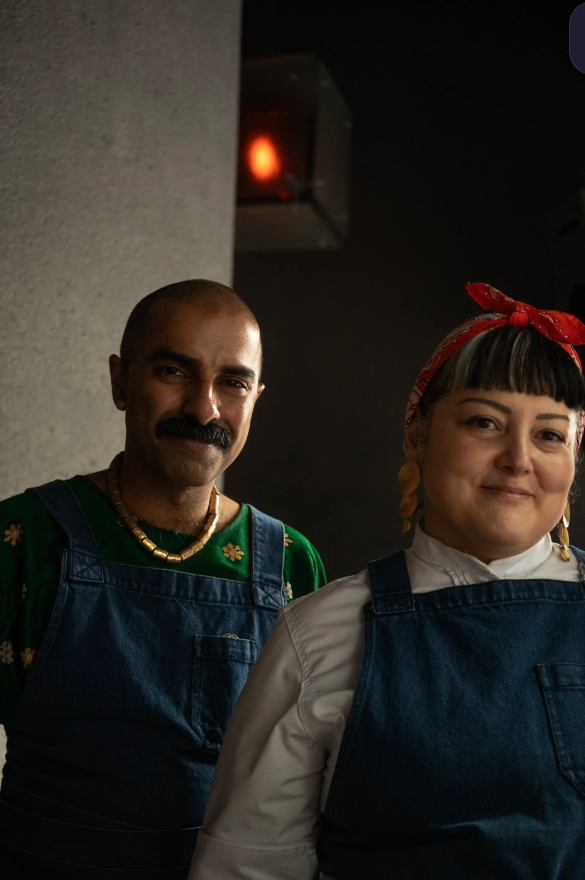
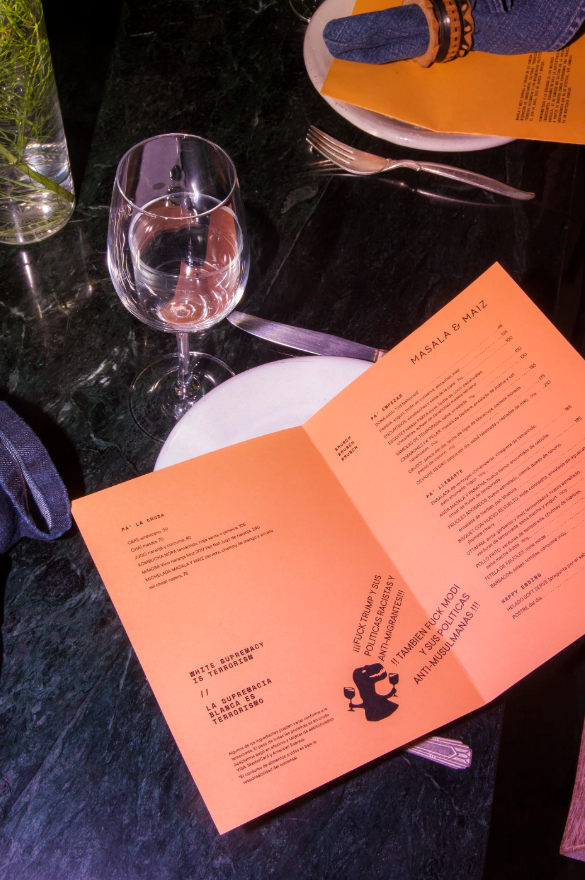
At the center of the movement are chefs and partners Norma Listman and Saqib Keval, the co-owners of Masala y Maíz. Their acclaimed Mexico City restaurant explores the relationships between Mexican, South Asian and East African food traditions, but its philosophy has long stretched beyond what lands on the plate. Listman and Keval have openly positioned the restaurant as a vehicle for examining labor, migration, culture, sustainability and social justice, making Pay What You Can less of a promotional stunt and more of an extension of how they already think about hospitality.
The idea did not suddenly appear in 2026. Masala y Maíz had been experimenting with Pay What You Can services for years, allowing diners to enjoy a meal and contribute what they were able to afford. In 2025, the idea expanded beyond one dining room, with more than 20 restaurants, bakeries and cafés participating in Mexico, including Michelin-recognized establishments. The response gave the team reason to think the experiment could travel, and by 2026 restaurants across multiple countries had joined the global day.
The setting matters. Mexico is experiencing an extraordinary concentration of wealth alongside continuing economic insecurity. Oxfam México reported this year that the richest 1% of the population owns approximately 40% of the country’s private wealth, while 18.8 million people lack access to nutritious, quality food. Access to a Michelin-level meal is obviously not the same issue as access to basic nutrition, but restaurants are also cultural spaces. As neighborhoods become more expensive and increasingly oriented toward tourists and wealthier consumers, the people who work in and sustain those communities can find themselves priced out of participating in the very places that make their city internationally desirable.
Paga Lo Que Puedas attempts to remove that barrier without creating a separate experience for lower-income guests. Participating restaurants serve their normal menus during regular service rather than offering a stripped-down charity menu. Guests can see regular prices for context but choose what they are able to contribute, whether by cash or card. The campaign recommends keeping drinks at their normal prices, restricting the offer to dine-in service and treating gratuity separately so restaurant workers are not expected to absorb the cost of the experiment.
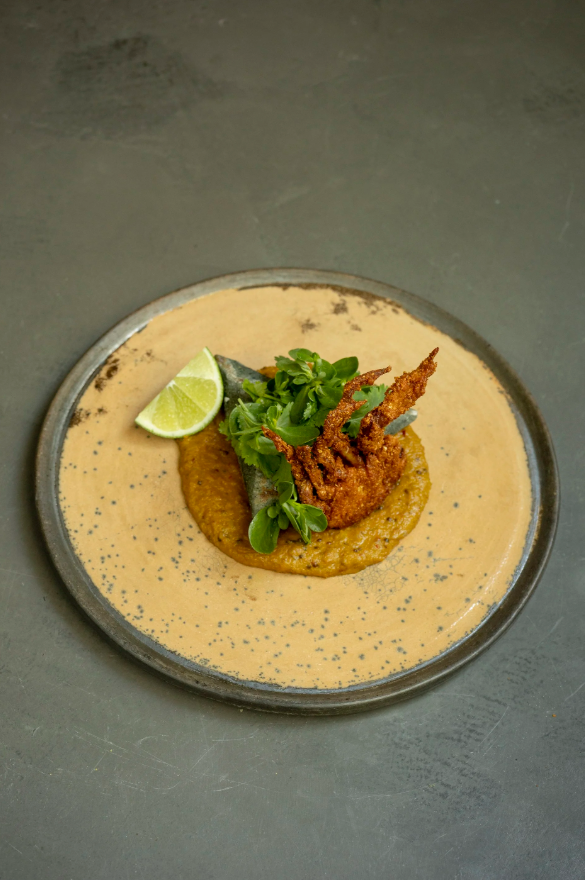
That distinction is central to the idea. The diner is not standing in a charity line and the restaurant is not pretending that food, labor and ingredients have no value. Instead, both sides enter into an unusual exchange built on trust. Some diners can contribute less, others can pay the regular amount or more, and the dining room temporarily becomes accessible to people who may never have considered walking through its doors.
The early results suggest the experiment changed who was sitting at those tables. A survey reported by Mexico News Daily covering 12 participating restaurants found that 75% experienced higher or much higher customer turnout than on a normal day, while 58% of diners identified themselves as first-time customers. Eighty-three percent of the restaurants surveyed said they would definitely participate again. Sales were more complicated: 42% reported a better sales day, while other restaurants performed similarly or worse. Tips, however, reportedly increased by 42%, suggesting that generosity did not disappear when the fixed meal price did.
The human stories may be more revealing than the percentages. The Christian Science Monitor reported that one diner traveled roughly two hours to Masala y Maíz and then waited another four hours for the opportunity to eat there. Restaurant manager Carlo Magno estimated that while the restaurant’s usual clientele is largely international, approximately 95% of customers on Pay What You Can days are Mexican nationals. That reversal gets directly to the purpose of the project: recognition is valuable, but what does local success mean if the people living around a celebrated restaurant increasingly feel that it was not created for them?
There are limits to the model, and they should not be ignored. Pay-what-you-can pricing is not automatically a sustainable business strategy. Panera Bread experimented for years with permanent donation-based Panera Cares cafés in the United States before eventually closing them after determining that the model was no longer financially viable. At the same time, smaller nonprofit community cafés continue operating similar systems successfully when supported by donations, volunteers and a mission specifically structured around food access. Masala y Maíz says its own Pay What You Can days have at least broken even, but Listman and Keval themselves do not argue that every restaurant should abandon fixed pricing.
That may be exactly why the Mexico City model is interesting. It does not claim that one generous day can solve income inequality, rising rents, food insecurity or the difficult economics of running an independent restaurant. Instead, it asks restaurants to interrupt business as usual long enough to examine whom their dining rooms are actually serving.
For one day, the price of admission becomes trust. The experiment leaves the restaurant industry with a question that matters far beyond Mexico City: if hospitality means welcoming people to the table, how hospitable can a restaurant truly be when much of its own community can no longer afford to sit down?