
From experimental furniture to cinematic New York interiors, Studio S II is building a design language that refuses to sit neatly inside one category. At the center of that vision is designer, artist, and founder Erica Sellers.
Some design studios create rooms. Studio S II is more interested in creating worlds. Based between New York and Berlin, Studio S II works across interior architecture, residential design, furniture, collectible objects and immersive environments. The studio describes its practice as existing between art and utility—a philosophy visible across a portfolio that moves from private homes to exhibitions and highly experimental furniture.
Rather than applying one recognizable look to every project, Studio S II builds a narrative around each space. Materials, architecture, furniture and art are treated as pieces of a larger story. The result can feel cinematic, sometimes dark and unexpected, but the spaces are still meant to function as real places in which people live, gather and move.

Photo Credit: Courtesy of Studio S II –
Right: Erica Sellers, Founder of Studio S II, Head of Furniture & Product Design. Left: Hanna Propst, Principal, Head of Architectural and Interior Desig
Erica Sellers and the Art of Making
That approach makes more sense when looking at the career of Erica Sellers, founder, principal, and head of furniture and product design at Studio S II.
Sellers is a New York-based designer, artist, furniture maker and builder whose work combines digital experimentation with traditional craftsmanship. She earned a BFA in Industrial Design from the Rhode Island School of Design and spent years working within fine art production before establishing Studio S II in 2020.
Her background includes serving as Head of Production for artist Tavares Strachan and working on major international installations connected to the Venice Biennale, Prospect New Orleans, the Carnegie International and SFMOMA. In 2021, Sellers also appeared as a competitor on HBO Max’s Ellen’s Next Great Designer.
That combination of fine art, industrial design, fabrication and experimentation remains visible in Studio S II’s work. Furniture is rarely treated as decoration alone. A chair, table, light or sculptural object can become part of the architecture and sometimes the central idea around which a room develops.
Sellers’ independent furniture practice is equally conceptual. Her work often looks at the relationship between physical objects, technology, sound, data and human experience, while maintaining a strong focus on materials and making.
Erica Sellers Image Credit: If using the portrait from RISD Alumni featuring Sellers and Jeremy Silberberg, credit Photo by John Rohrer / Courtesy RISD Alumni. The photographer for the portrait currently appearing on Erica Sellers’ own About page is not identified, so PMG should not assign a photographer credit to that image without confirmation.
House of S II
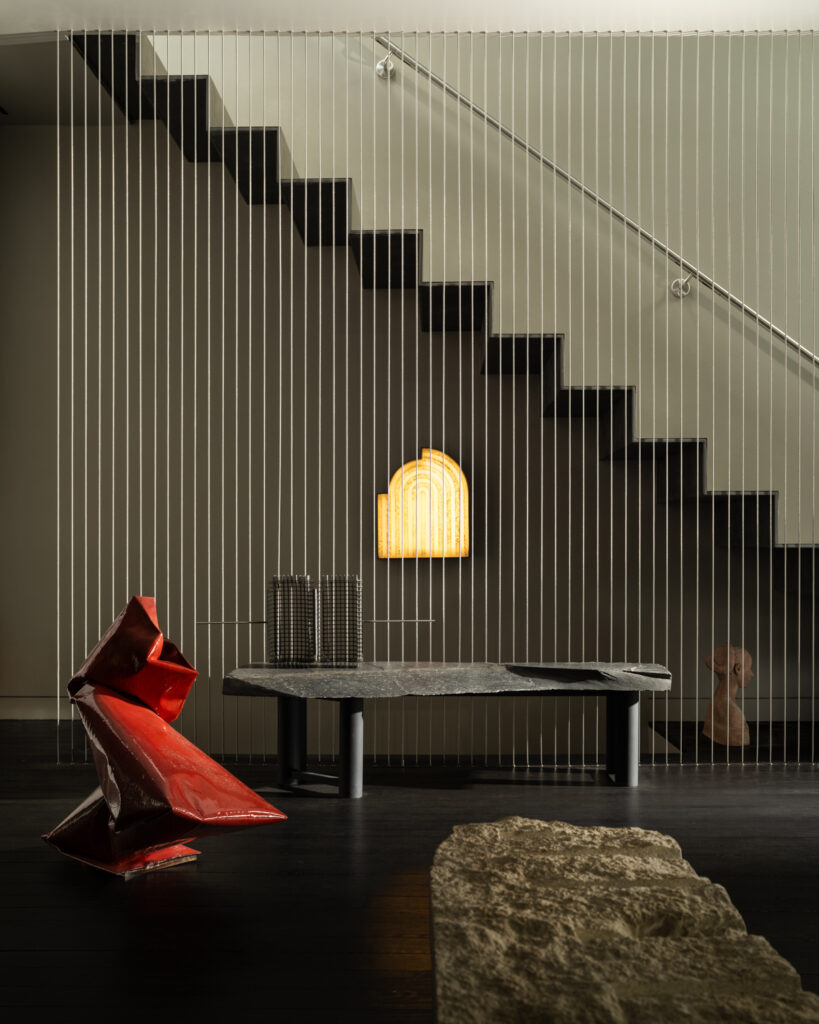
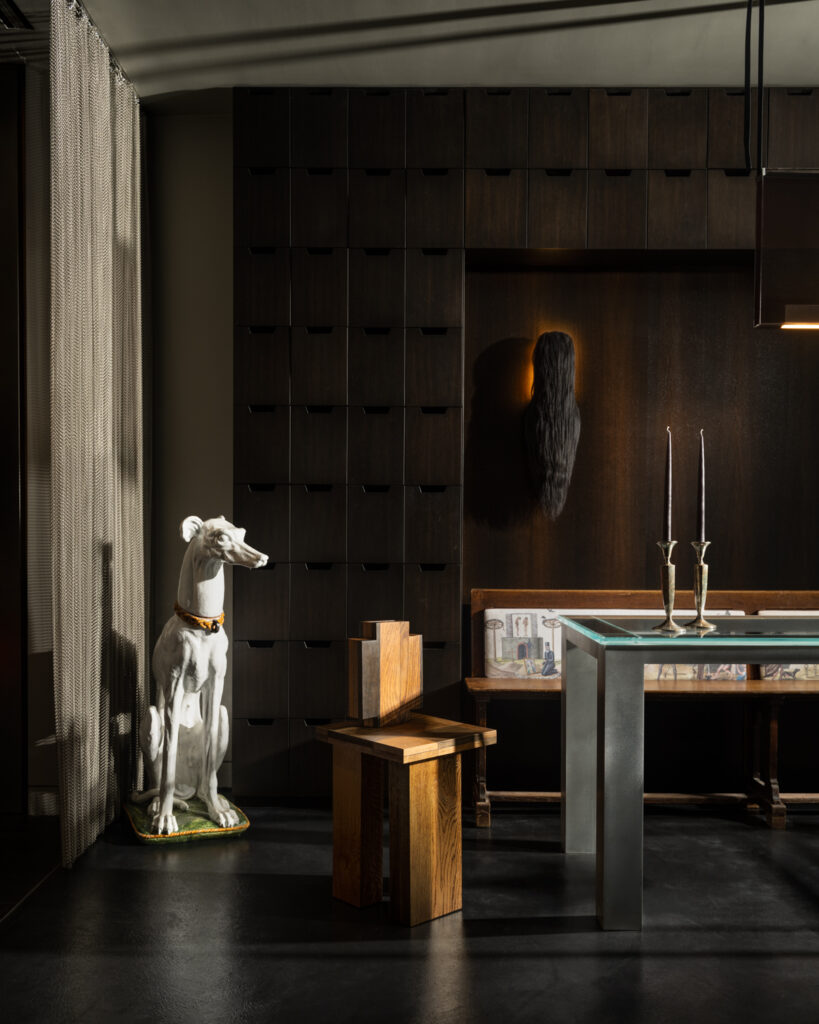
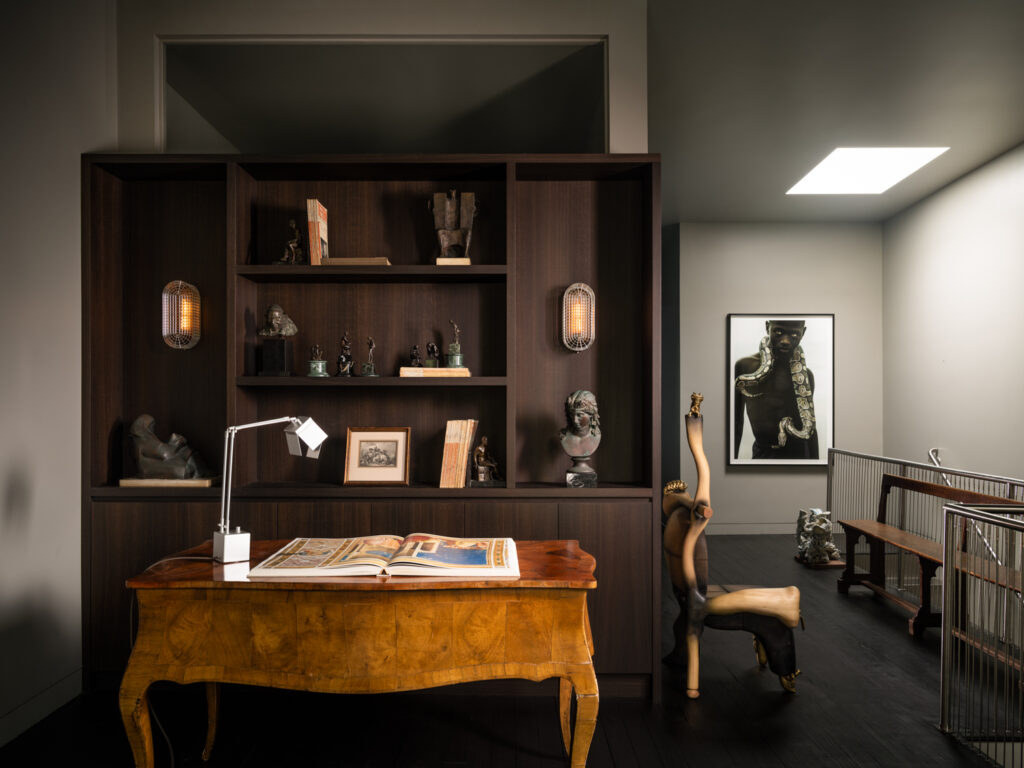
Perhaps the clearest expression of the studio’s thinking is House of S II, its Ridgewood, Queens townhouse, showroom and gallery.
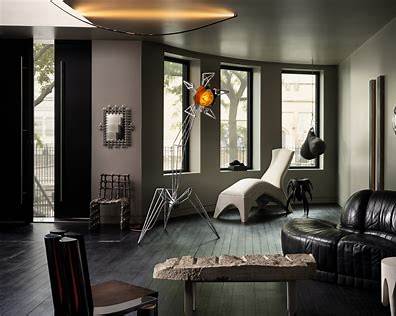
The 2,500-square-foot project transformed a three-story residential rowhouse into a space where domestic life, collectible design and exhibition culture meet. Studio S II combines antiques, heirlooms and works by other designers with its own sculptural furniture and custom details.
House of S II also functions as a platform for the wider design community. The gallery officially opened in 2025 with work from more than 55 designers and artists, turning the residence into something closer to a continuously evolving design environment than a conventional showroom.
The project captures an important part of Studio S II’s identity: old and new do not have to compete. Historic references can sit beside futuristic materials. Gothic forms can coexist with contemporary minimalism. Collectible objects can still function inside everyday spaces.
It is this tension that gives the studio’s work much of its personality.
From Ridgewood to Boerum Hill
That philosophy carries into the studio’s residential portfolio.
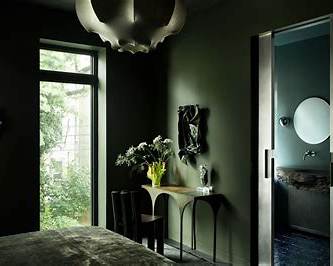
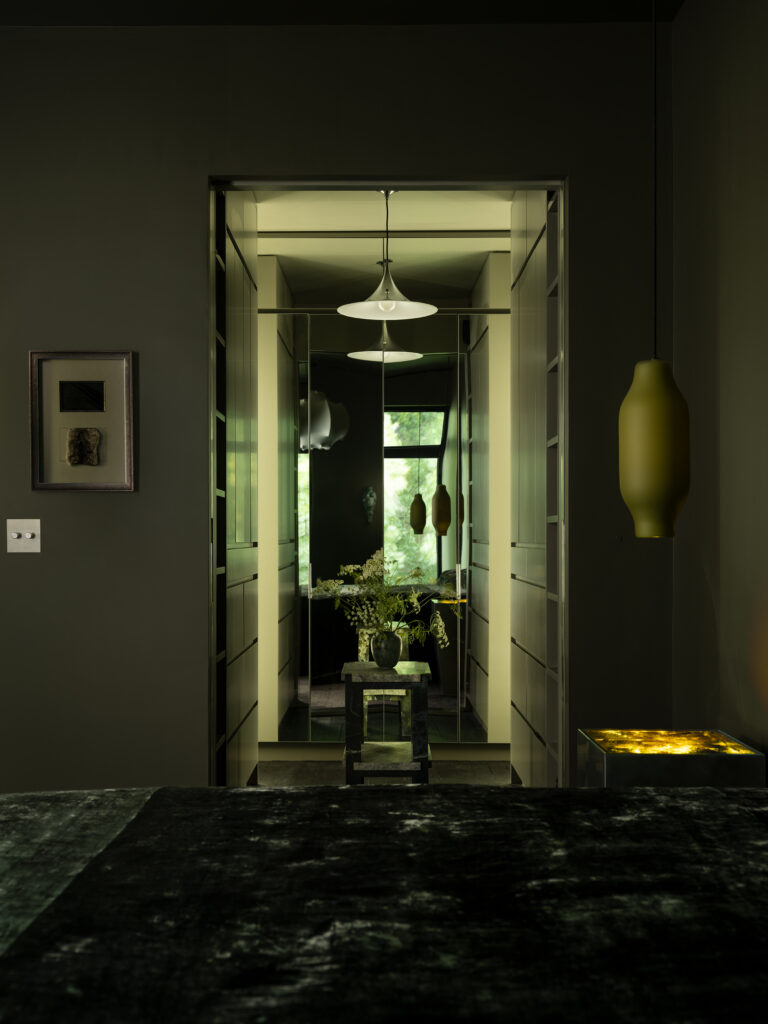
For a 2025 penthouse in Boerum Hill, Brooklyn, Studio S II worked inside a building designed by architecture firm SO-IL. Rather than disguising the building’s exposed concrete and strong architectural geometry, the studio responded to it.
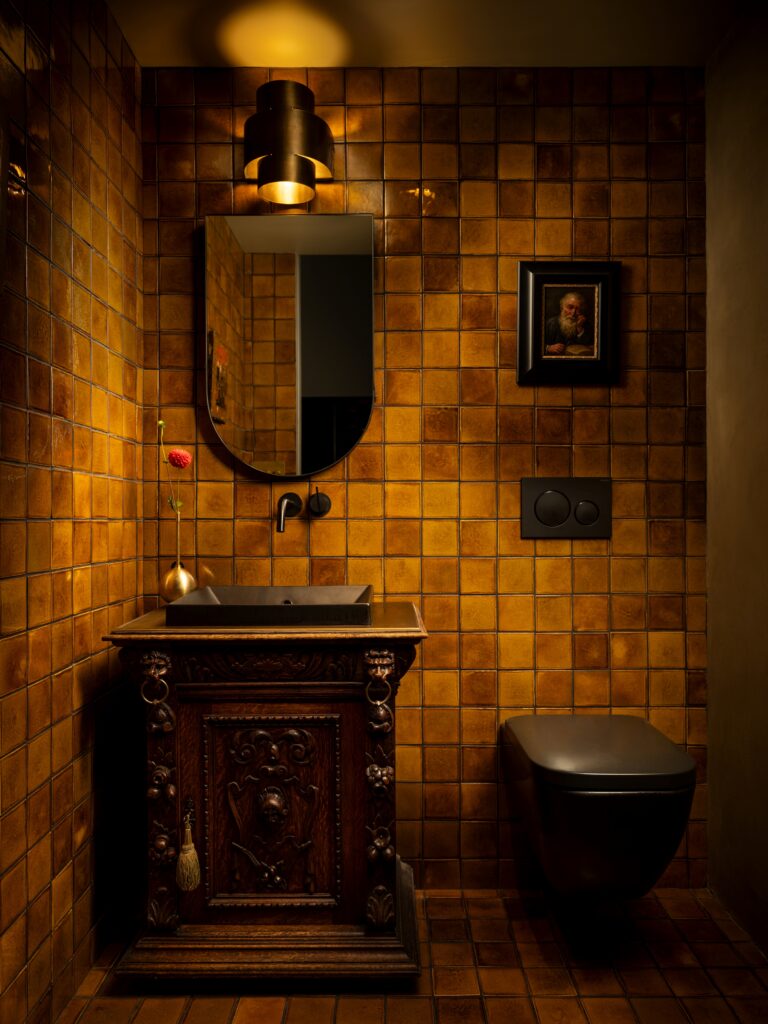
The 2,200-square-foot interior uses Venetian plaster, texture and changing tones to shift the atmosphere from room to room. Lighter cream tones define parts of the living and dining areas, while private spaces move toward richer, darker colors, including burgundy in the bedroom and charcoal in the powder room.
It is a useful example of Studio S II’s ability to work with an existing architectural language without becoming controlled by it. The concrete remains visible, but warmer materials, furniture, art, and color introduce another layer of personality.
Design Without a Fixed Category
Studio S II’s reach also extends beyond residential interiors.
Its portfolio includes exhibitions and collectible design presentations, including participation during Milan Design Week. At Alcova Milano in 2024, the studio presented pieces including its Bodice Vase, Coupled S+P Mills and editions of its Chastity Sconces as part of Adorno’s Animism exhibition.
The studio’s work has also received wider industry recognition. Studio S II lists selections by Dwell among its emerging designers and repeated inclusion in Wallpaper‘s directory of creatives shaping American design, alongside features in publications including Architectural Digest, The New York Times, Elle Decor and Robb Report.
What makes Studio S II interesting is not simply that its rooms photograph well. Its work asks a larger question about what an interior can be.
Can a home also function as a gallery? Can furniture operate as sculpture without losing its usefulness? Can historic references and futuristic fabrication occupy the same room?
For Erica Sellers and Studio S II, the answer appears to be found somewhere in the space between those categories, and that space is becoming increasingly difficult to ignore.