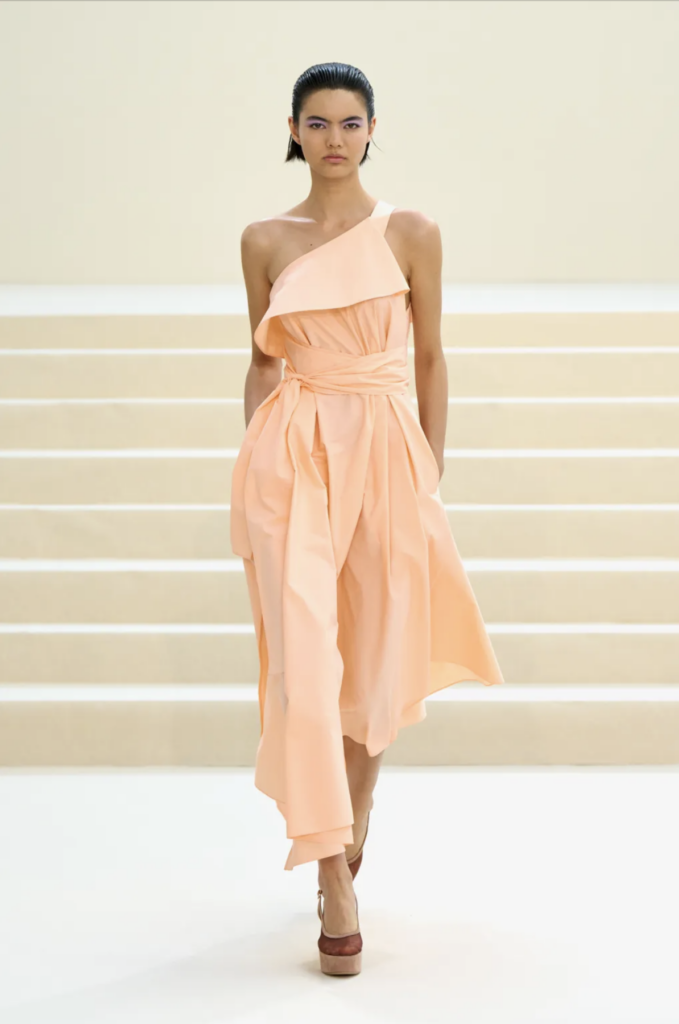
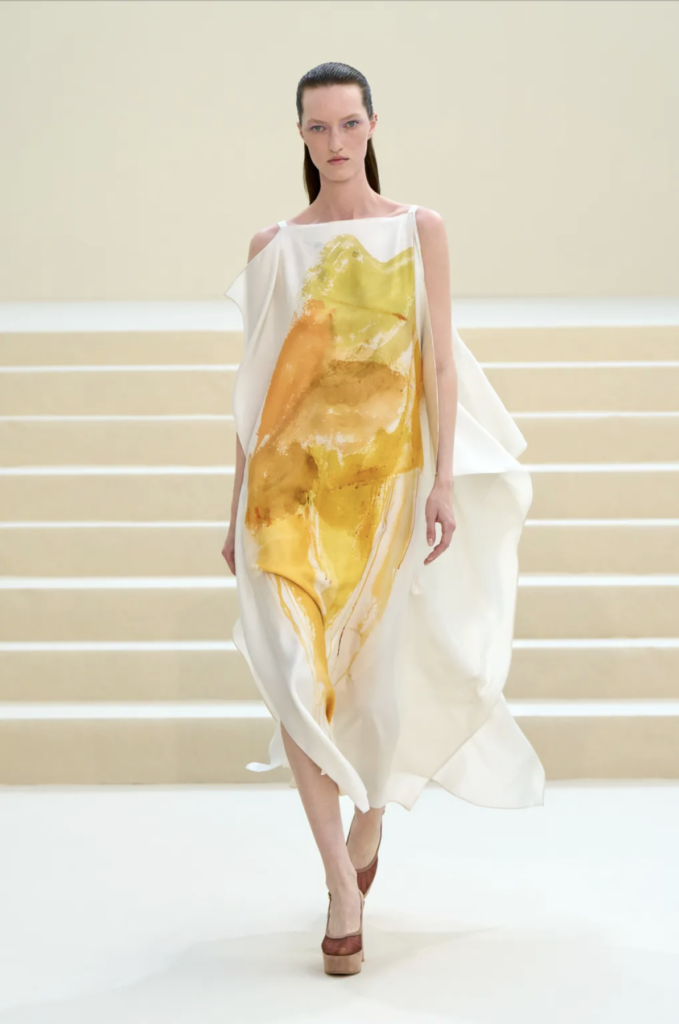
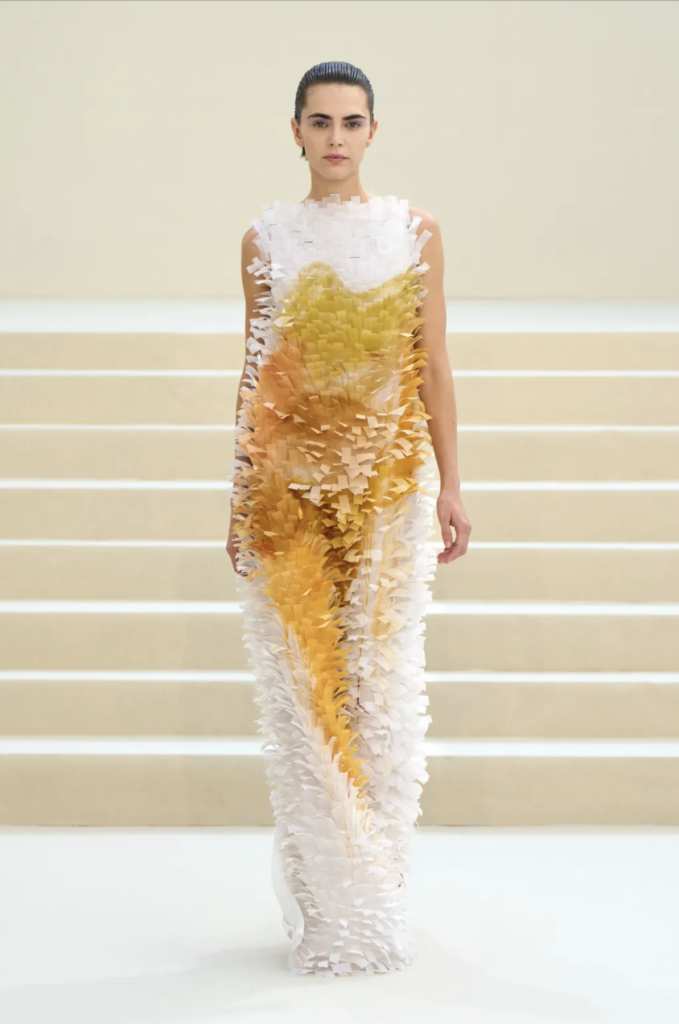
Albert Kriemler transforms the instinctive work of Austrian painter Martha Jungwirth into color, craftsmanship and controlled movement for Spring 2027.
Akris has never needed spectacle to command attention. For Spring 2027, Albert Kriemler stayed committed to the Swiss house’s precise approach to luxury while allowing something far less controlled to enter the conversation: the expressive paintings of Austrian artist Martha Jungwirth. The result was a collection where disciplined construction met color, gesture and emotion without sacrificing the clarity that has long defined Akris.
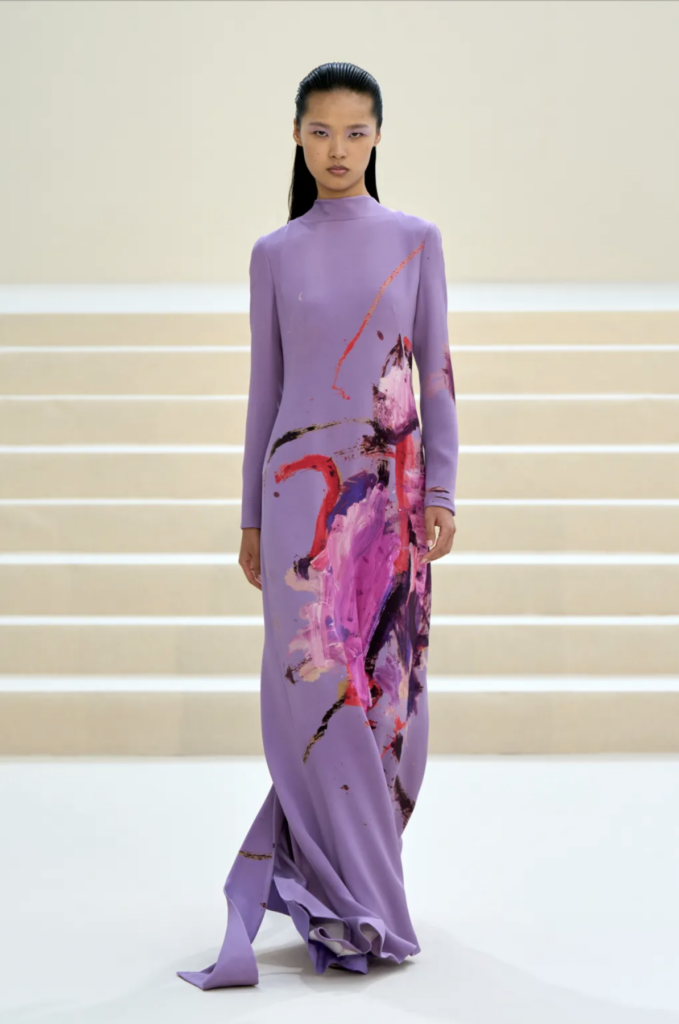
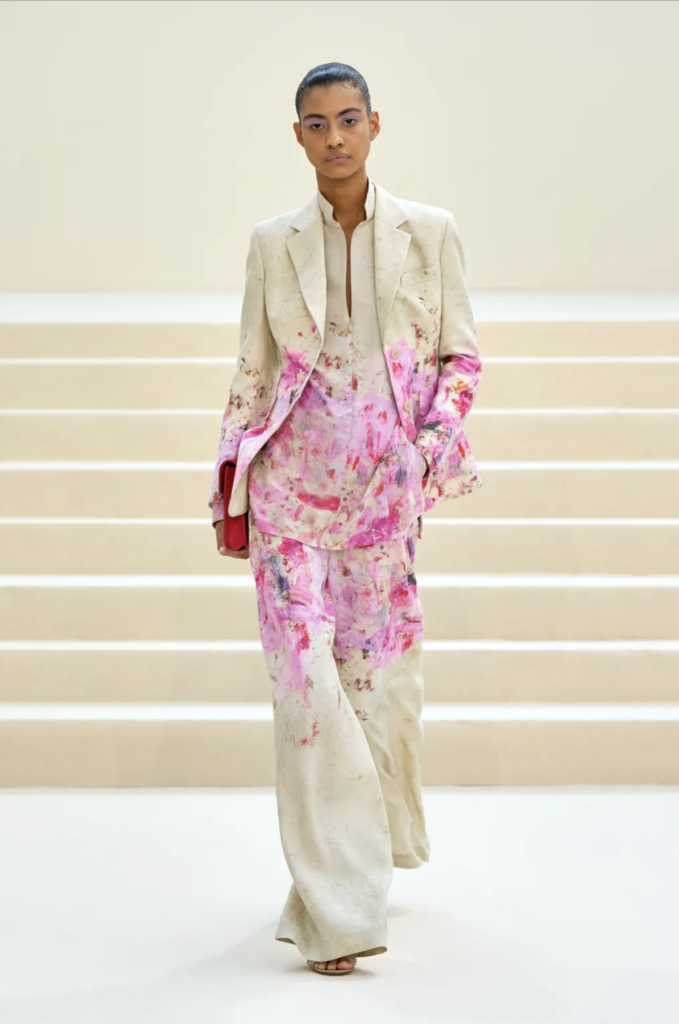
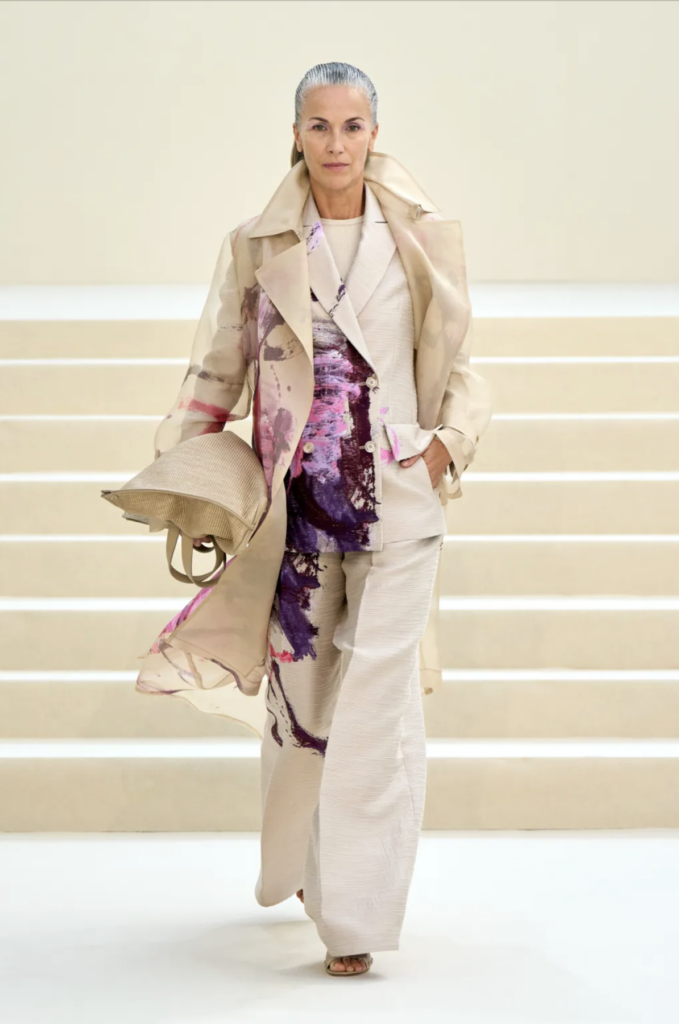
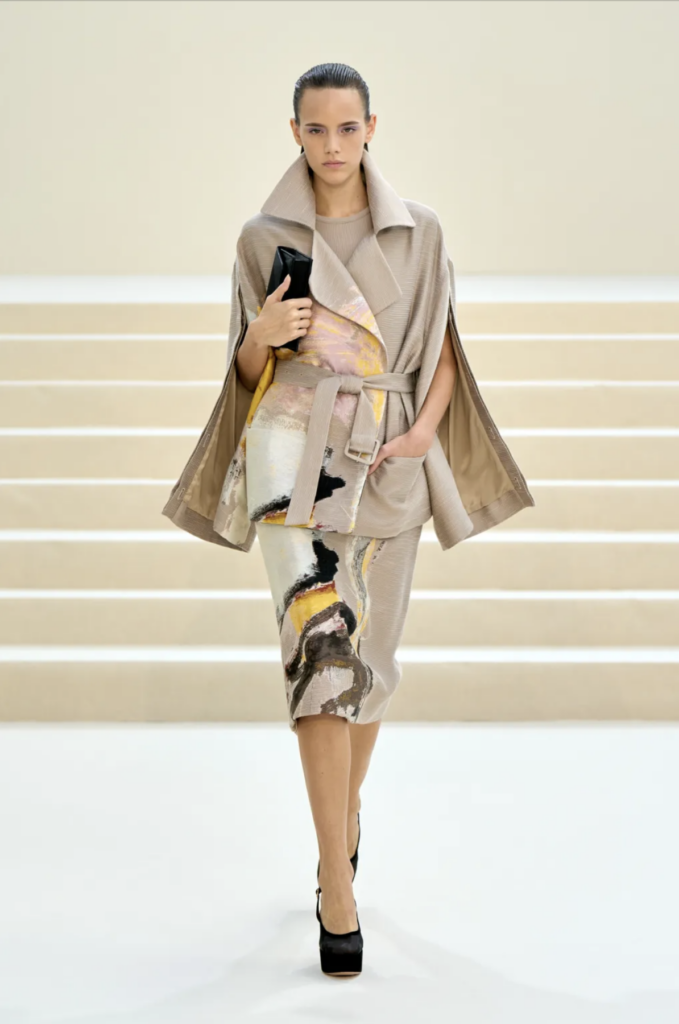
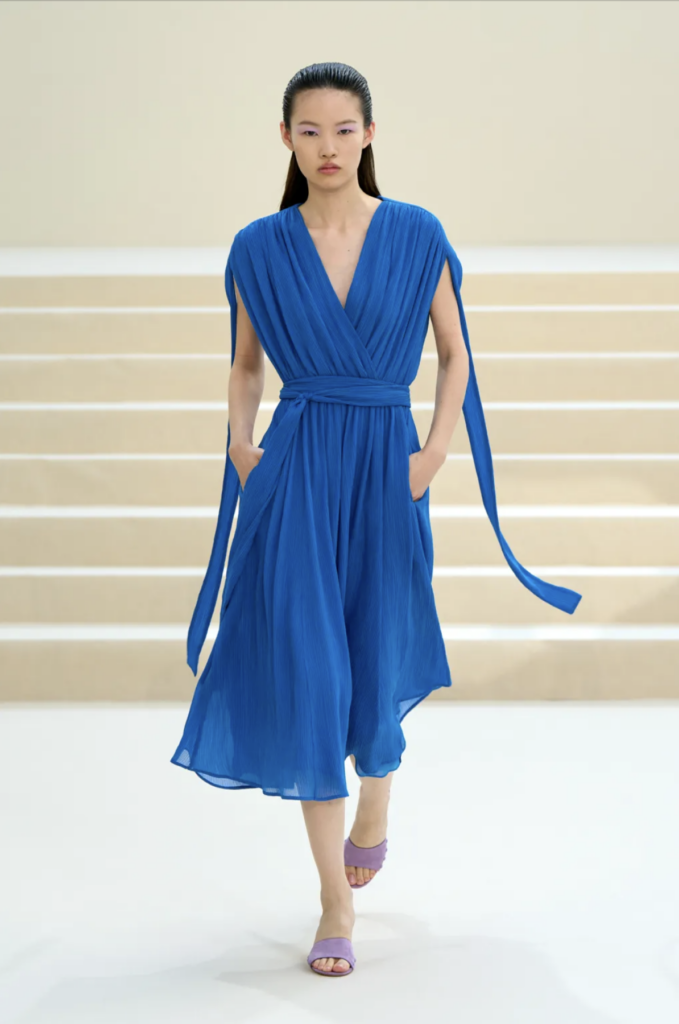
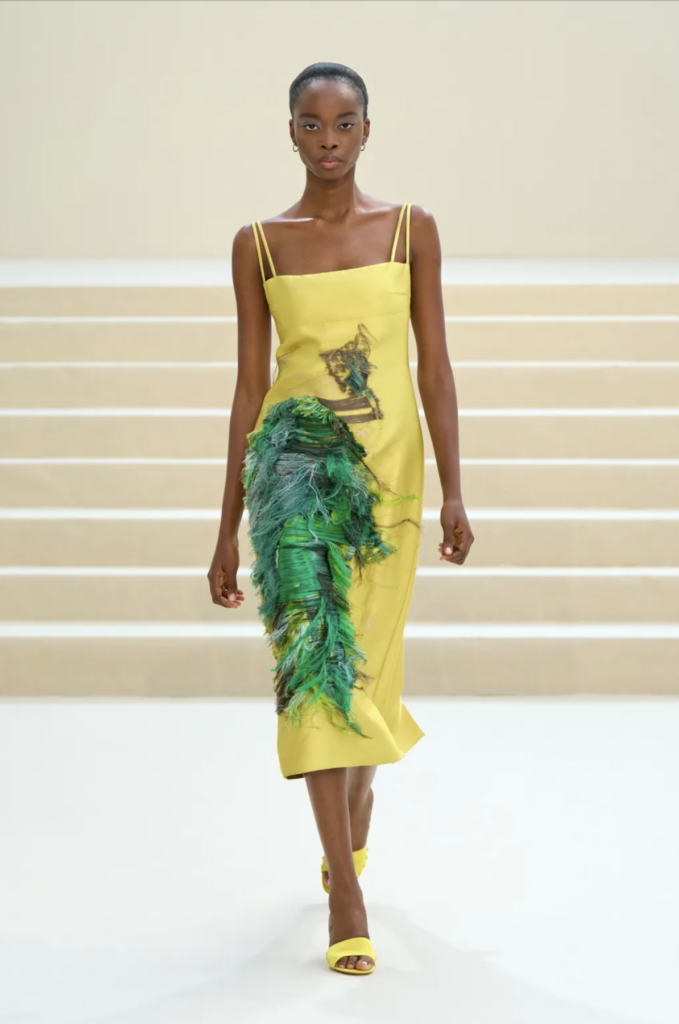
Kriemler first encountered Jungwirth’s work at the Thaddaeus Ropac gallery in Paris and later visited the artist in Vienna. Rather than simply reproducing her paintings across clothing, he looked at the physical energy behind them. Her smears, scratches, irregular marks and unexpected combinations of purple, pink, green and yellow became a starting point for exploring how emotion could be translated through fabric and construction.
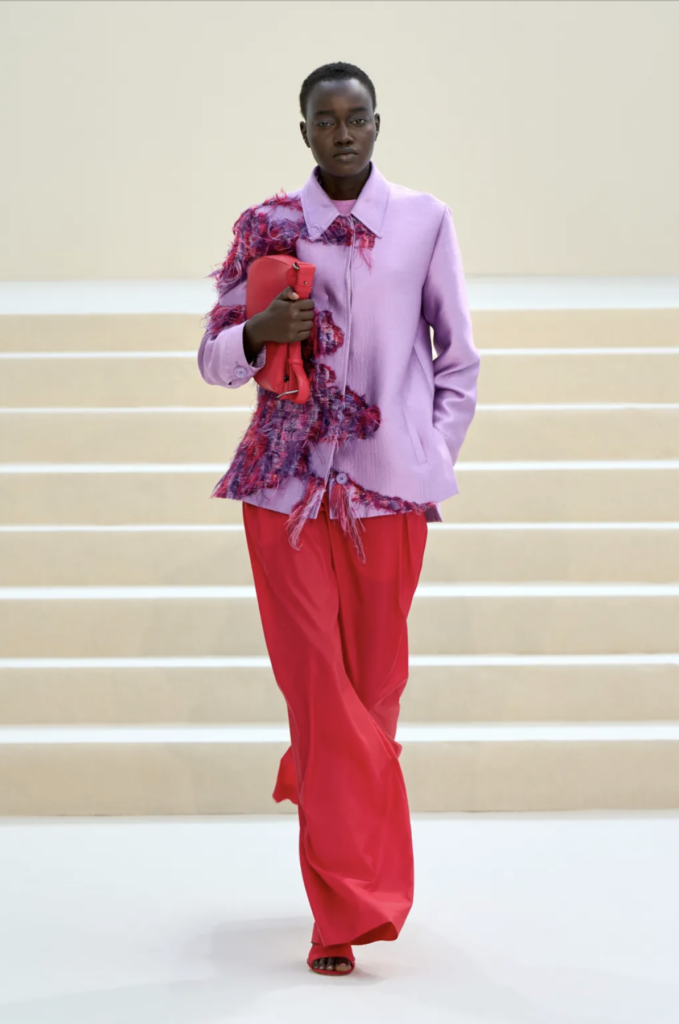
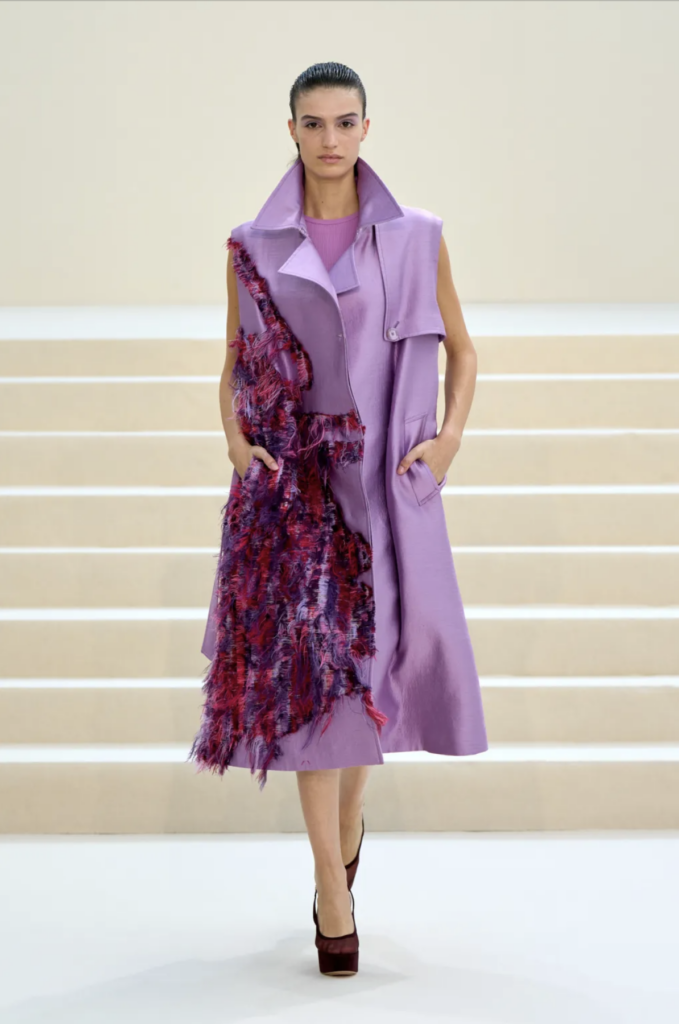
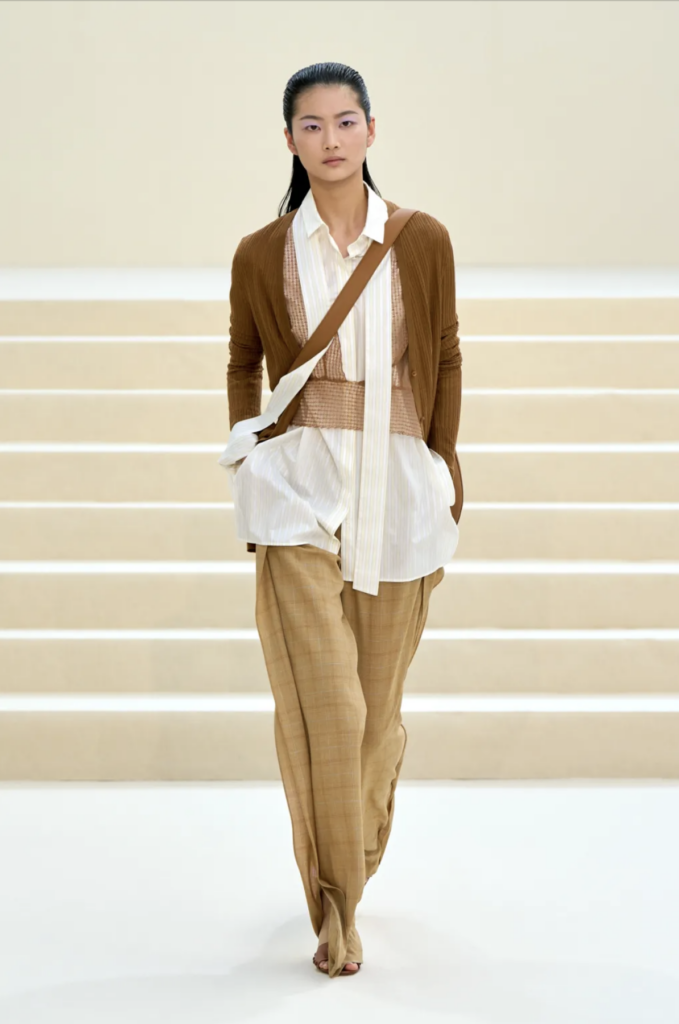
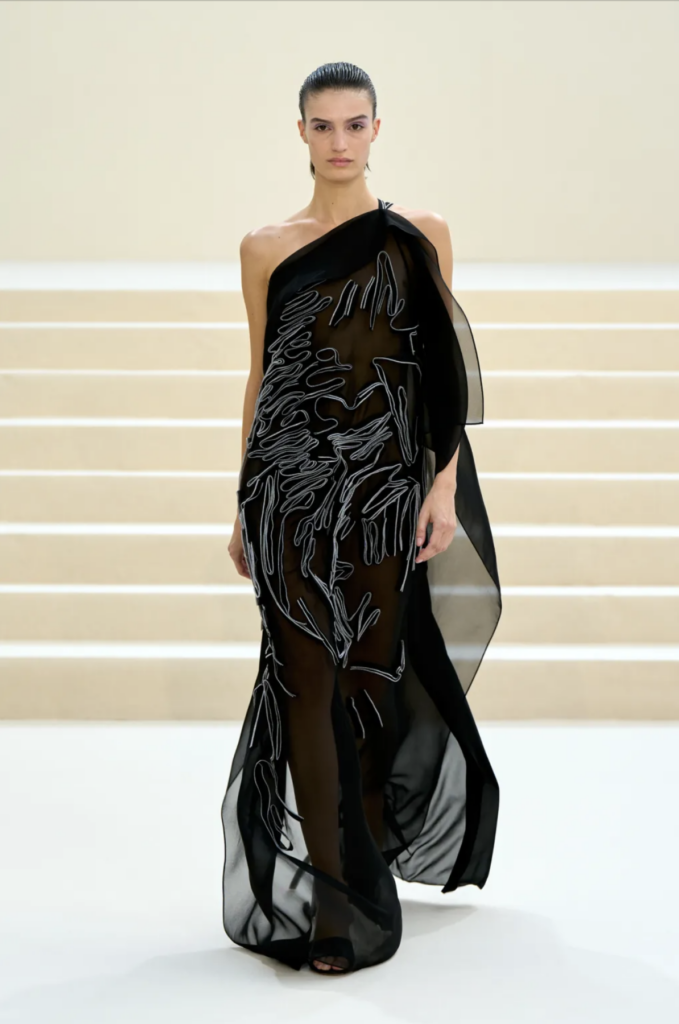
That approach becomes most compelling in the collection’s textile work. Reverse-side jacquards expose hanging threads that resemble unfinished brush marks, while zigzag ribbon embroidery and fabric streamers bring a sense of movement to otherwise clean silhouettes. Jungwirth’s artwork becomes less of a surface treatment and more of a structural language, appearing through texture, placement and the deliberate tension between refinement and rawness.
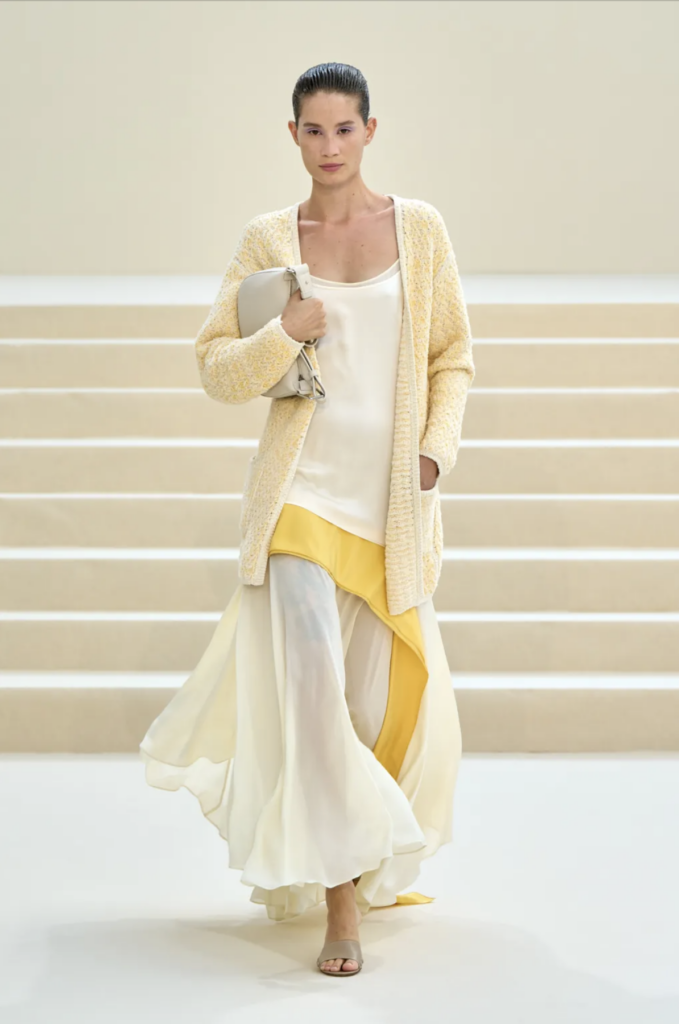
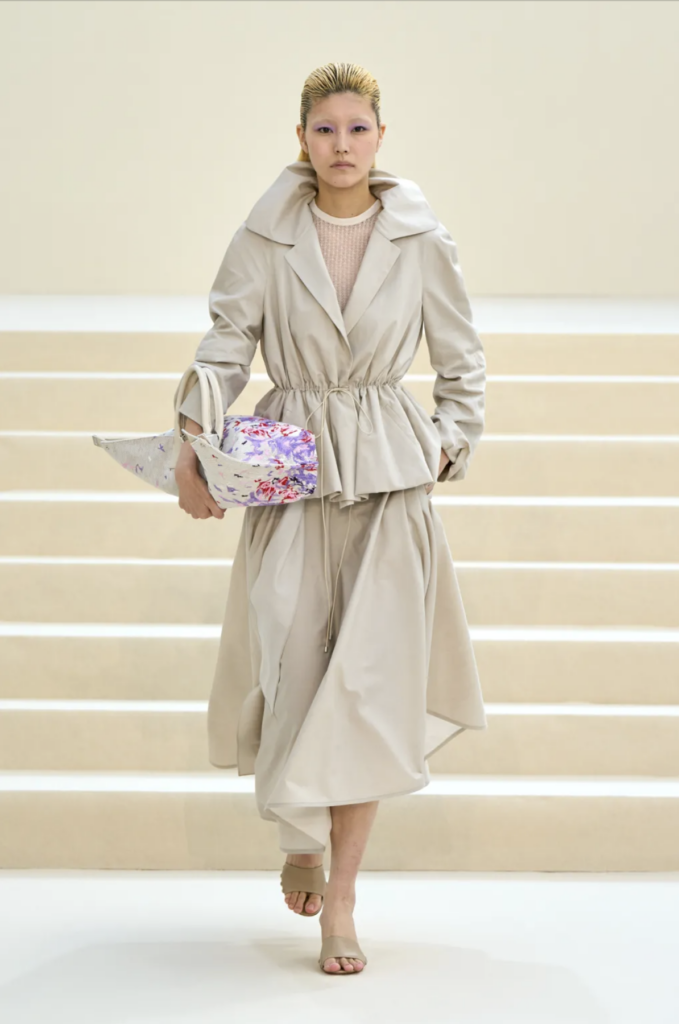
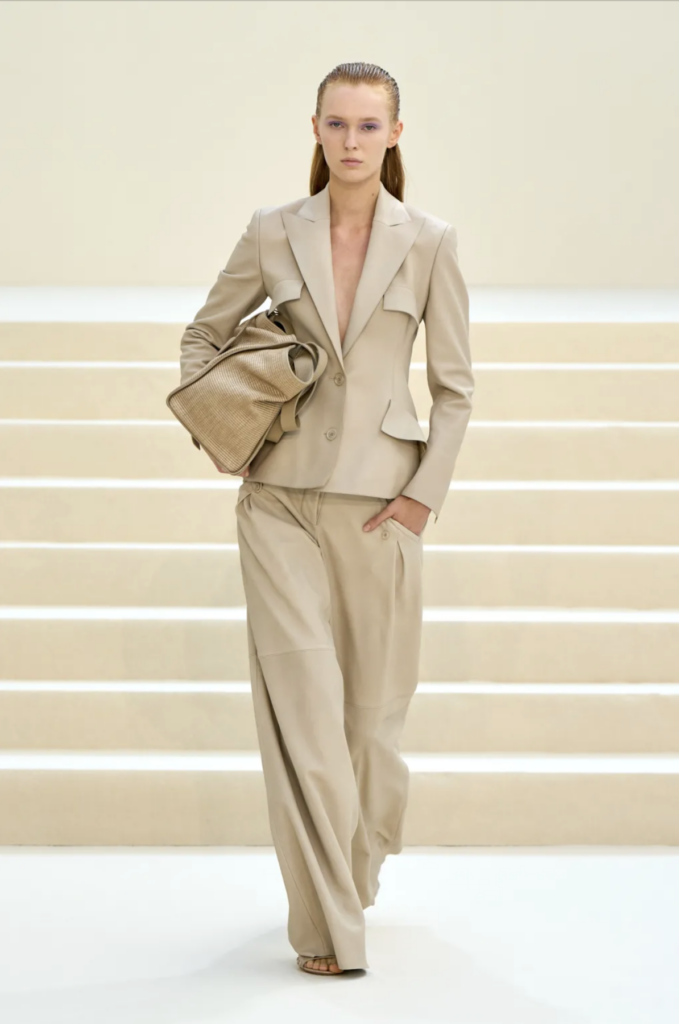
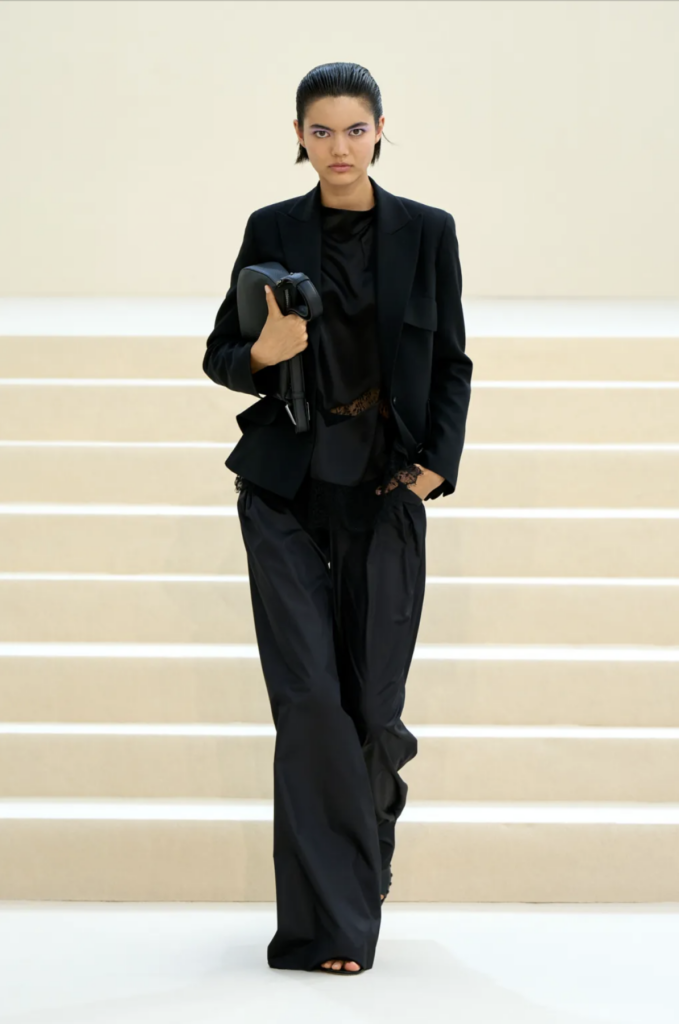
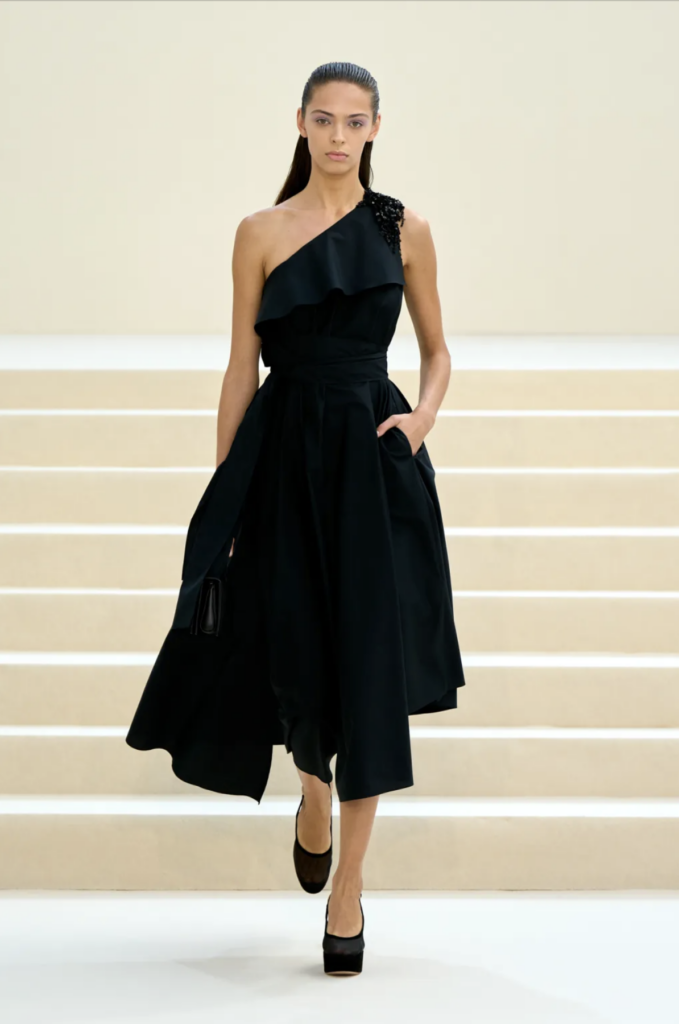
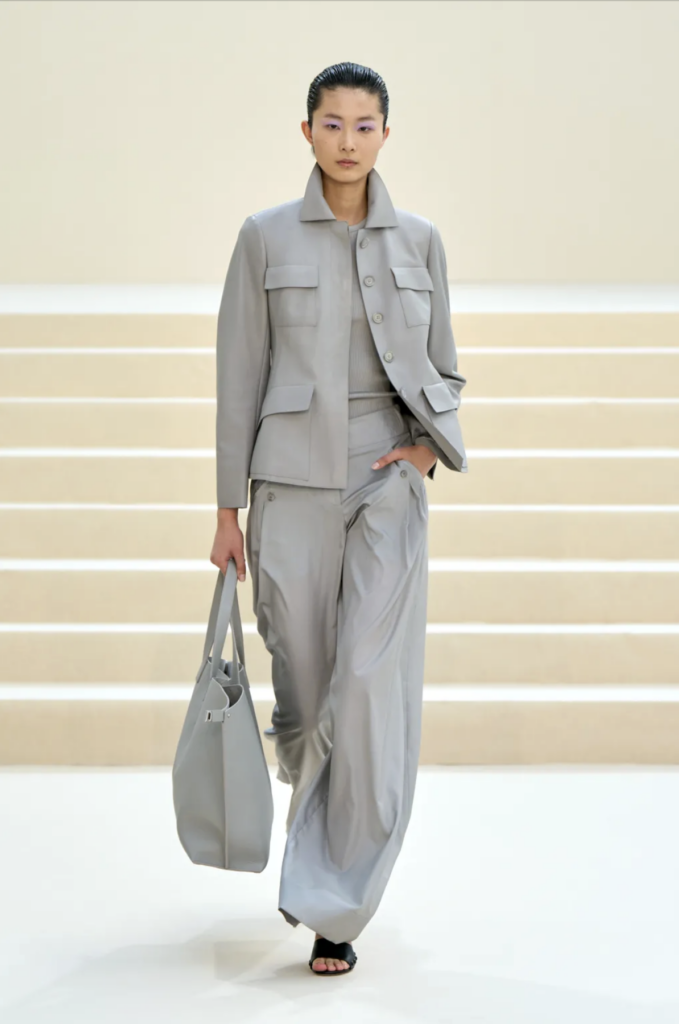
Against that expressive craftsmanship, Kriemler keeps the clothing recognizably Akris. Tailored pantsuits, coats, fluid dresses and tonal separates provide a disciplined foundation for the collection’s more painterly moments. Beige becomes especially important, allowing color to feel deliberate rather than overwhelming, while monochromatic dressing gives several looks an assured simplicity. The restraint is what makes the louder elements work.
There is also a meaningful connection to the house’s own history. Curving lace details draw from St. Gallen embroidery designs created by Kriemler’s grandmother Alice during the 1950s, linking the season’s contemporary art collaboration with generations of Swiss textile craftsmanship. Instead of treating heritage as something untouchable, Akris places it directly inside a modern conversation about creativity and making.
Spring 2027 succeeds because neither artist nor designer disappears inside the collaboration. Jungwirth’s restless color retains its energy, while Kriemler’s tailoring gives that energy somewhere to live. Akris did not turn paintings into clothes. It took the instinct behind the paintings and rebuilt it through fabric, movement and form. That distinction made the collection considerably more interesting.