
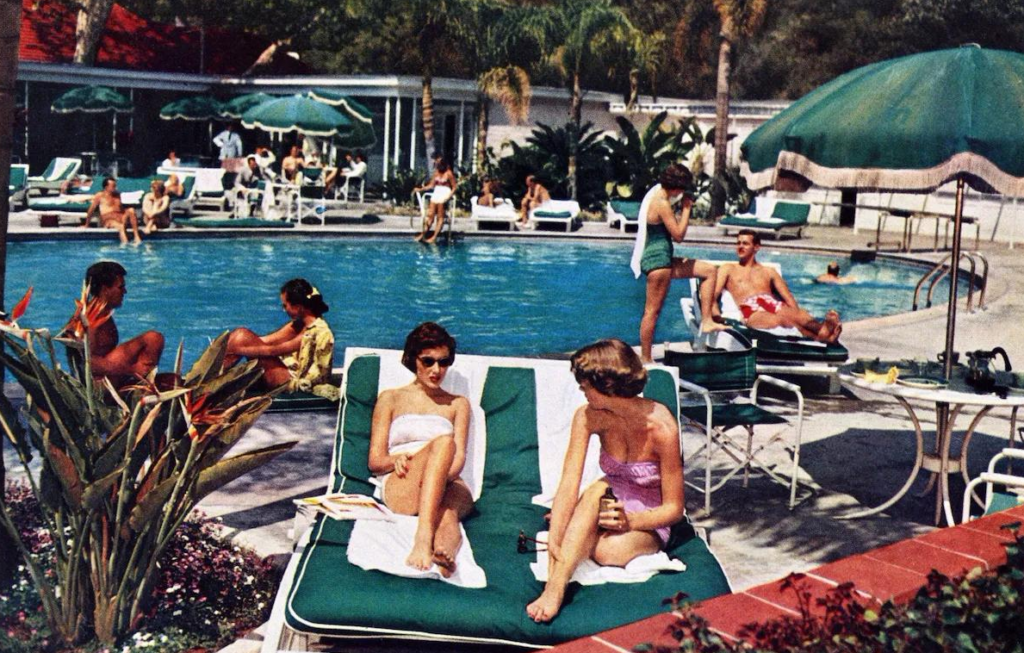
There are photographs that document a place, and then there are photographs that seem to explain an entire era. A 1951 image of the pool at Hotel Bel-Air belongs to the latter. Sunbathers lounge around an oval pool surrounded by palms and greenery, appearing almost untouched by the city beyond the canyon. There is no velvet rope, no visible performance of wealth and no need for spectacle. It is simply Los Angeles luxury at its most confident: private, relaxed and seemingly effortless.
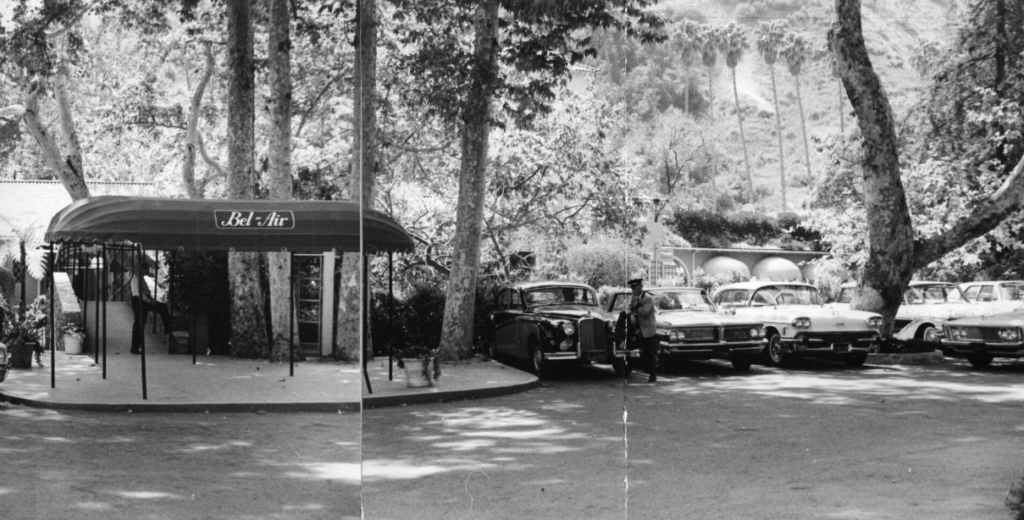
Although the photograph dates to 1951, Hotel Bel-Air had already been welcoming guests for five years. The property officially opened on August 24, 1946, after Texas hotel entrepreneur Joseph Drown purchased 18 acres from Alphonzo Bell, the businessman behind the development of Bel-Air. Bell’s original estate planning office would become part of the hotel’s Mission-style main building, while Drown and architect Burton Schutt transformed the secluded canyon property into an intimate luxury retreat.
The swimming pool seen in the famous photograph has its own unusual history. Before becoming one of Los Angeles’ most recognizable hotel pools, the site had been a horse-riding ring. Drown transformed it during the hotel’s development in the 1940s, creating the distinctive oval pool that remains a centerpiece of the property more than 75 years later. Today, the pool measures approximately 76 by 34 feet, but its importance has always been less about its dimensions than the world that formed around it.
By the early 1950s, Hotel Bel-Air was becoming a refuge for Hollywood rather than simply another place to be seen. That distinction matters. Los Angeles already had glamorous hotels, but Bel-Air developed a reputation for discretion. The gardens, private accommodations and canyon setting allowed famous guests to disappear from the machinery of celebrity for a while. Grace Kelly regarded it as a home away from home, Elizabeth Taylor lived at the property after marrying Nicky Hilton, and generations of actors, musicians, political figures and royalty eventually passed through its gates.
Marilyn Monroe became particularly associated with the hotel and its pool. Hotel Bel-Air notes that one of her celebrated Vogue photo sessions took place there, adding another chapter to the property’s connection with Hollywood imagery. The pool later appeared in the opening of the 1965 Dean Martin film The Silencers and on the cover of Bryan Ferry’s 1974 album Another Time, Another Place. What began as a converted riding ring gradually became part of the visual language of Los Angeles glamour.
Yet the 1951 photograph remains compelling precisely because it predates much of that mythology. There are no obvious celebrities demanding our attention. Instead, the image presents luxury as atmosphere: green umbrellas, bathing suits, sunlight, landscaping and people with apparently nowhere else they need to be. It captures an era when Southern
California itself was being sold to the world as a lifestyle, and Hotel Bel-Air appeared to offer one of its most refined versions.
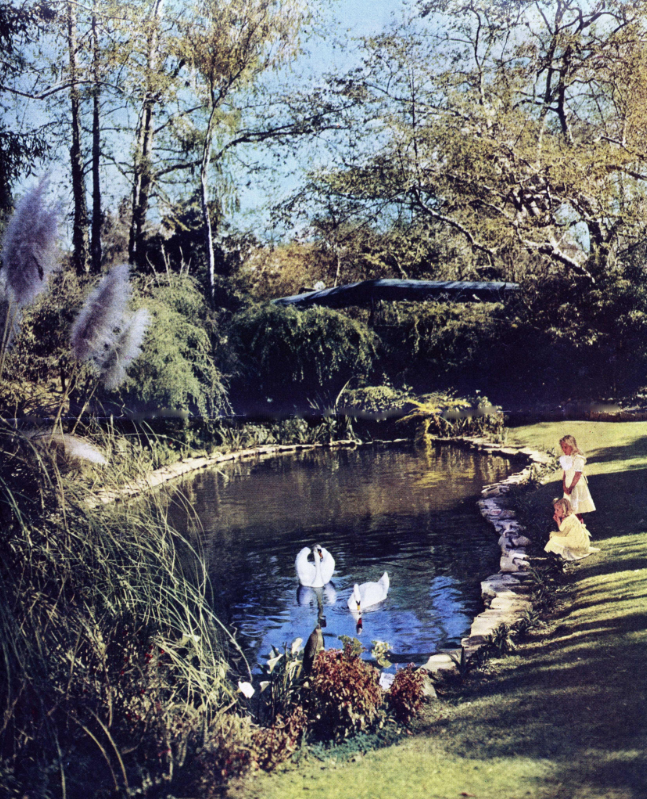
The hotel has evolved considerably since that photograph was taken. Hotel Bel-Air became part of Dorchester Collection in 2008 and later underwent an extensive two-year renovation involving designer Alexandra Champalimaud and Rockwell Group. Today the property contains 103 rooms and suites within 12 acres of landscaped gardens, while preserving the residential scale, gardens, swans and sense of retreat that have long defined its identity.
That continuity may be the most interesting part of the Hotel Bel-Air story. Luxury hospitality has become bigger, louder and increasingly designed for instant visibility. Hotel Bel-Air built its reputation around almost the opposite idea. Its greatest attraction was the ability to disappear.
Look again at the pool in 1951 and the formula becomes remarkably clear. Privacy. Nature. Beauty. Space. Service without spectacle.
More than seven decades later, those qualities still feel luxurious.