
Two one-of-a-kind Porsche 911s, a mechanical dashboard clock, bespoke Louis Vuitton luggage and an entire wardrobe prove that the most compelling luxury collaborations are no longer about simply placing one logo beside another.
There are luxury collaborations, and then there are projects so obsessively considered that the word “collaboration” almost feels insufficient. Louis Vuitton’s work with Singer belongs firmly in the second category. Built around two classic Porsche 911s reimagined by Singer, the project brings automotive engineering, leather craftsmanship, trunk making, fashion and Swiss watchmaking together in a way that feels less like branded merchandise and more like the construction of an entirely new luxury world.
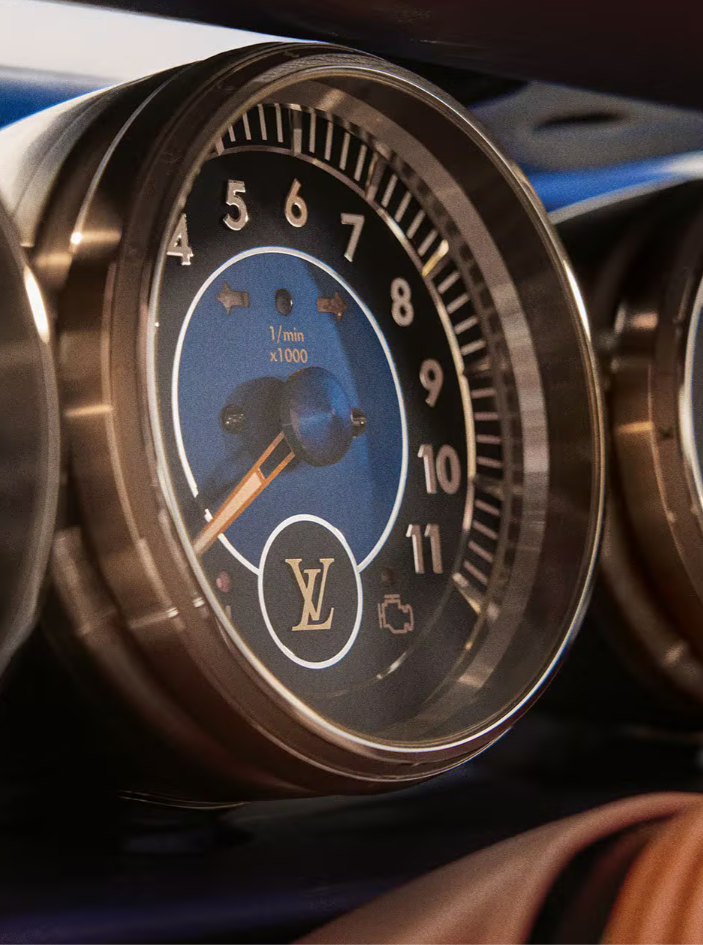
The story began surprisingly small. Singer approached La Fabrique du Temps Louis Vuitton in Switzerland about creating a mechanical dashboard clock for a car. That single object became the catalyst for something much larger. Louis Vuitton and Singer ultimately began reconsidering virtually every tactile and visual element of the automobile, from the instrumentation and switches to the leather, luggage and clothing that would accompany it. The project became Louis Vuitton’s first complete automotive undertaking of this kind and one of the clearest expressions yet of the House’s historic “Art of Travel” philosophy.
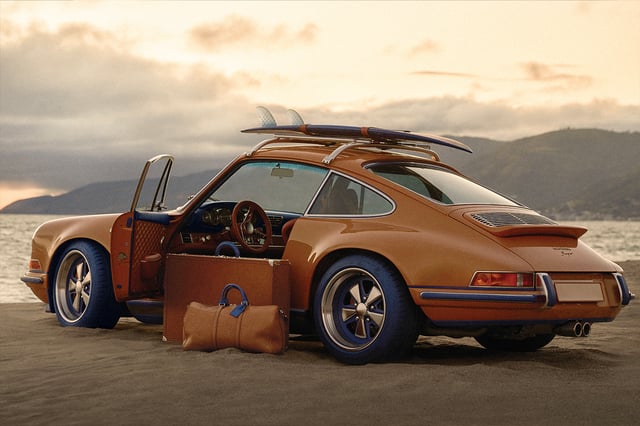
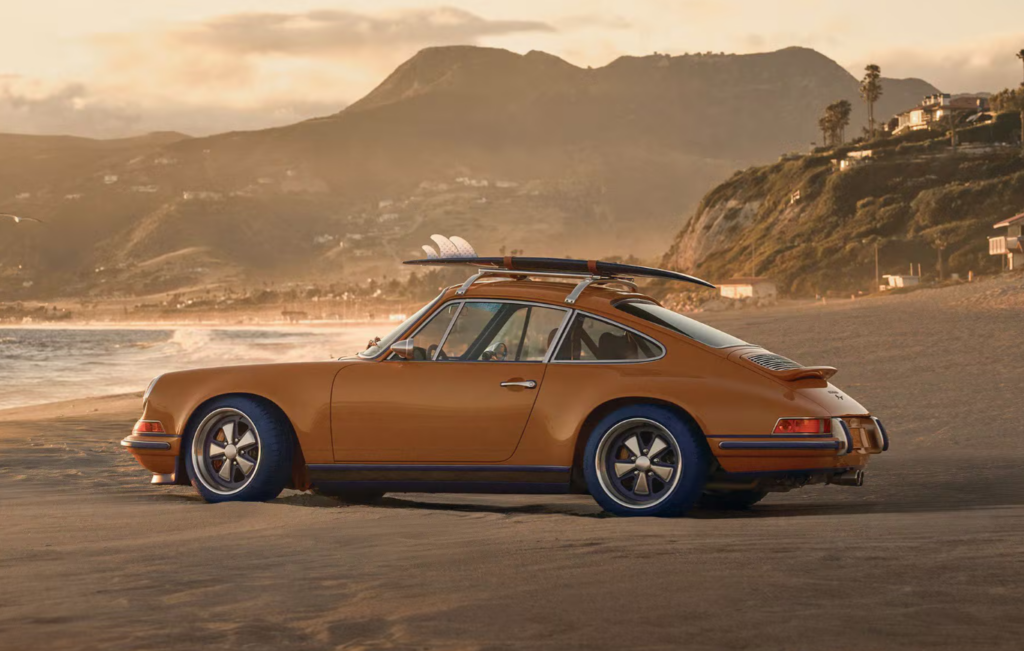
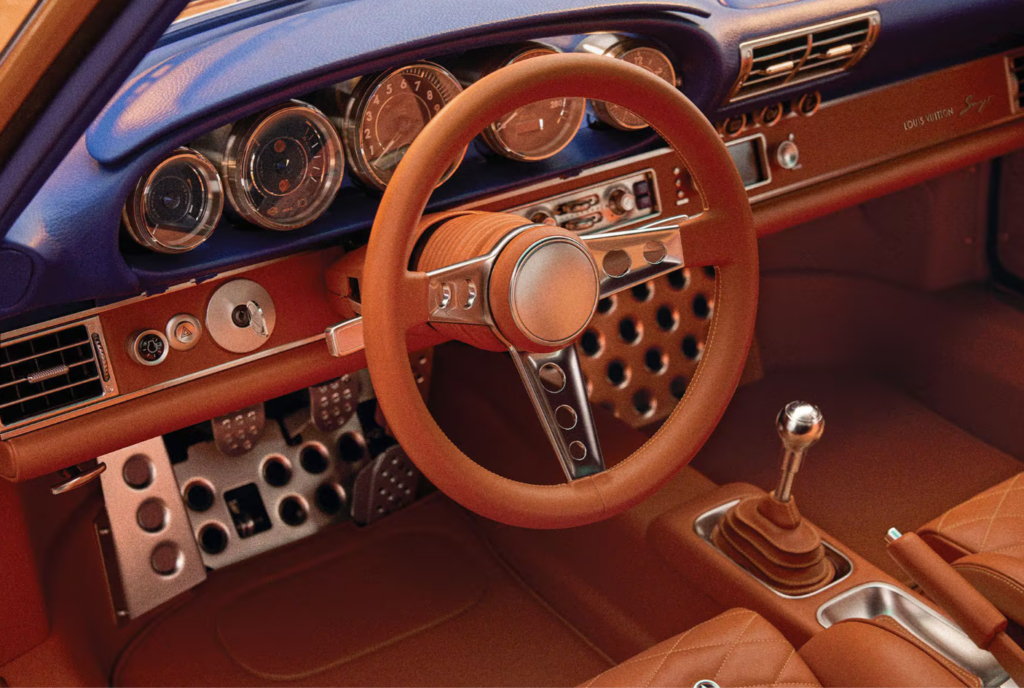
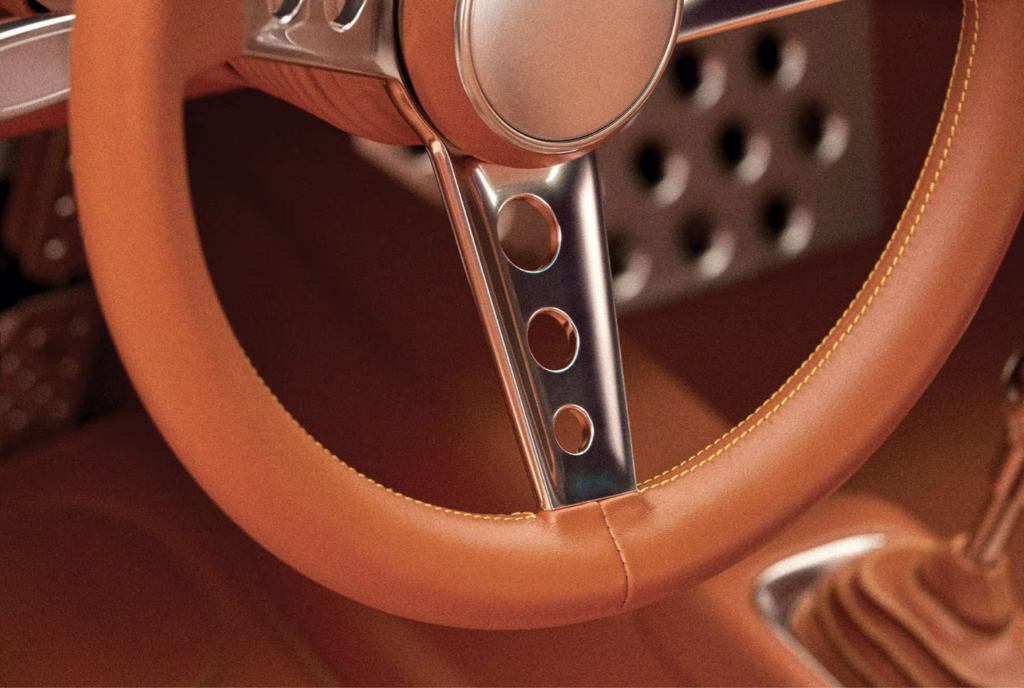
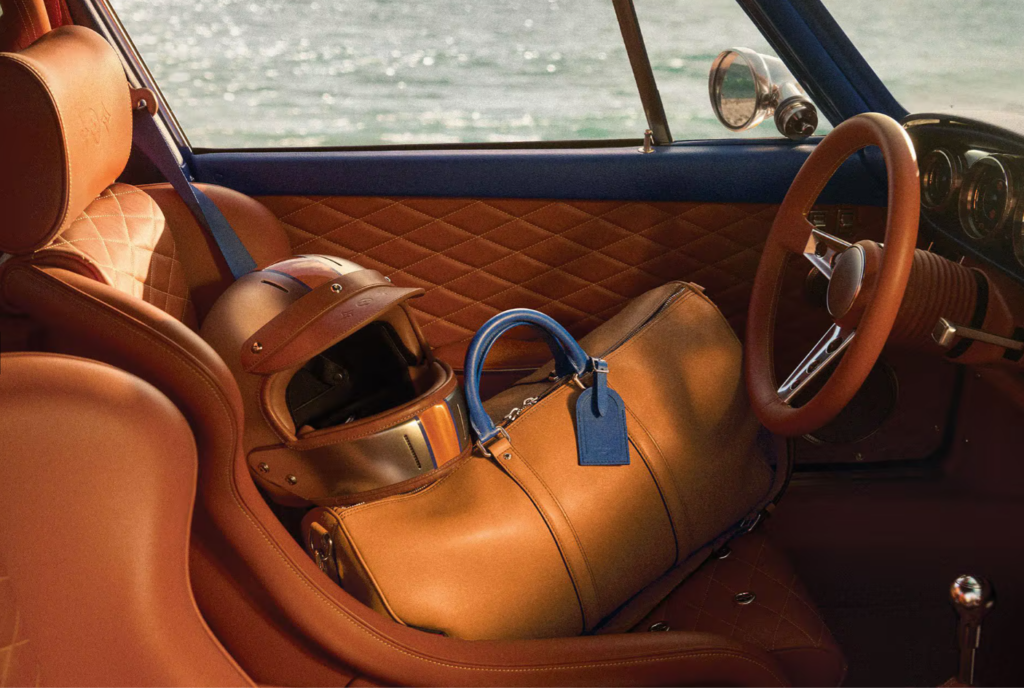
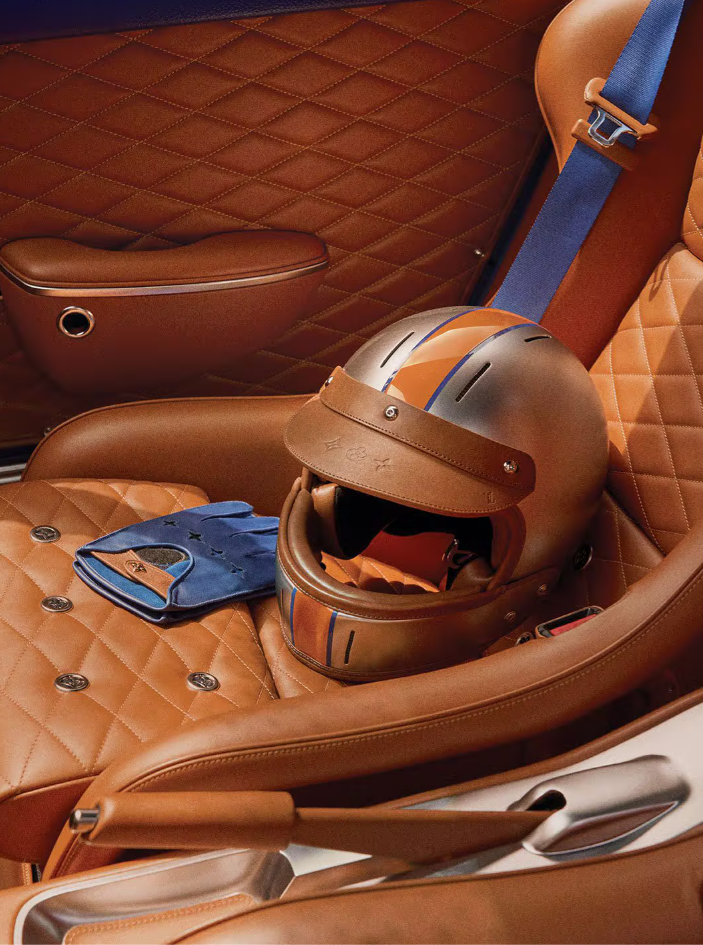
The first car, the Porsche 911 Reimagined by Singer – Classic, is almost impossible to separate from its color story. Finished in saffron with cobalt blue and yellow accents, the coupé connects Louis Vuitton’s visual heritage with Singer’s own history. Beneath that presentation sits a naturally aspirated 4.0-liter flat-six paired with a six-speed manual transmission and carbon-ceramic brakes. Yet the engineering is only half the story. Inside, natural-toned leather, yellow stitching, diamond-pattern embossing inspired by the interiors of Louis Vuitton trunks and hand-finished metal components transform the cabin into something closer to a piece of functional craftsmanship than a conventional automotive interior.
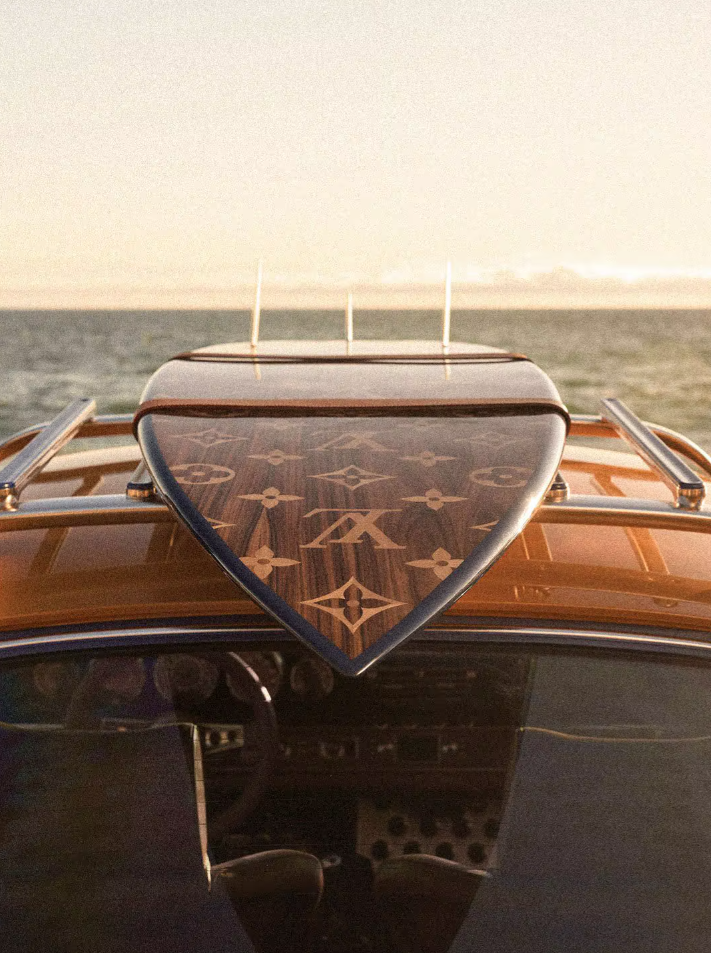
Its luggage system pushes the concept further. Louis Vuitton created bags specifically shaped around the 911’s available storage spaces, while a custom roof rack can accommodate a fitted trunk, skis or a handcrafted surfboard. The clothing capsule continues the same language with a leather racing jacket, driving footwear, gloves and a bespoke helmet. Rather than designing accessories that merely match the automobile, Louis Vuitton treated the driver, luggage and car as parts of one environment.
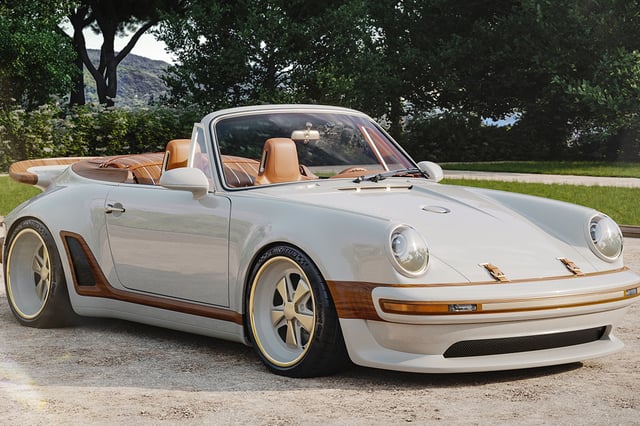
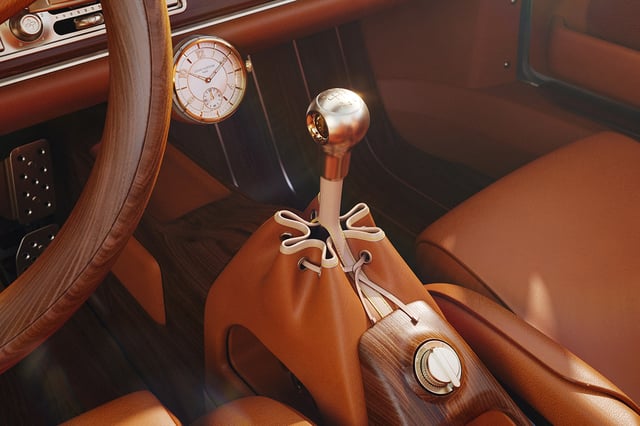
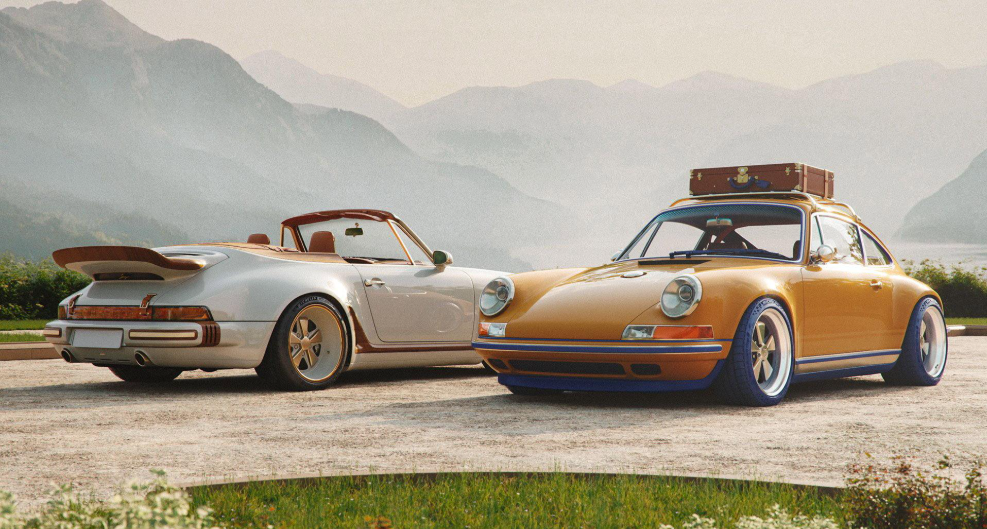
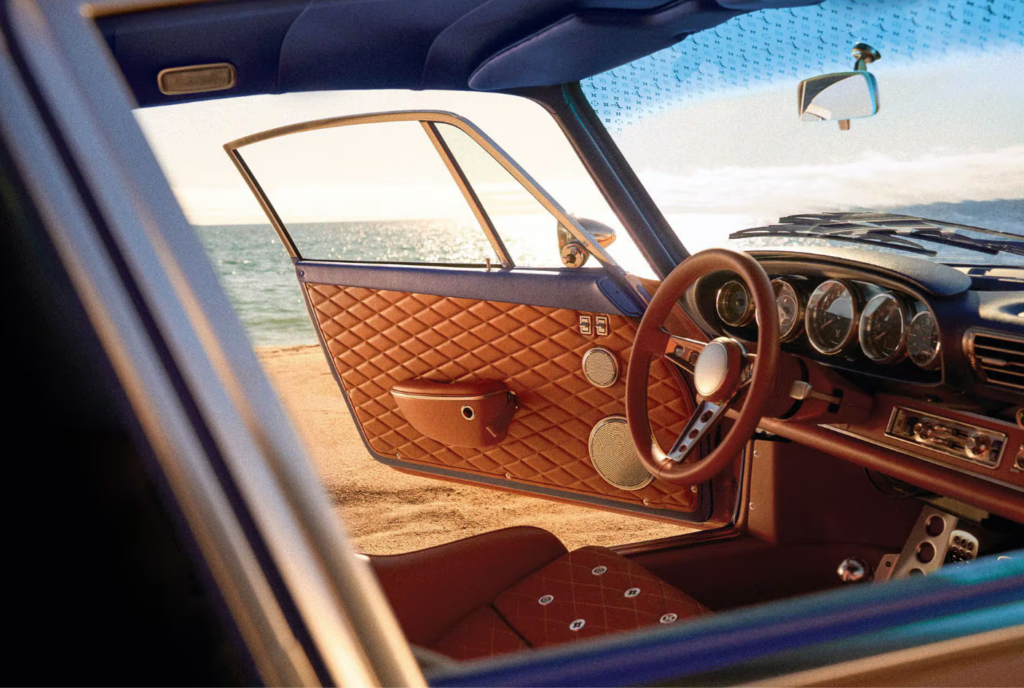
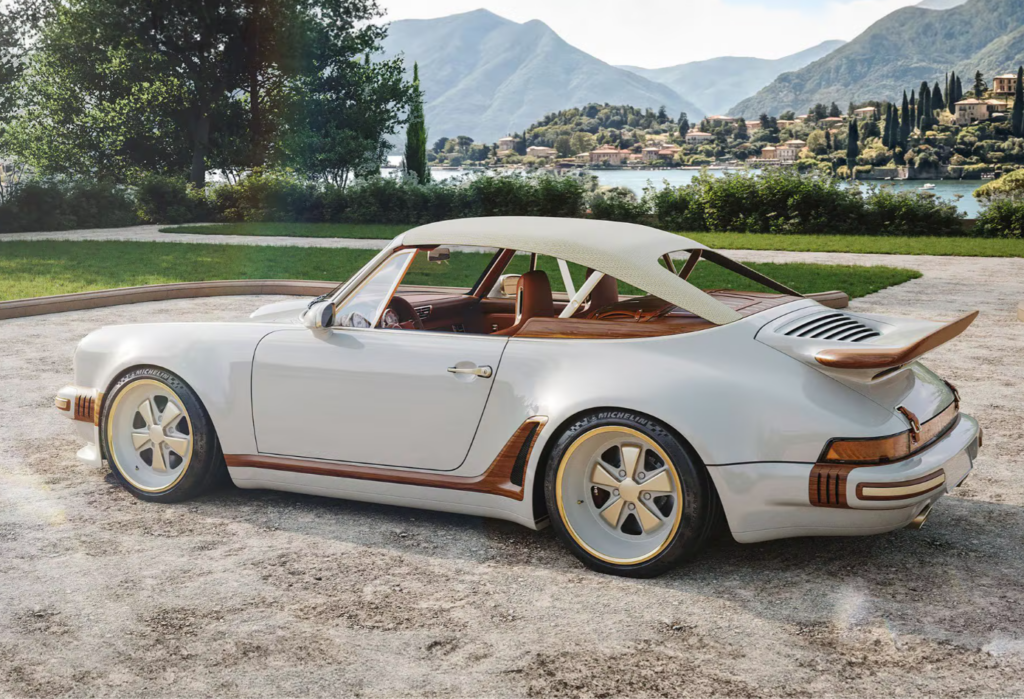
The Porsche 911 Reimagined by Singer – Classic Turbo approaches luxury from an entirely different perspective. Conceived with Nicolas Ghesquière, Louis Vuitton’s Artistic Director of Women’s Collections, the turbocharged cabriolet is finished in Calcaire Lutétien white with natural leather, gold-toned detailing and extensive woodwork. The inspiration moves away from motorsport and toward the elegance of classic motorboats, even extending to a rear luggage compartment finished with a teak-inspired deck. A 3.8-liter twin-turbo flat-six and six-speed manual transmission ensure that beneath the refinement, this remains a serious driver’s machine.
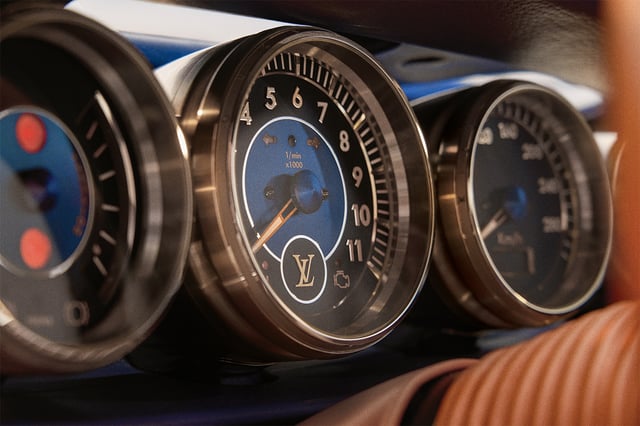
Then there is the watchmaking. The mechanical dashboard clock that started the project can be removed from the vehicle and placed on its own stand as a desk clock. The hand-wound mechanism offers an eight-day power reserve, while the surrounding gauges were redesigned with references to Louis Vuitton’s Tambour watch language. On the Classic Turbo, that relationship extends to a dedicated 40mm Tambour Automatic wristwatch executed in ceramic and yellow gold and paired with a capsule that includes a made-to-measure parachute-silk suit, gloves, sunglasses, footwear and a helmet.
What makes the project especially compelling is the historical logic behind it. Louis Vuitton’s connection to transportation predates the modern luxury automobile. The House was creating specialized trunks for motorcars around the turn of the 20th century, adapting luggage to fit new methods of travel as automobiles became increasingly important. Seen through that lens, the Singer project is less of a departure for Louis Vuitton than a highly contemporary return to one of its oldest ideas: that the objects surrounding a journey deserve as much consideration as the destination itself.
Singer is an equally logical partner. The California-founded company has built its reputation by taking classic Porsche 911s and obsessively reimagining them around individual owners. Its philosophy revolves around beauty, craftsmanship and engineering—principles that overlap naturally with the way Louis Vuitton approaches its most ambitious projects. Importantly, this is a Louis Vuitton and Singer collaboration built around classic Porsche 911s, rather than a conventional factory fashion tie-up with Porsche itself.
There is also a broader lesson here about where the highest tier of luxury is moving. Exclusivity alone is no longer enough. Logos alone are certainly not enough. The real currency is coherence: the sensation that every material, mechanism, color, accessory and physical interaction belongs to the same idea. In these cars, the watch does not feel added to the dashboard, the luggage does not feel added to the trunk and the fashion does not feel added to the campaign. Each element appears to have been considered simultaneously.