

From a giant chrysalis to insect-covered tailoring and a final metamorphosis, Thom Browne closed New York Fashion Week by letting nature invade one of fashion’s most controlled wardrobes.
There are designers who build collections around clothes, and there are designers who build entire worlds around them.
For Spring 2027, Thom Browne gave New York both.
Closing New York Fashion Week, Browne staged his latest womenswear collection around a giant chrysalis surrounded by greenery—a theatrical centerpiece that immediately established the evening’s central idea: transformation.
Caterpillars appeared around it. One entered the cocoon.
Then Browne’s clothes began to emerge.
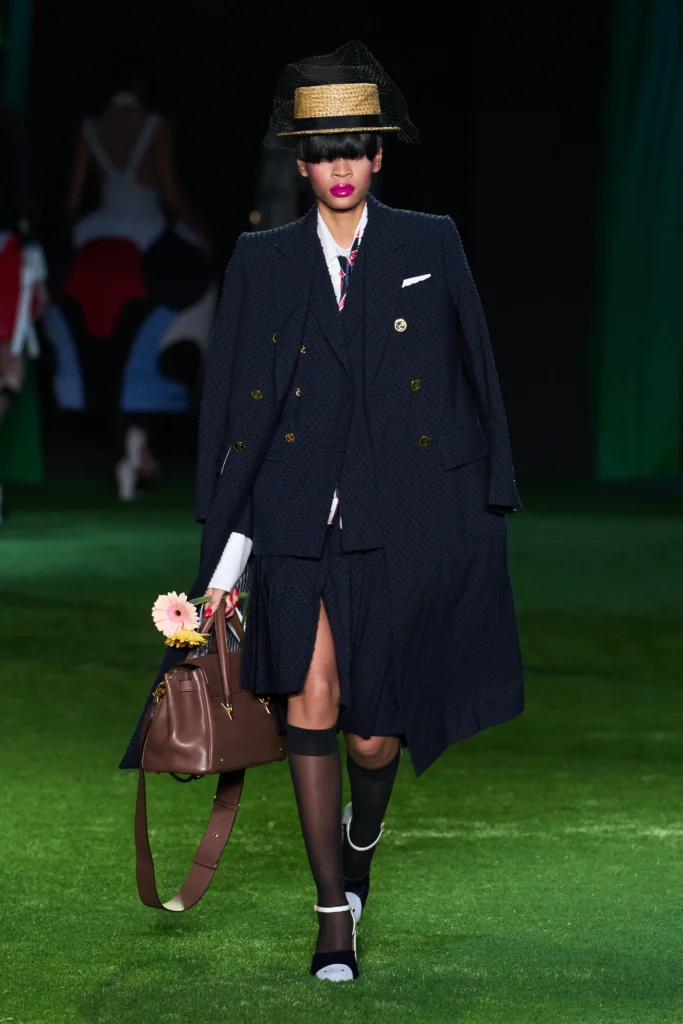
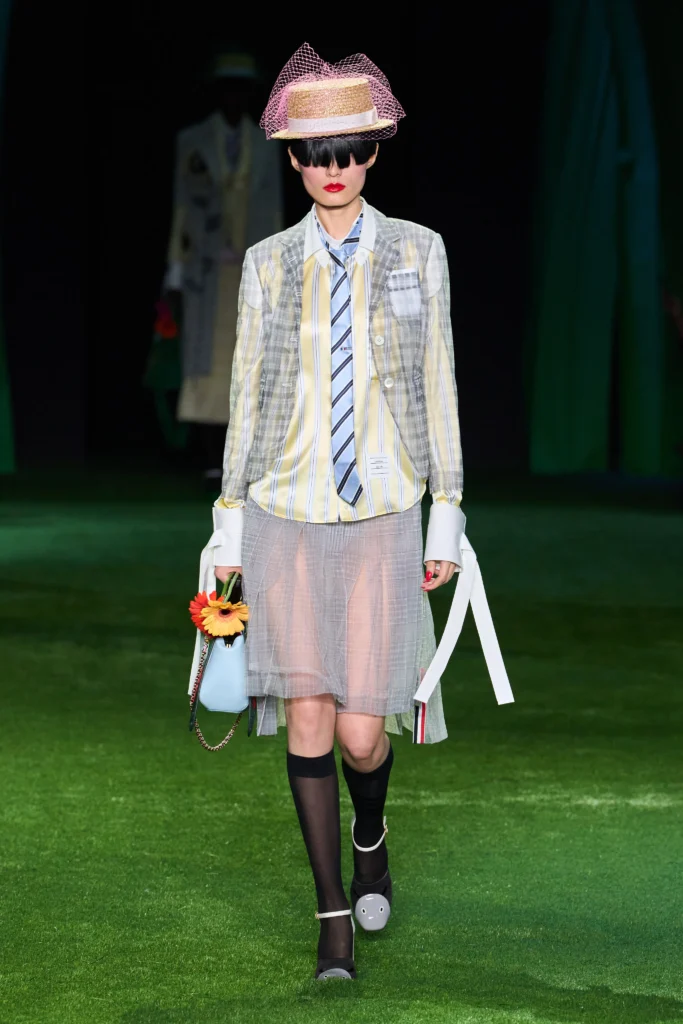
What followed was a 61-look progression that moved between the highly controlled tailoring synonymous with the designer and something increasingly organic, dimensional and strange.
The Uniform Meets the Garden
Browne has spent years turning the language of institutional dress into something instantly identifiable.
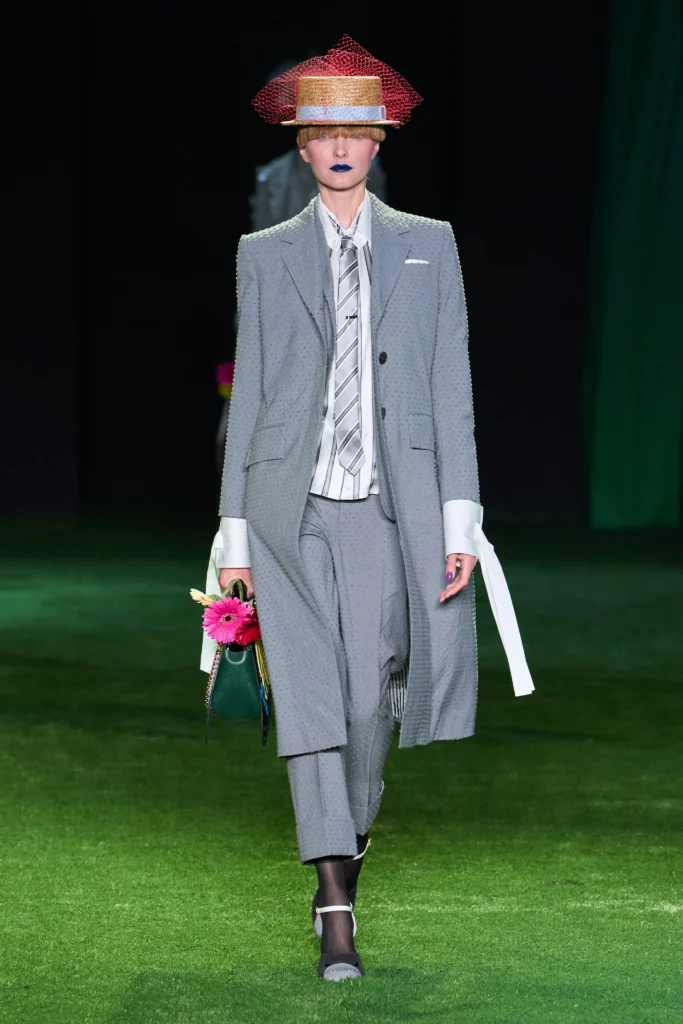
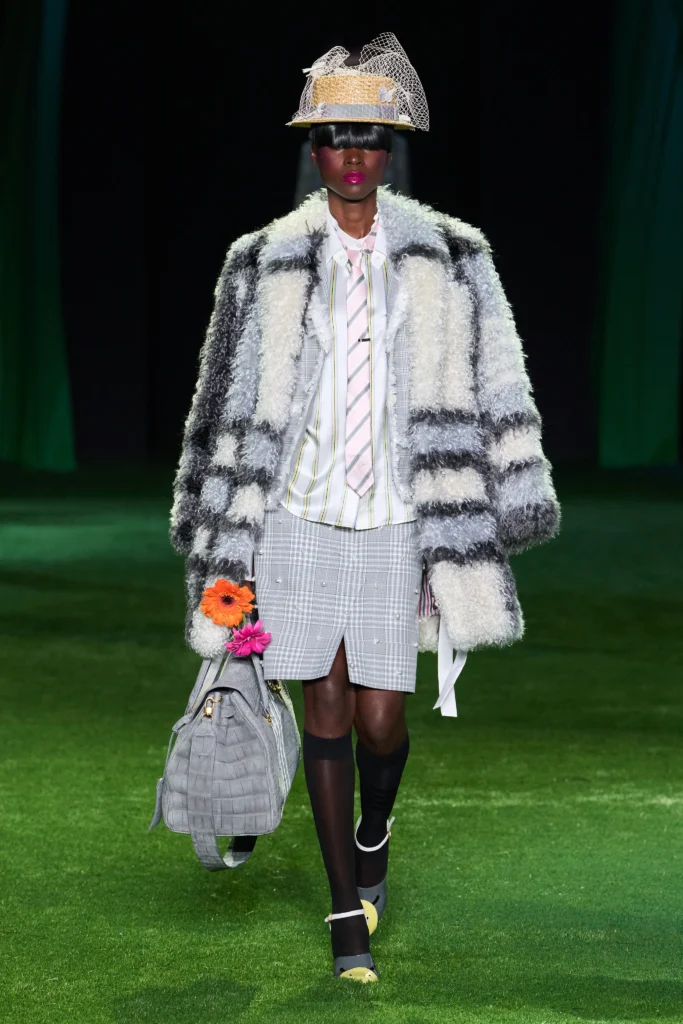
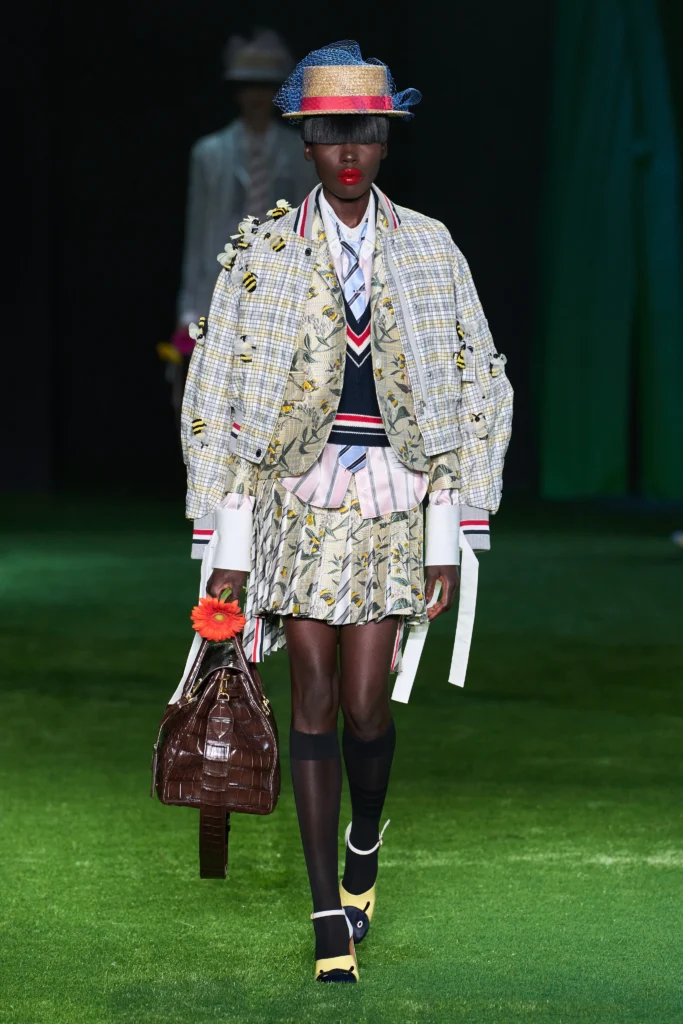
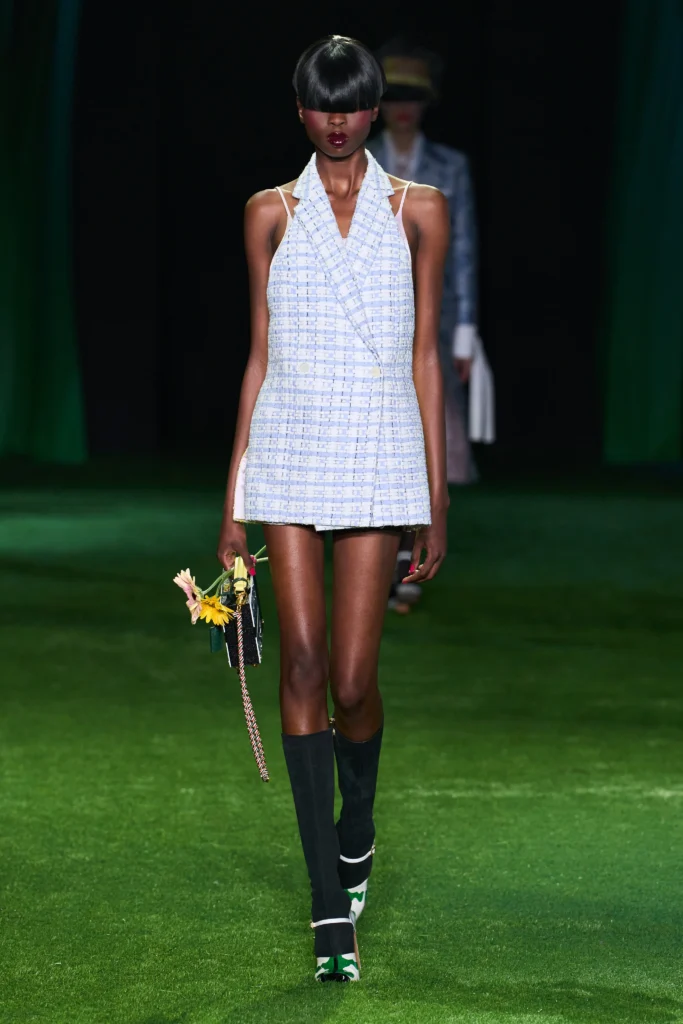
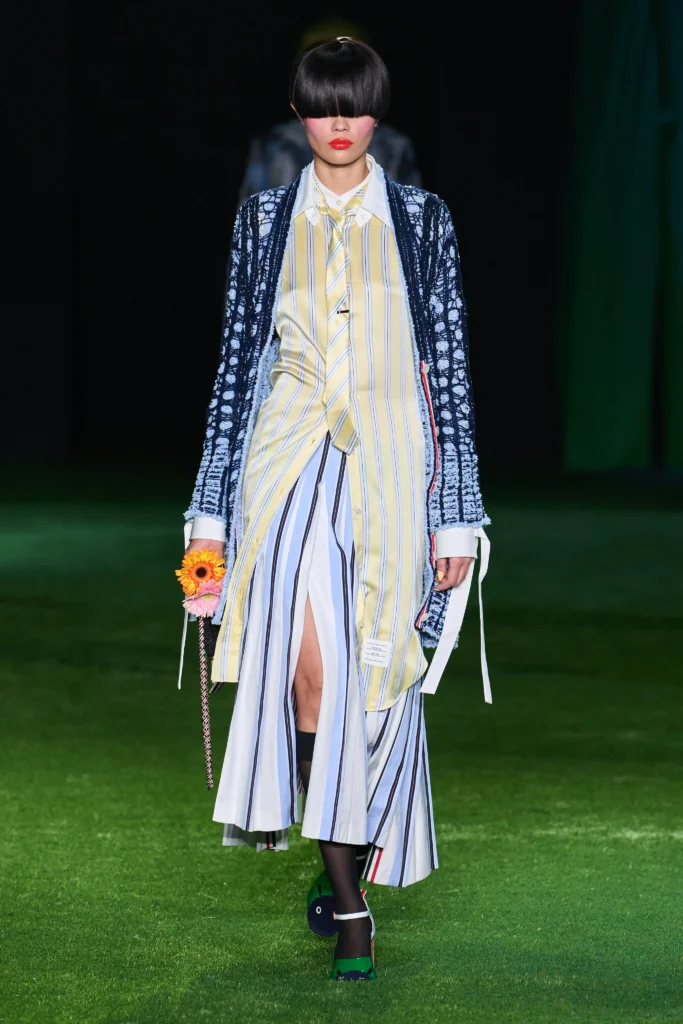
Tailored coats. Narrow ties. Shirts. Skirts. Jackets built around deliberate proportions.
Spring 2027 did not abandon that vocabulary.
Instead, nature began invading it.
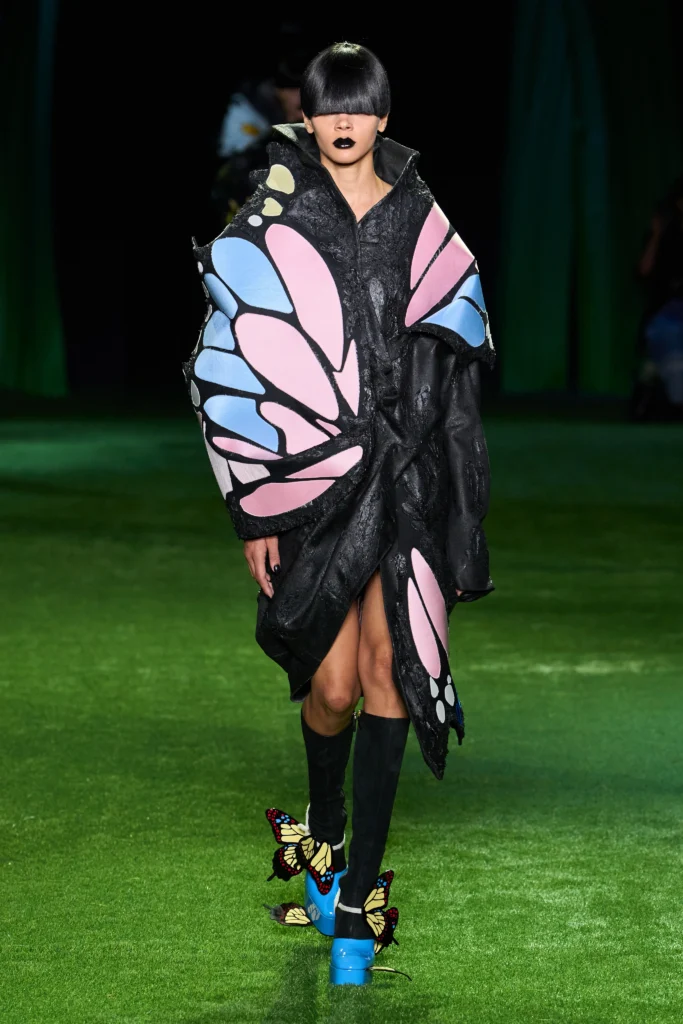
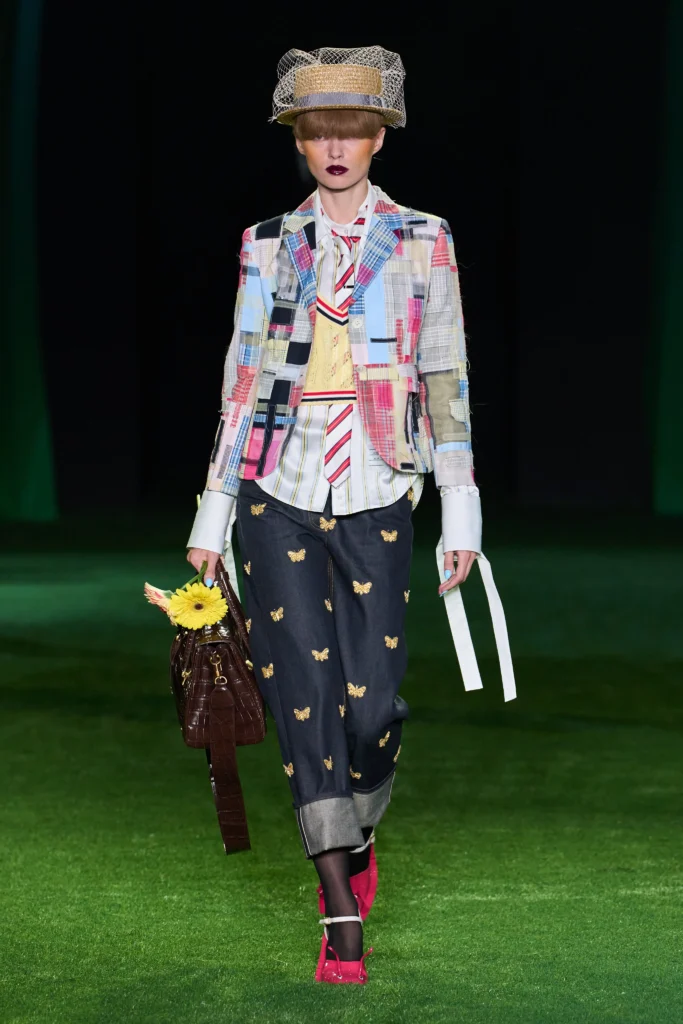
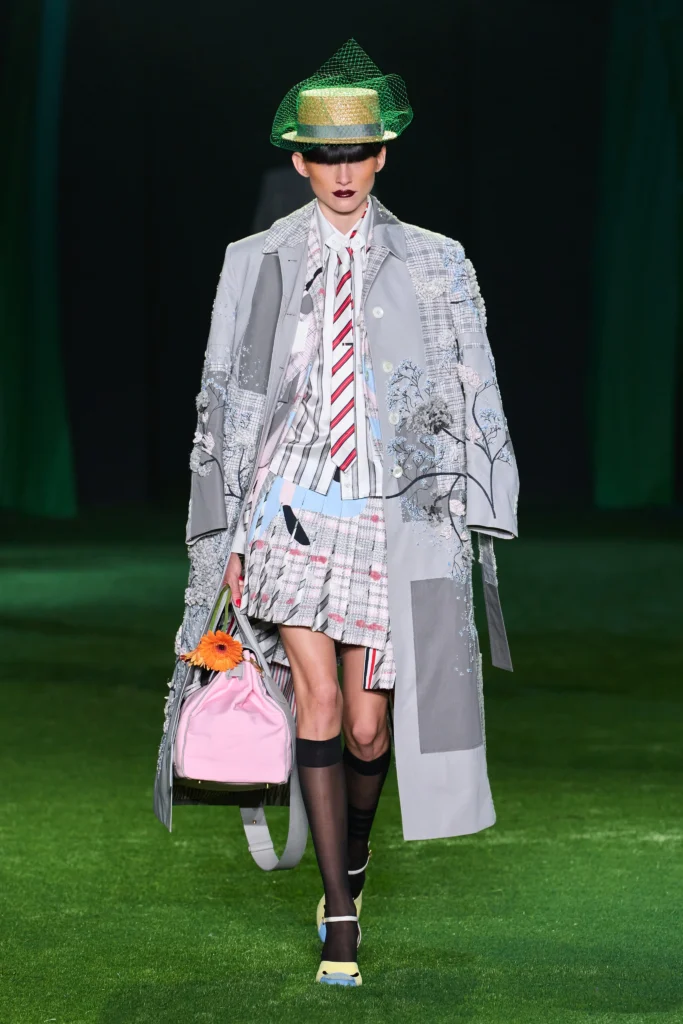
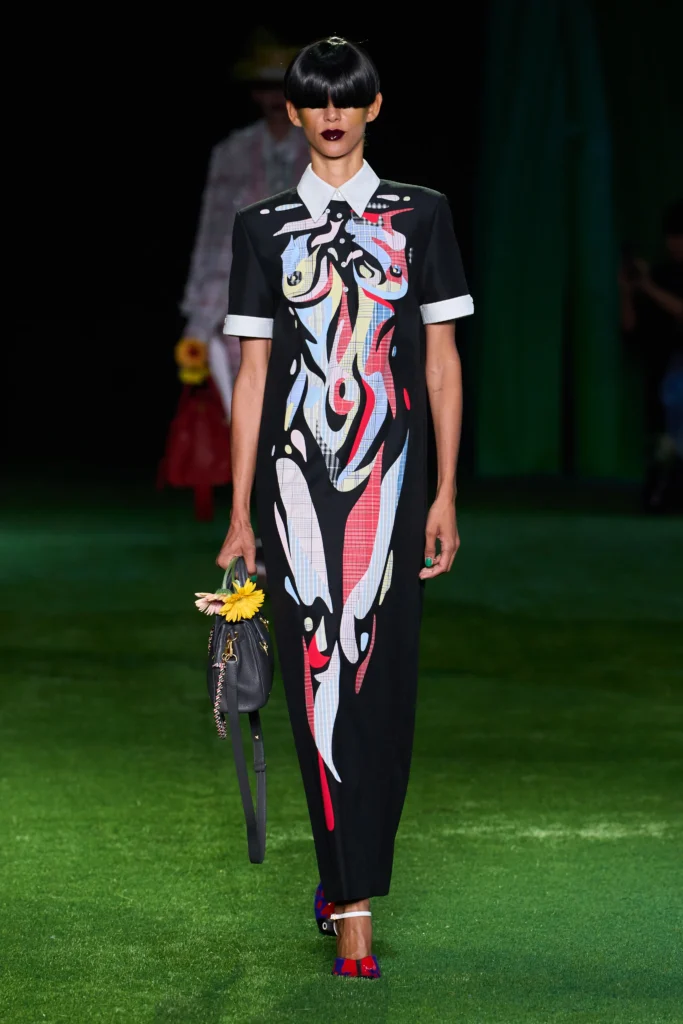
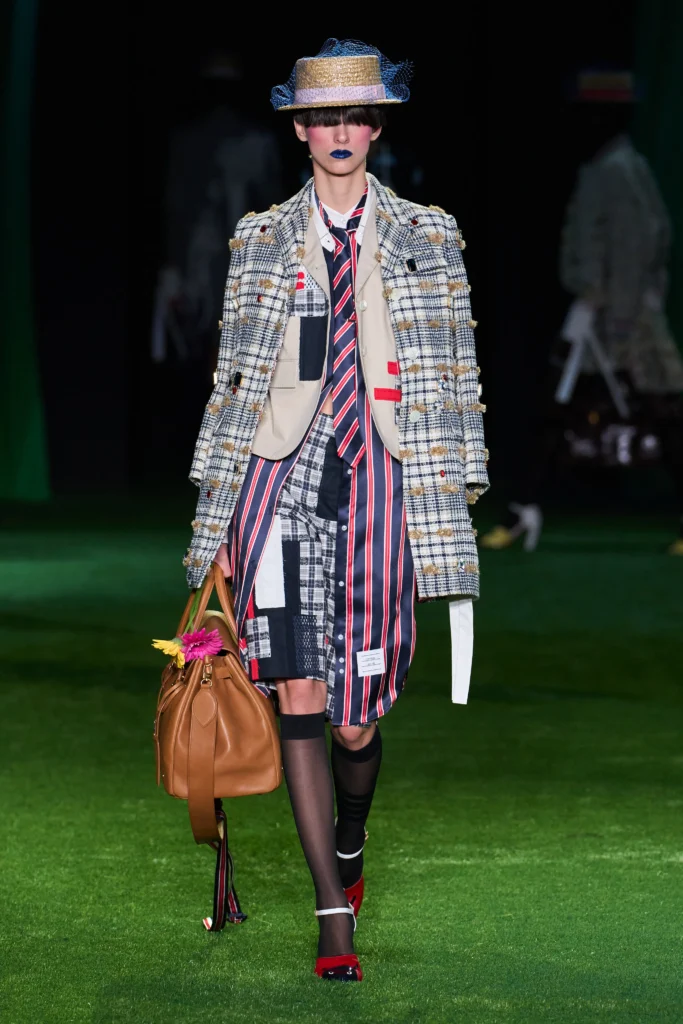
A flower might appear against an otherwise disciplined jacket. Bees, dragonflies and other insects became embroidery and woven surface decoration. Butterflies stretched across garments. What initially appeared ornamental gradually became structural.
That progression is important.
This wasn’t simply a collection covered in insects.
The clothes themselves began behaving like them.
From Decoration to Anatomy
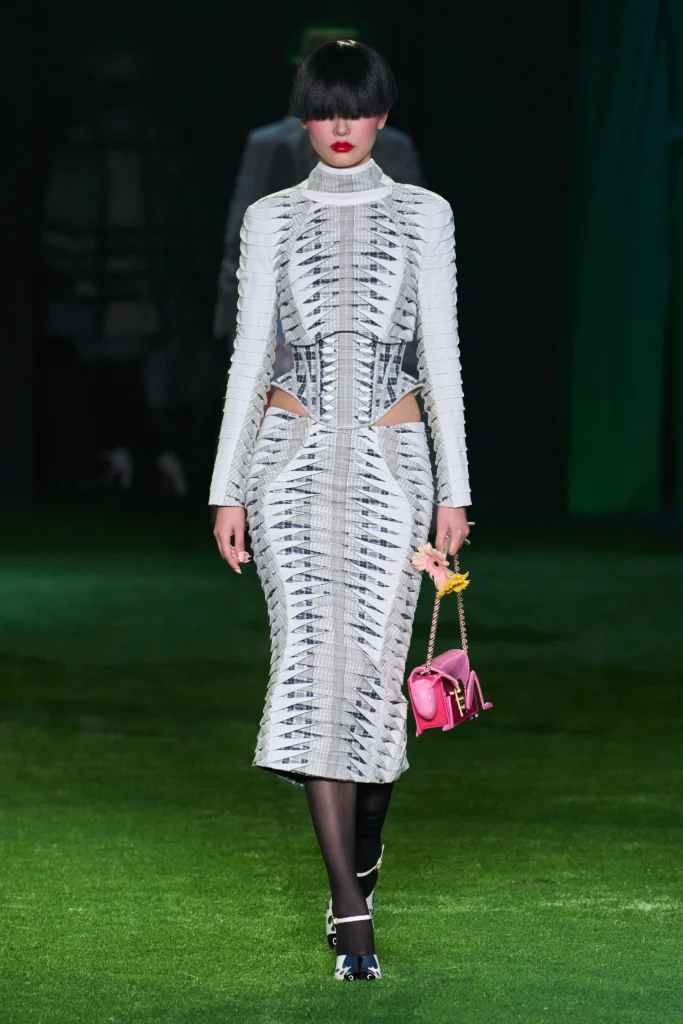
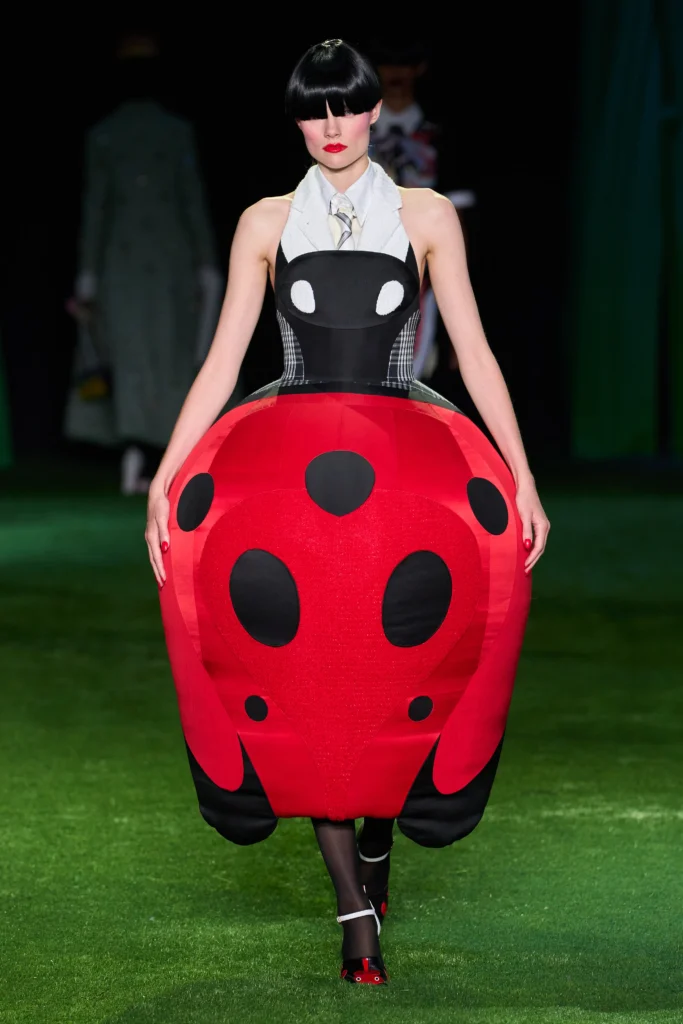
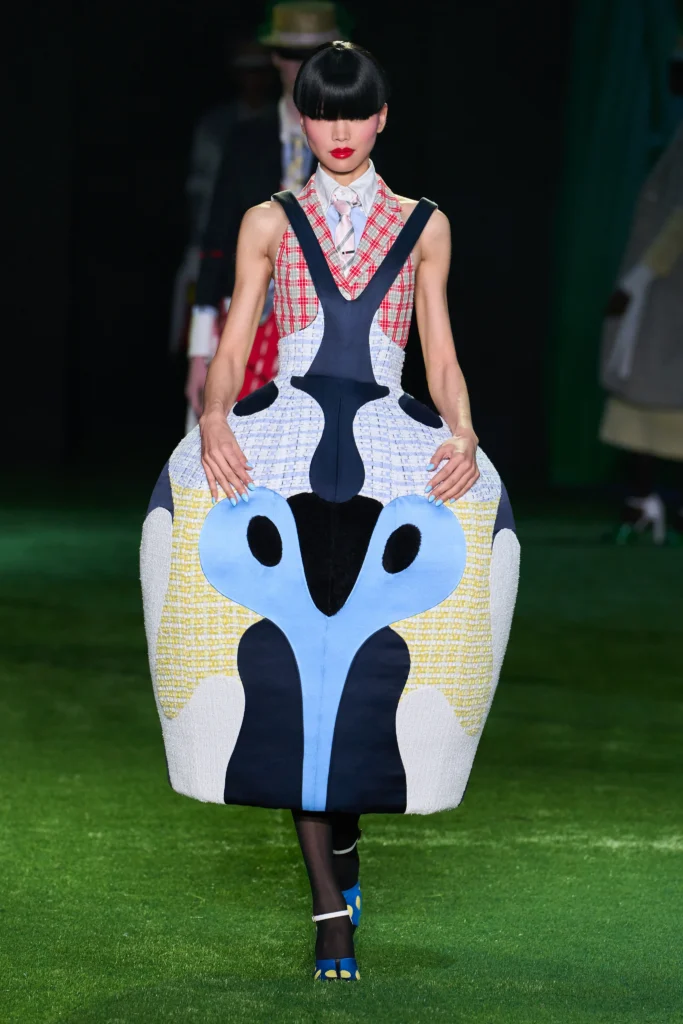
As the show developed, Browne pushed beyond embroidered bugs into silhouettes that referenced shells, wings and insect bodies.
Dimensional constructions expanded away from the body. Rounded skirts recalled hard outer shells. Fitted bodices sat against exaggerated forms. Other looks used complex folding and manipulation to create almost anatomical surfaces.
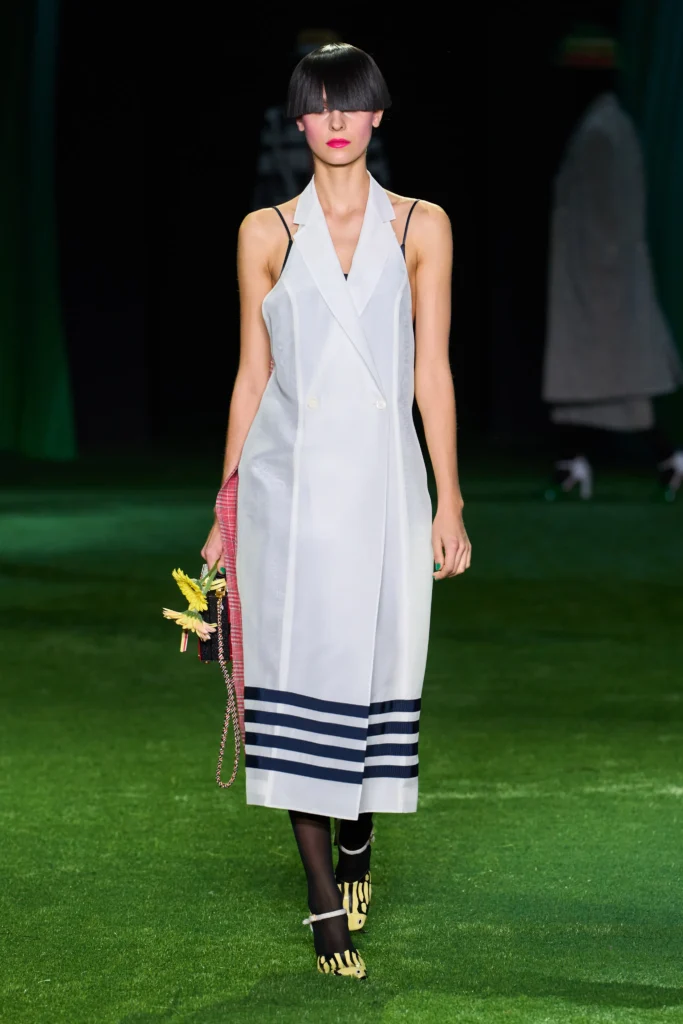
The runway archive shows Browne moving repeatedly between formal coats and suits, skirts, tartans, dresses and handbags before reaching more theatrical capes, gowns and sculptural evening shapes toward the finale.
That back-and-forth stopped the collection from becoming costume.
Even at its strangest, you could still see Thom Browne underneath it.
A Story That Started Earlier
The insect world wasn’t entirely new.
Browne’s Spring 2027 menswear collection, shown earlier in Milan, also explored insects and garden imagery. There, Browne identified Pixar’s 1998 film A Bug’s Life as one of the starting points.
Menswear featured spiders, bees, dragonflies, crickets and other entomological references against Browne’s familiar preppy foundations.
New York turned the idea into a larger narrative.
Instead of merely placing insects onto clothing, the womenswear presentation structured an entire runway around the lifecycle itself.
Caterpillar.
Cocoon.
Transformation.
Butterfly.
Why It Matters
For PMG, the more interesting element is the conflict between control and transformation.
Few contemporary designers have created a visual system as recognizable as Browne’s. His work thrives on rules: precise tailoring, uniforms, repeated proportions and familiar codes.
Spring 2027 succeeds because the designer didn’t destroy that system to make something new.
He allowed it to mutate.
The tailored jacket remained.
The tie remained.
The formal coat remained.
But insects landed on them. Shapes expanded. Bodies became armored. Traditional tailoring slowly crossed into fantasy.
Metamorphosis therefore wasn’t only the show’s theme.
It became its construction method.
61 Looks Later
By the closing sequence, the collection had traveled a considerable distance from its disciplined opening.
Vogue’s runway archive records 61 collection looks before Browne’s own finale appearance.
And the figure associated with the chrysalis ultimately returned transformed as a butterfly, completing the narrative established before the first look had properly begun.
It was an unusually literal ending.
For this collection, that was exactly the point.
Browne began with one of nature’s simplest ideas—something entering one form and emerging as another—and filtered it through one of fashion’s most disciplined design languages.
The result was recognizably Thom Browne.
Just with wings.