
FIAT’s latest concept can move from family vehicle to open-bed pickup in a matter of movements, proposing something increasingly rare in automotive design: a car built around the way people actually live.
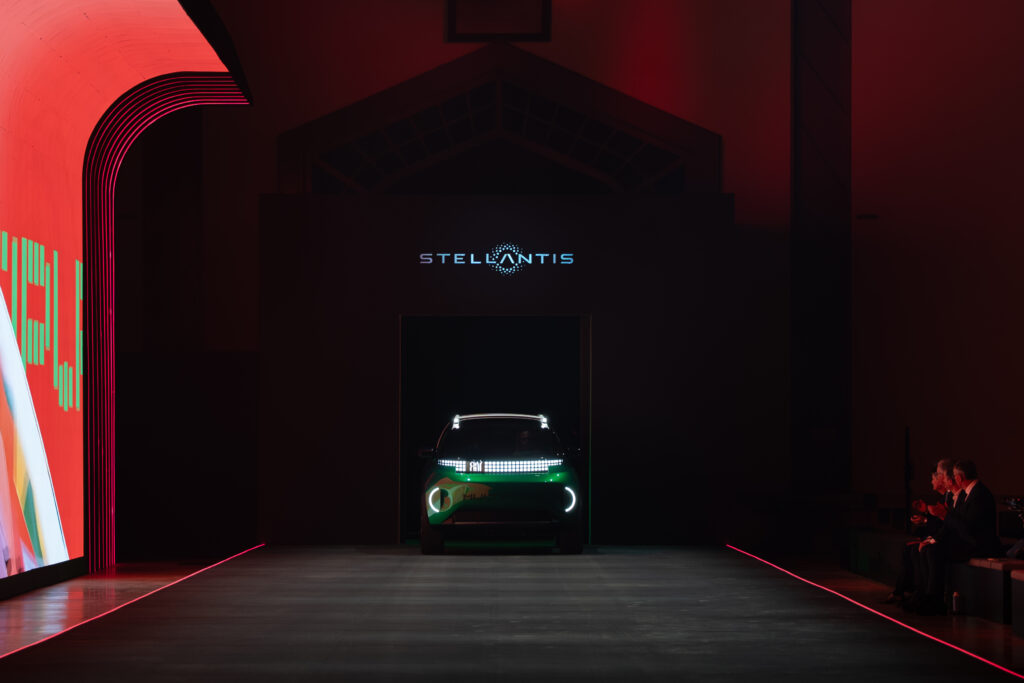
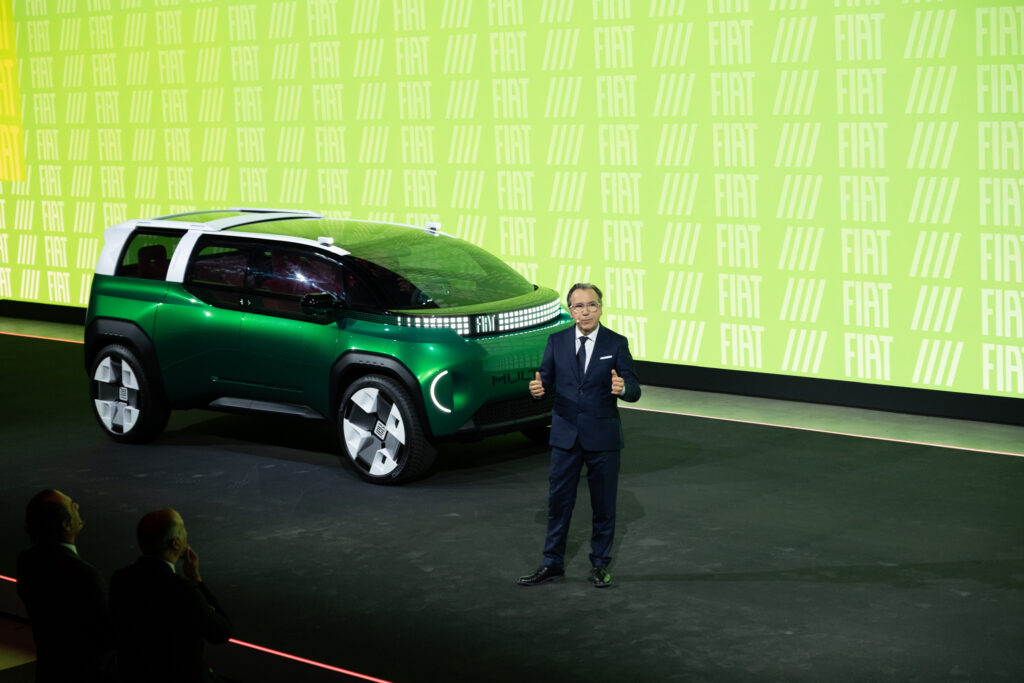
There are concept cars designed primarily to make us stare, and then there are concepts that ask a more interesting question. With the new FIAT Multiplay, the Italian automaker is asking why a vehicle should remain fixed in one form when the people using it rarely live that way. Unveiled at Stellantis’ “Night Before” event ahead of the 2026 Paris Motor Show, Multiplay combines the space efficiency of an MPV, the stance of an SUV and the functionality of a pickup within a vehicle measuring just 4.45 meters long.
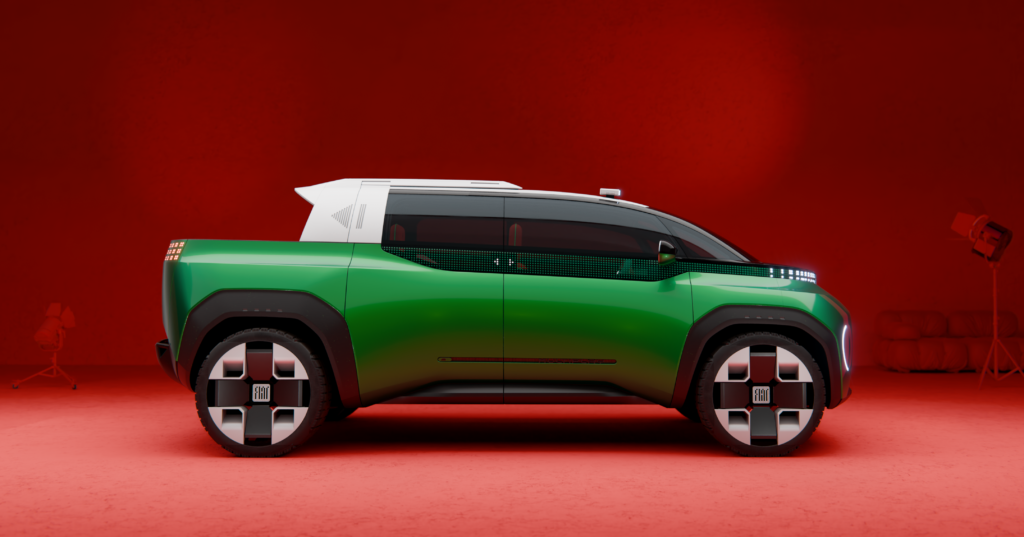
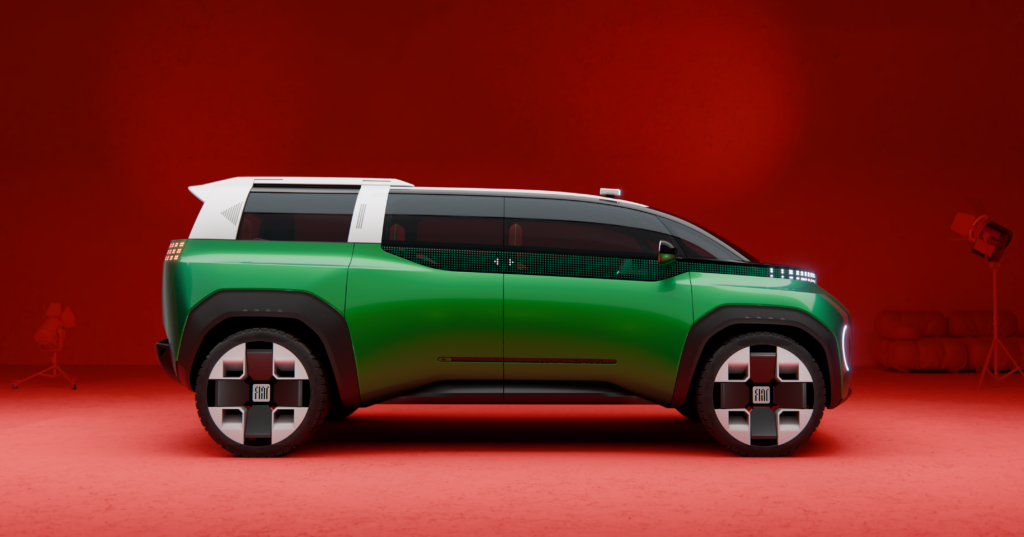
The headline feature is something FIAT calls “Metamorfosi.” Built around the vehicle’s C-pillar, the architecture allows the rear module to slide longitudinally along dedicated guides. In its enclosed configuration, Multiplay operates as a 6+1 family vehicle. Move the rear section forward and the same car becomes a four-seat pickup with an exposed cargo bed ready for bicycles, sports equipment, luggage or the oversized things that tend to appear precisely when a traditional family vehicle runs out of room. Even the rear spoiler has been given a second job: it rotates into an integrated carrier capable of holding two bicycles.
That kind of thinking is important because Multiplay is not simply playing with automotive shape. It is playing with usefulness. FIAT has a history here. The 600 Multipla of 1956 managed to carry six people in roughly 3.5 meters, while the famously unconventional Multipla introduced in 1998 put six seats across two rows in a body under four meters long. Multiplay takes that obsession with extracting more function from less space and updates it for a world in which work, parenting, leisure and travel increasingly overlap.
Inside, the ideas become even more playful. The additional “+1” in FIAT’s 6+1 description is what the company calls the Petsenger seat, a modular element that can serve as a child-seat mounting point, pet space, table or storage area. Part of its cushion can even detach to become a pet leash, while a compartment in the door carries a folding bowl. The third row is intended to accommodate two children or, when necessary, an adult. Up front, the passenger seat can become the Sunseat when the car is parked, rotating into a lounge-like position beneath the panoramic roof and using the dashboard area as a backrest.
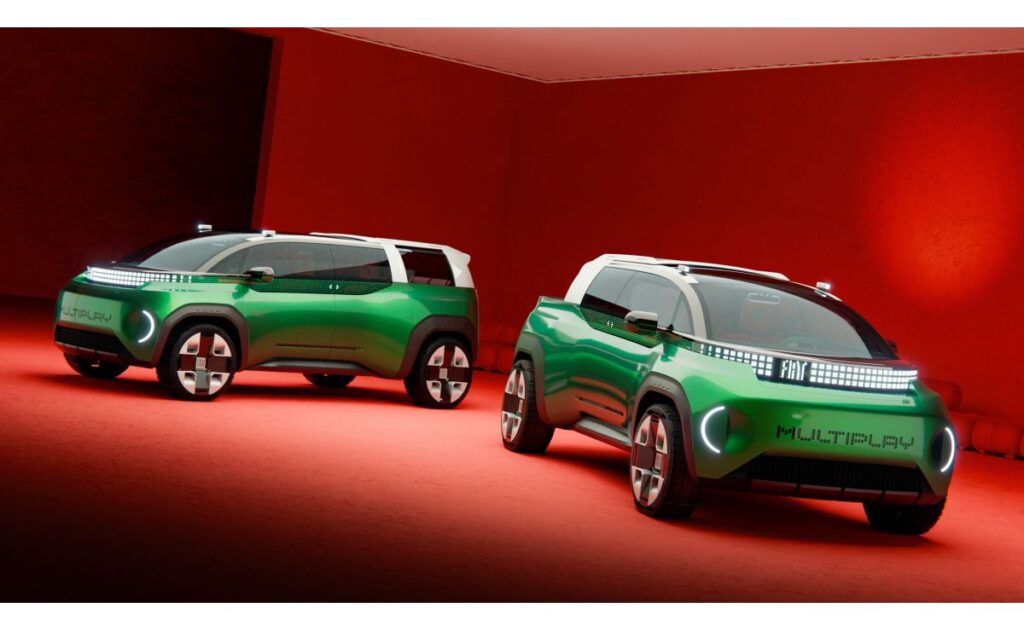
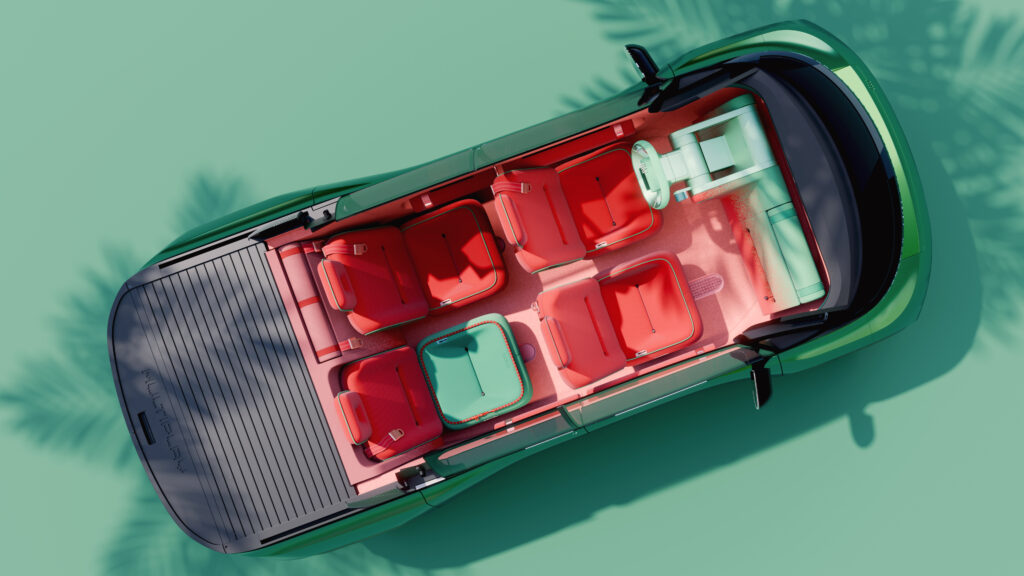
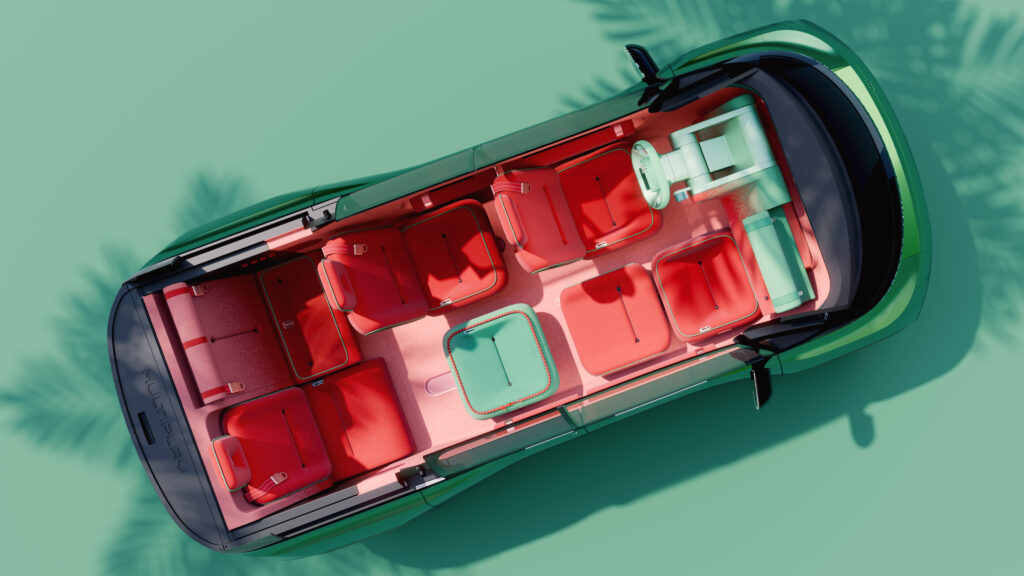
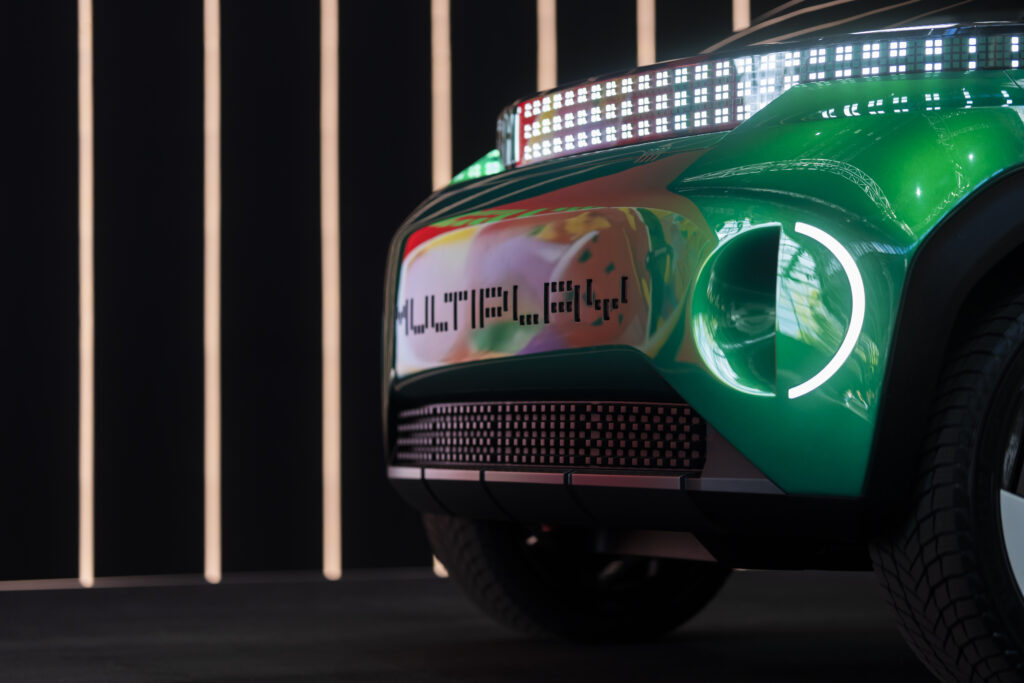
Even the materials and color story resist the usual gray-on-black language of future mobility. FIAT says the exterior and interior palette was inspired by an Italian summer and, more specifically, a watermelon: bright green outside, with pink and red tones appearing through the cabin. Soft interior components make use of monomaterial textiles produced through seamless 3D knitting, while areas intended for children and pets incorporate water-resistant finishes. A display integrated into the dashboard disappears when the vehicle is switched off, another small rejection of the idea that every surface inside a modern car needs to scream for attention.
The result feels less like an exercise in adding more technology and more like an exercise in asking technology to justify its presence. That distinction matters. Automakers have spent years filling cabins with larger displays, additional interfaces and increasingly complicated feature lists. Multiplay instead suggests that the next luxury may be adaptability: space that changes, components that perform more than one task and technology that knows when to disappear.
FIAT is also being careful about expectations. Multiplay is a concept and, according to the company, is not a preview of a specific production model. It is being positioned as a laboratory for ideas that could influence future products. That may ultimately be the more interesting role. Concept cars do not have to reach showrooms intact to matter; sometimes their real value is introducing an idea that gradually finds its way into everything that follows.
For PMG, that is what makes Multiplay worth watching. The transformation itself is fun, but the larger proposition is smarter: instead of asking consumers to buy a different vehicle for every version of their lives, what happens when the vehicle adapts to them? In an industry obsessed with defining categories, FIAT has designed something whose most appealing feature may be its refusal to stay inside one.