
For Spring/Summer 2027, Hillary Taymour turned a trip to Storm King Art Center into part of the collection, staging the outdoor museum’s first-ever runway show.
New York Fashion Week is built around movement—editors, buyers, celebrities and photographers racing from one venue to another across the city. For Collina Strada’s Spring/Summer 2027 show, Hillary Taymour changed the route entirely.
Guests were shuttled away from the city and into the Hudson Valley for a presentation at Storm King Art Center in New Windsor, New York, the sprawling 500-acre outdoor museum known for placing monumental sculpture directly within its landscape. It was not simply an unusual Fashion Week venue: Collina Strada became the first fashion brand to stage a runway show at Storm King, and the collection had the appropriate name: “Detour.”
Fashion Leaves the Traditional Runway Behind
Storm King was more than scenery.
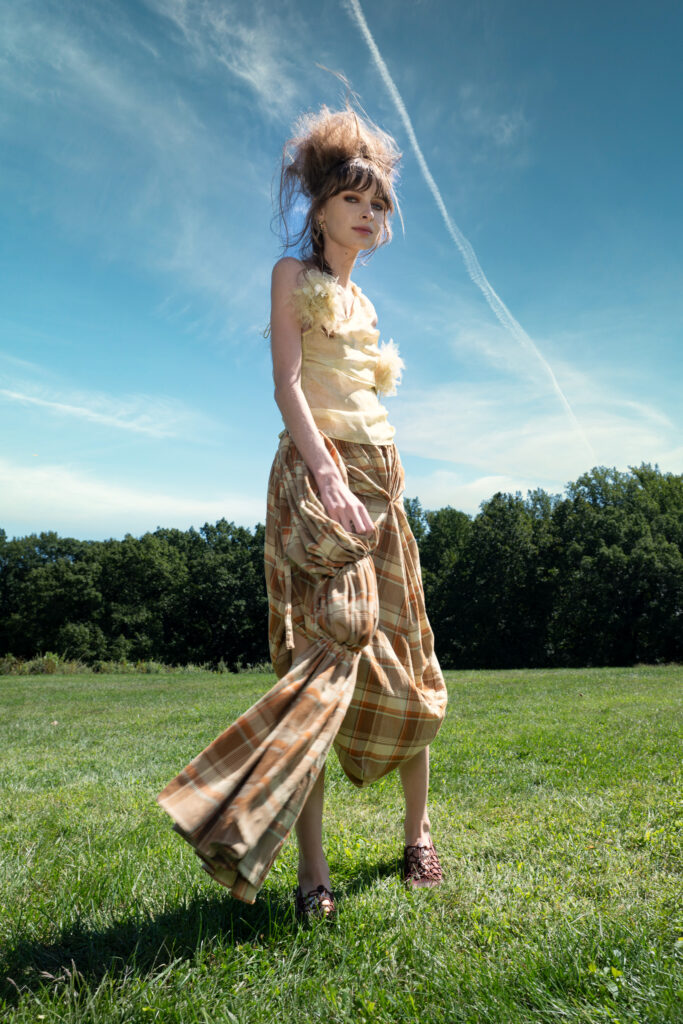
Collina Strada’s official show notes describe “Detour” as an exploration of what happens when people leave the prescribed path—physically and creatively. Taymour approached clothing as something sculptural, capable of expanding, collapsing and transforming as the body moves through space.
That idea translated naturally to Storm King, where art is experienced by moving through fields, hills and open landscapes rather than walking from gallery to gallery.
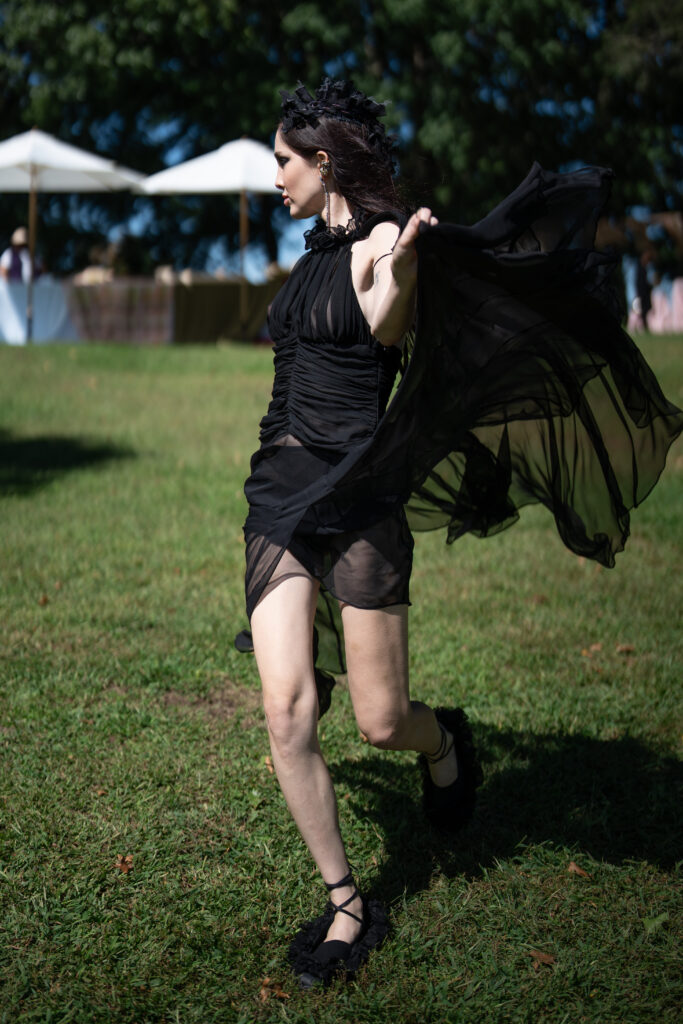
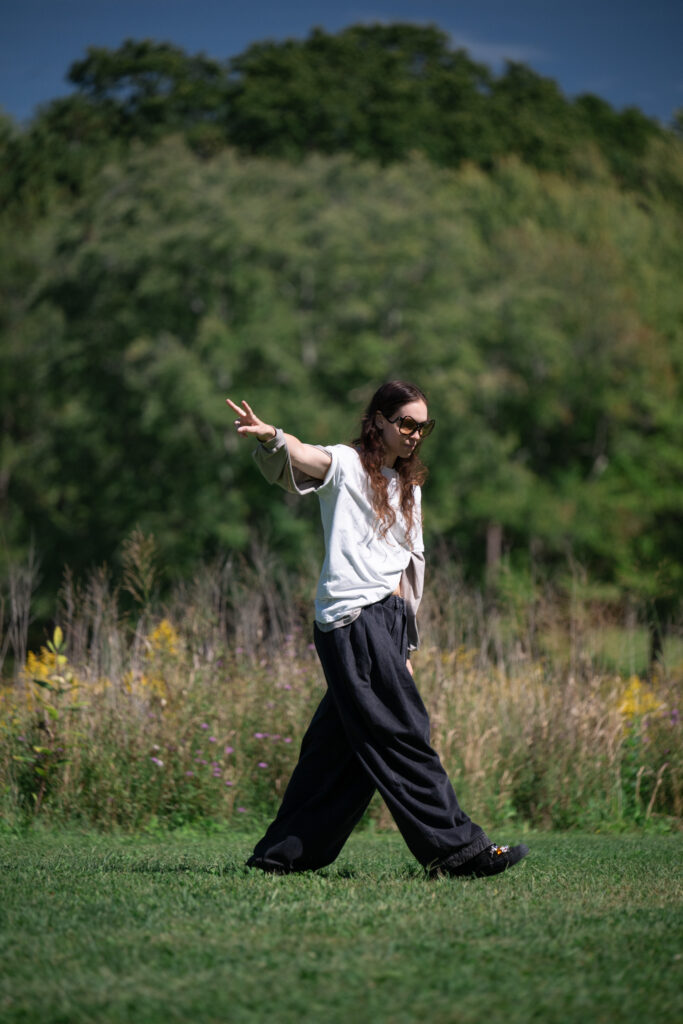
Models crossed the grounds amid major sculptures, including Alexander Calder’s The Arch, while fabric caught the wind and silhouettes changed with every step. The runway itself effectively became a journey through an existing artwork-filled landscape.
Romance Meets Rebellion
The clothes maintained the contradictions that have become central to Collina Strada’s vocabulary.
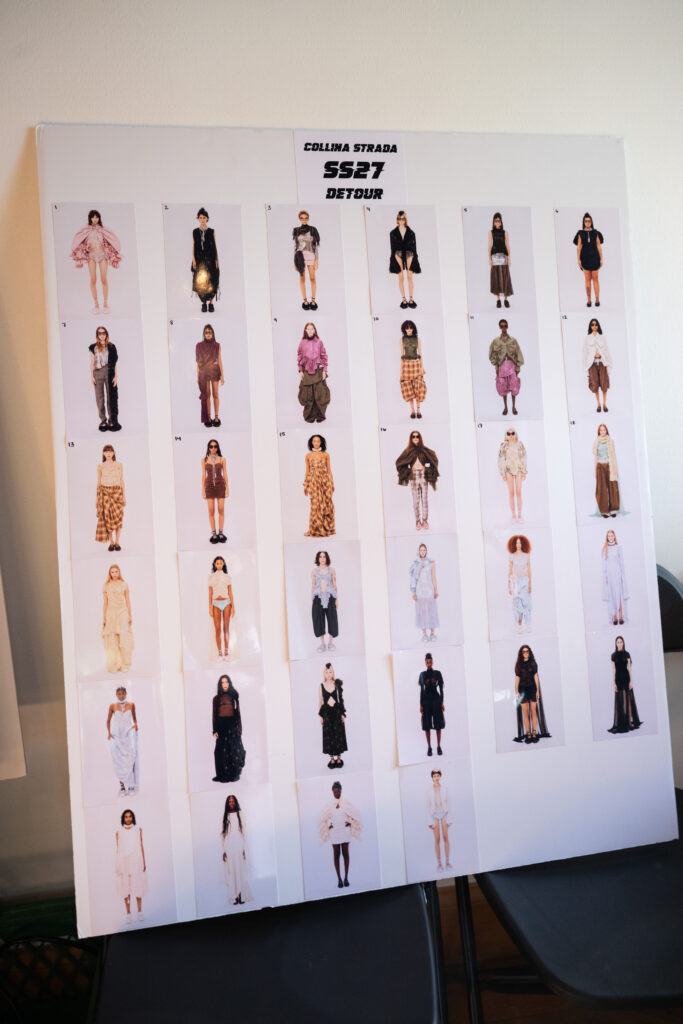
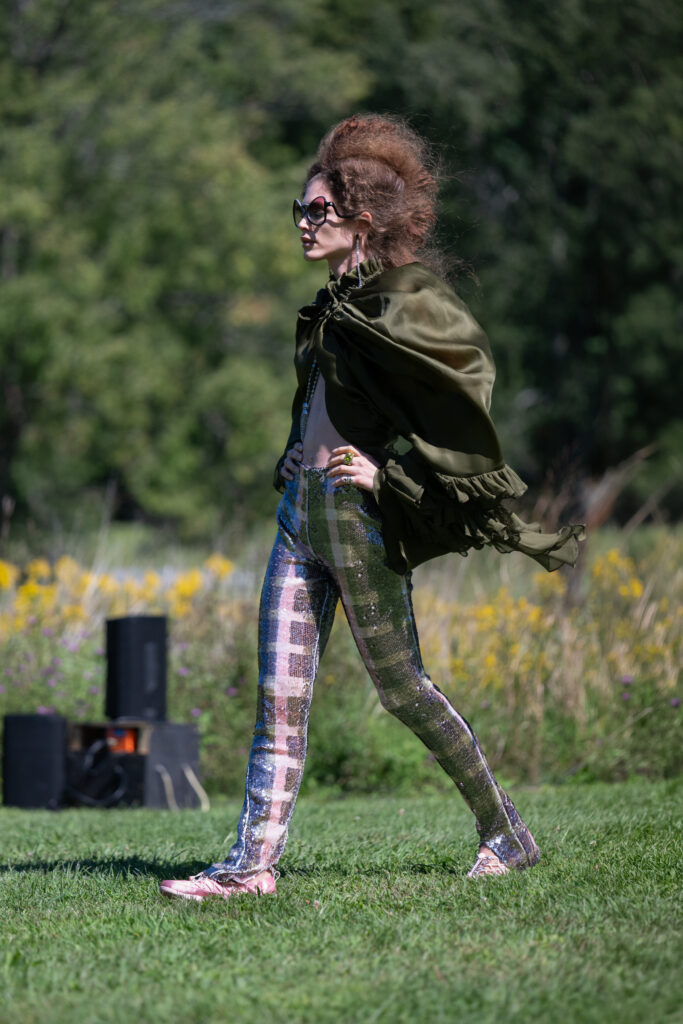
Spring 2027 mixed romantic volume with deliberate disruption: chiffon, moiré, organza, lace, recycled sequins, exaggerated ruffles, draping and trailing fabric appeared alongside plaid, cargo silhouettes and aggressively styled hair. The official show comprised 33 looks.
There were echoes of Renaissance and medieval dressing without the collection becoming costume. Instead, historical romance was pulled through a modern filter of punk, Y2K irreverence and Collina Strada’s continuing interest in lower-impact materials.
Footwear pushed that collision further, with new interpretations developed through collaborations with KEEN and Converse.
Against Storm King’s enormous steel works and open fields, those contrasts made sense. Delicate fabrics looked even lighter. Punk styling felt more disruptive. Clothes designed to move were given enough physical space to actually do it.
The Show Didn’t End With the Last Look
Taymour also understood that asking Fashion Week attendees to trade Manhattan for an upstate excursion meant creating something more substantial than a conventional 15-minute runway.
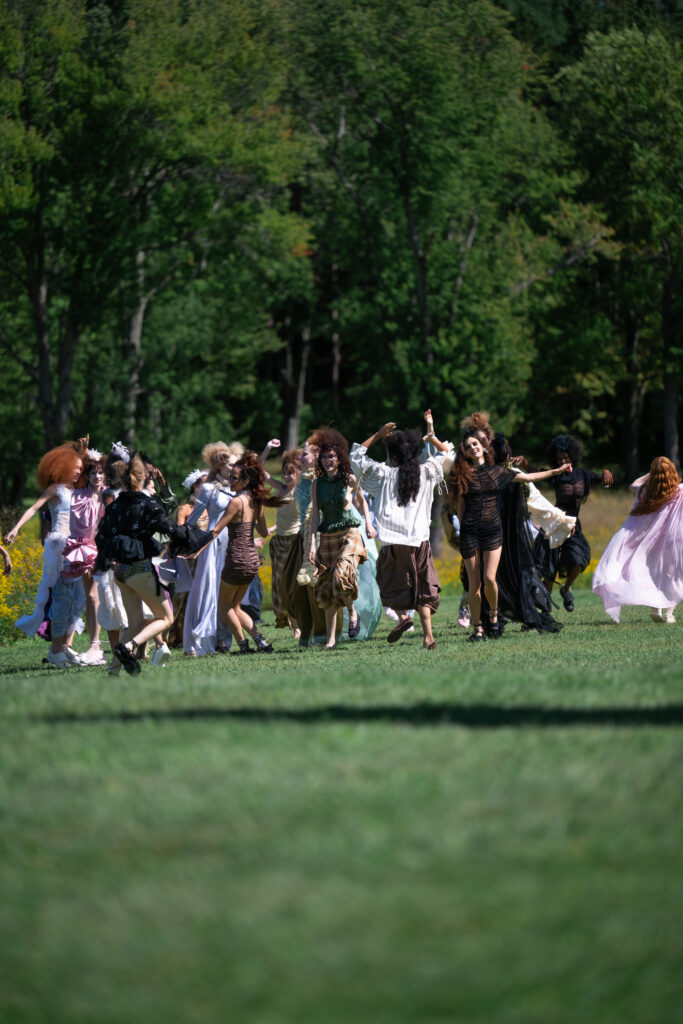
The finale delivered it. Carly Rae Jepsen emerged for a surprise live performance, with models eventually running across the field and dancing as the traditional runway structure dissolved into something closer to a celebration.
Guests were later transported across the grounds to an outdoor gathering introducing Collina Strada’s new home collaboration with Swedish interiors company Layered, extending the brand’s visual world beyond clothing and into furniture and interior design.
PMG Perspective: The Commute Was Part of the Point
For PMG, one of the more interesting ideas behind “Detour” is that distance became part of the storytelling.
Fashion Week normally rewards convenience. Shows are compressed into schedules measured in minutes, and venues compete for attention within a crowded city calendar. Collina Strada did the opposite: it asked its audience to commit to leaving that system temporarily.
That is a risk. But it also created separation.
Instead of another room, warehouse, or traditional runway disappearing into a week of presentations, the Hudson Valley became inseparable from the memory of the collection. The bus ride, open fields, sculpture, clothes, performance and eventual picnic all belonged to the same brand experience.
The title “Detour” therefore worked on several levels. The clothes explored reinvention. The audience literally changed course. And a New York fashion label demonstrated that participating in New York Fashion Week doesn’t necessarily require keeping every experience inside New York City.
Sometimes getting people to remember a show means taking them somewhere unexpected.