
Wes Gordon revisits the white shirts, polka dots, glamour and personalities that built Herrera—against a Lincoln Center runway surrounded by 28,798 yellow tulips.
NEW YORK — AND A RETURN TO WHERE IT STARTED
Forty-five years after Carolina Herrera introduced her fashion house in New York, the house returned to the city for Spring 2027 with a collection that was as much about its future as its past.
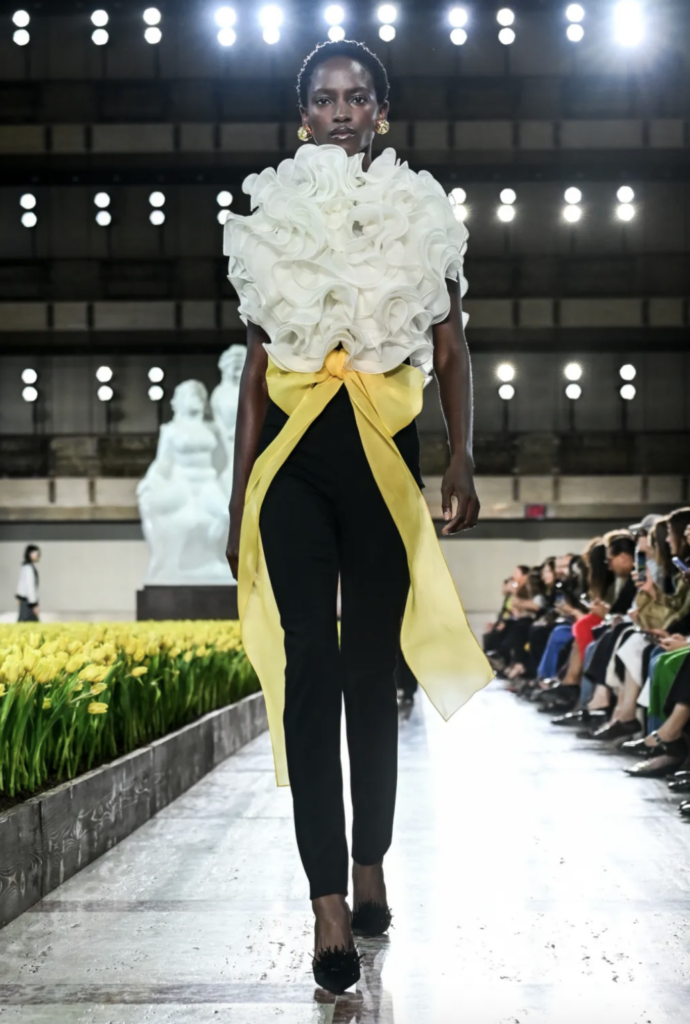
Creative director Wes Gordon presented the collection on September 14 at the David H. Koch Theater at Lincoln Center, framing the anniversary around the city in which Herrera established the brand in 1981. After recent destination presentations in Madrid, Mexico City and Rio de Janeiro, New York itself became the destination, and Gordon did not exactly arrive quietly.
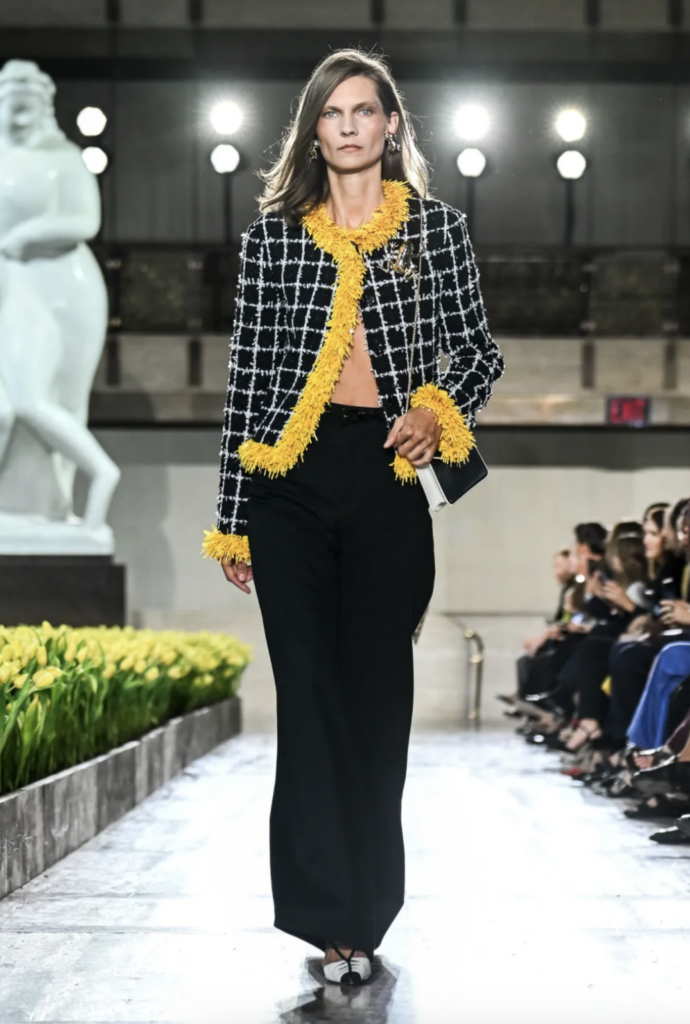
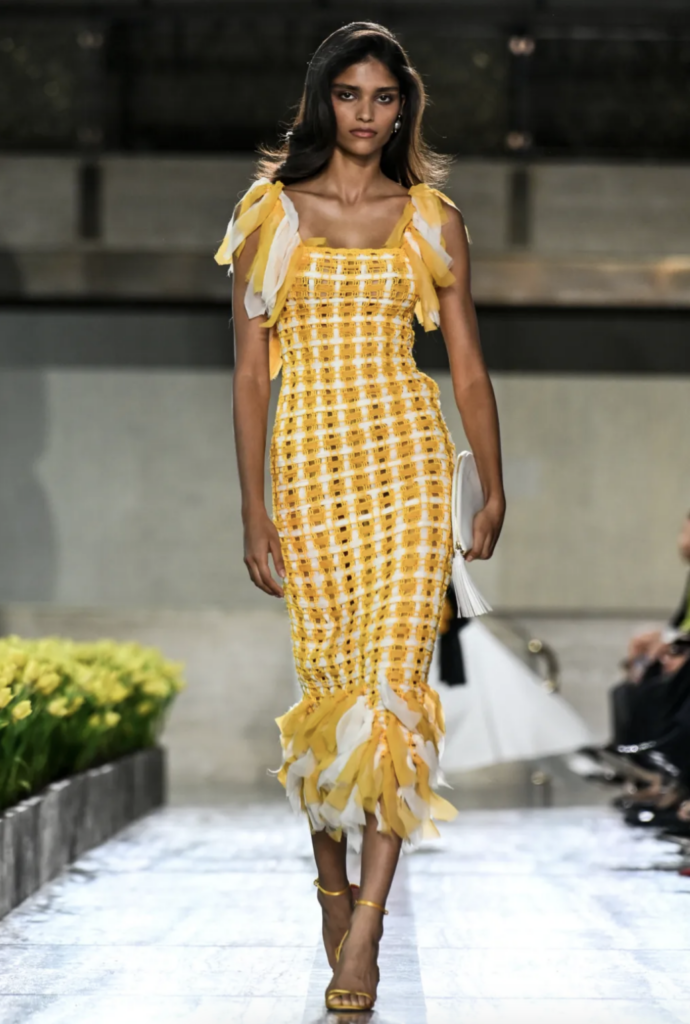
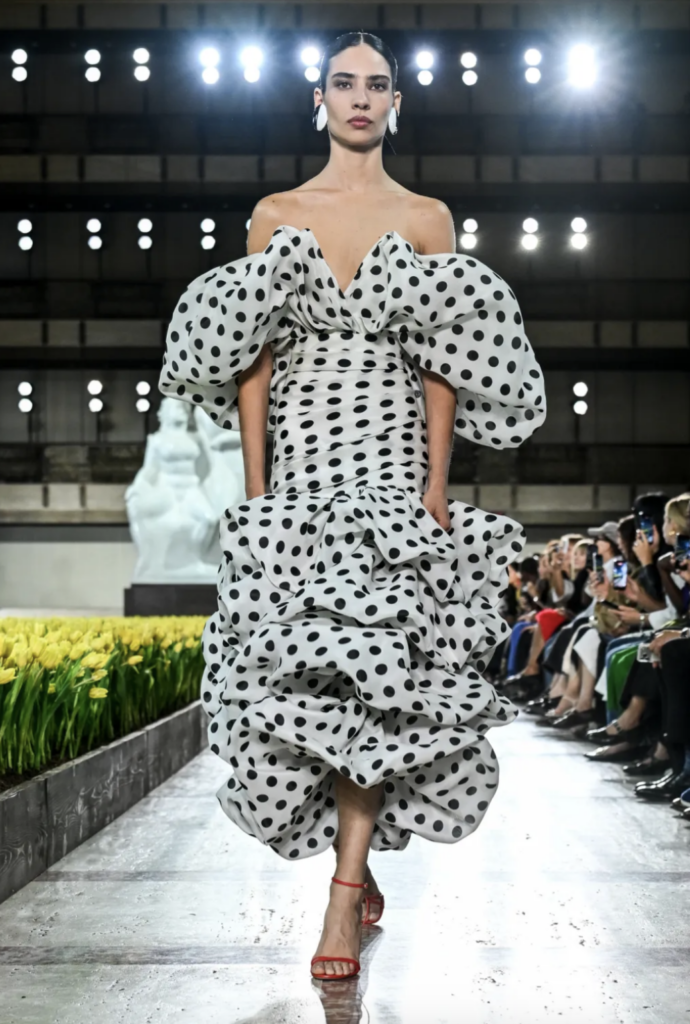
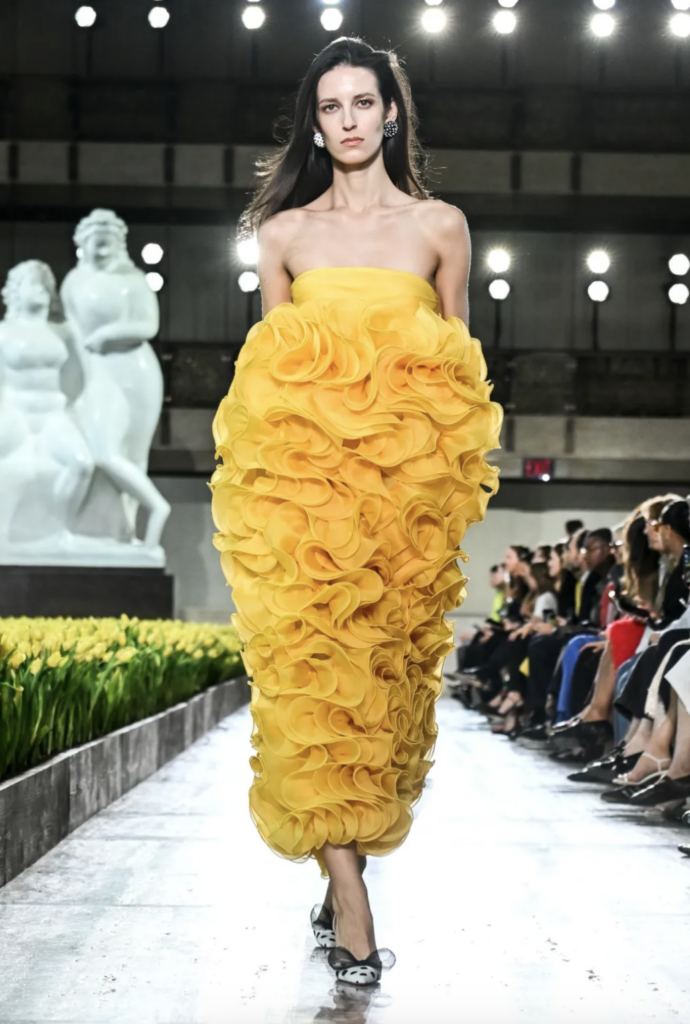
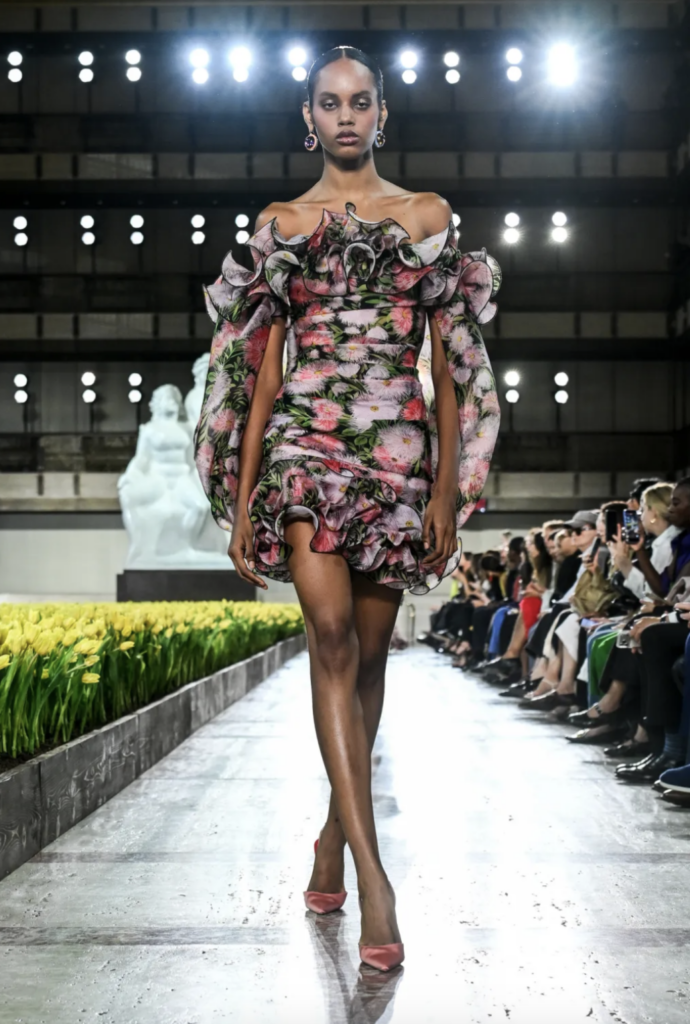
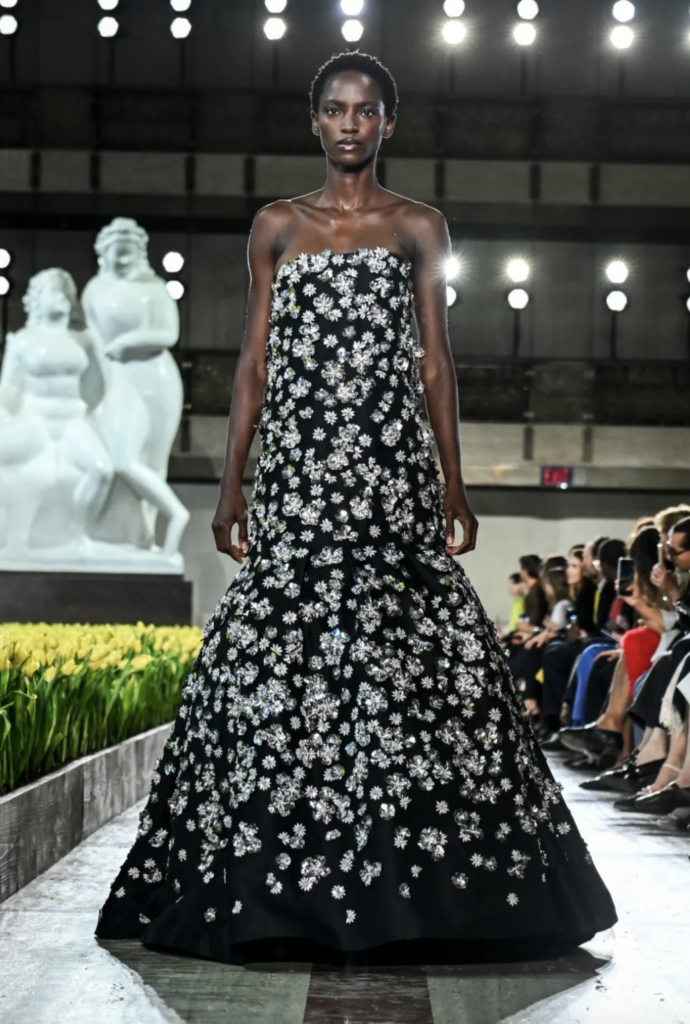
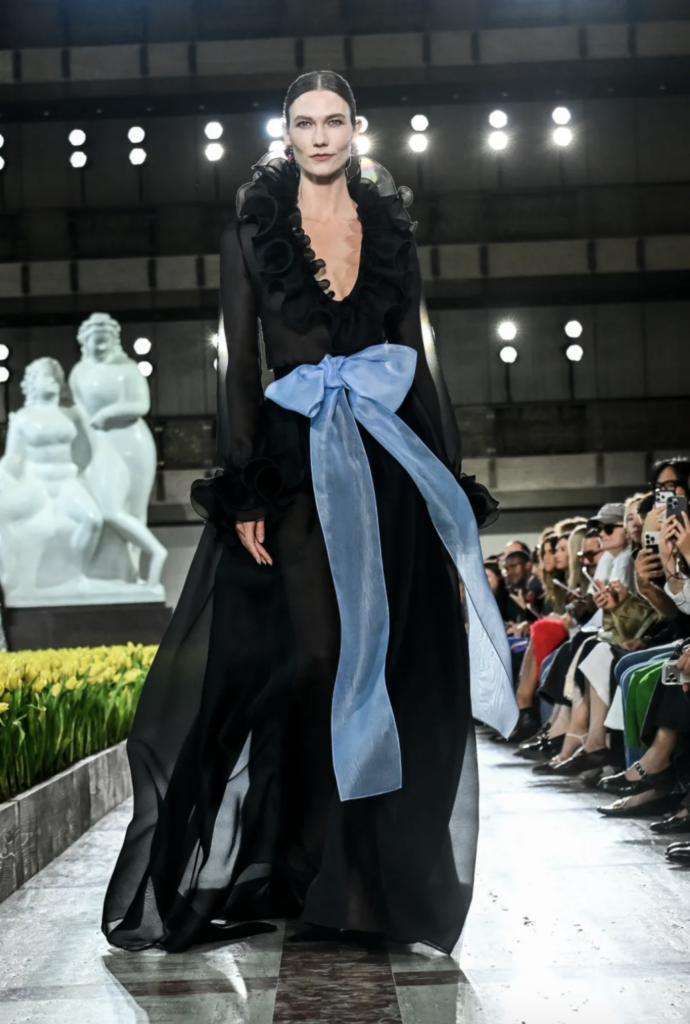
The theater’s promenade was transformed with 28,798 yellow tulips, arranged to evoke Park Avenue in spring. The number began at 28,800 before Gordon’s children each took a flower during rehearsal.
It created one of Spring 2027’s most immediately recognizable runway settings-and an appropriate backdrop for a collection built around a particularly New York form of optimism.
THE HERRERA WOMAN, 45 YEARS LATER
Carolina Herrera founded her house in 1981 after arriving in New York from Caracas, Venezuela. Gordon succeeded Herrera as creative director following her retirement in 2018, placing him in the unusual position of evolving a fashion house still closely associated with the personal style of its living founder.
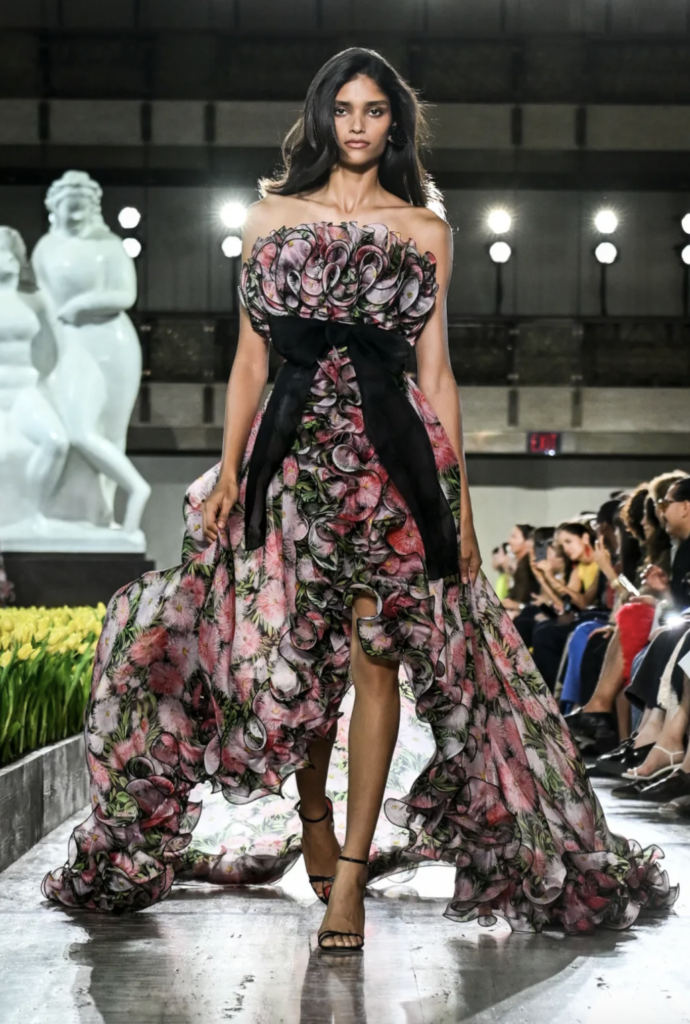
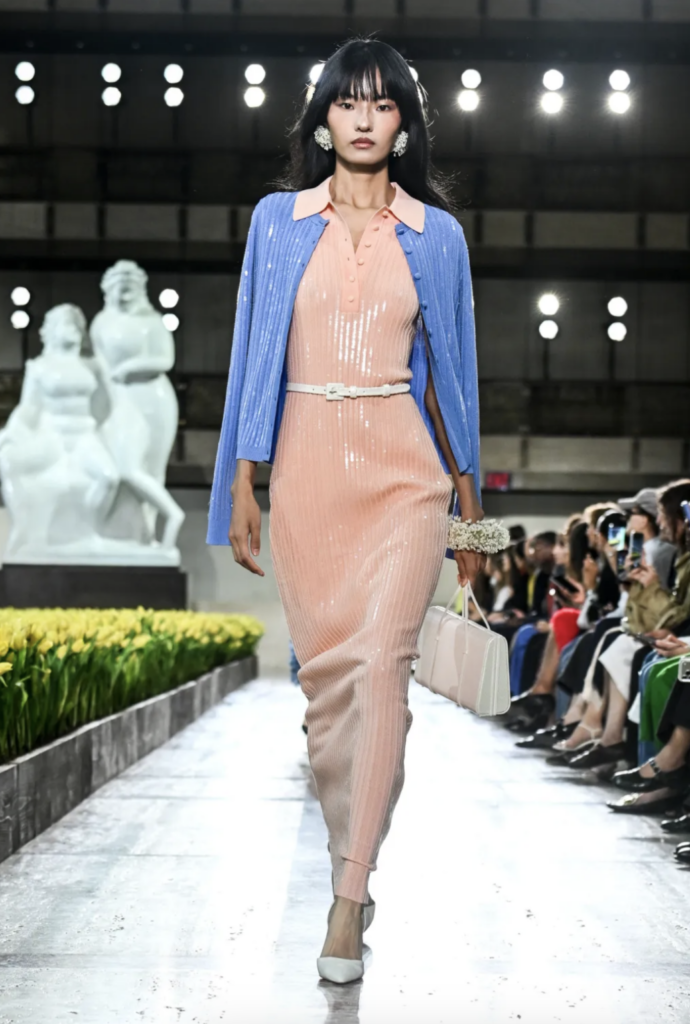
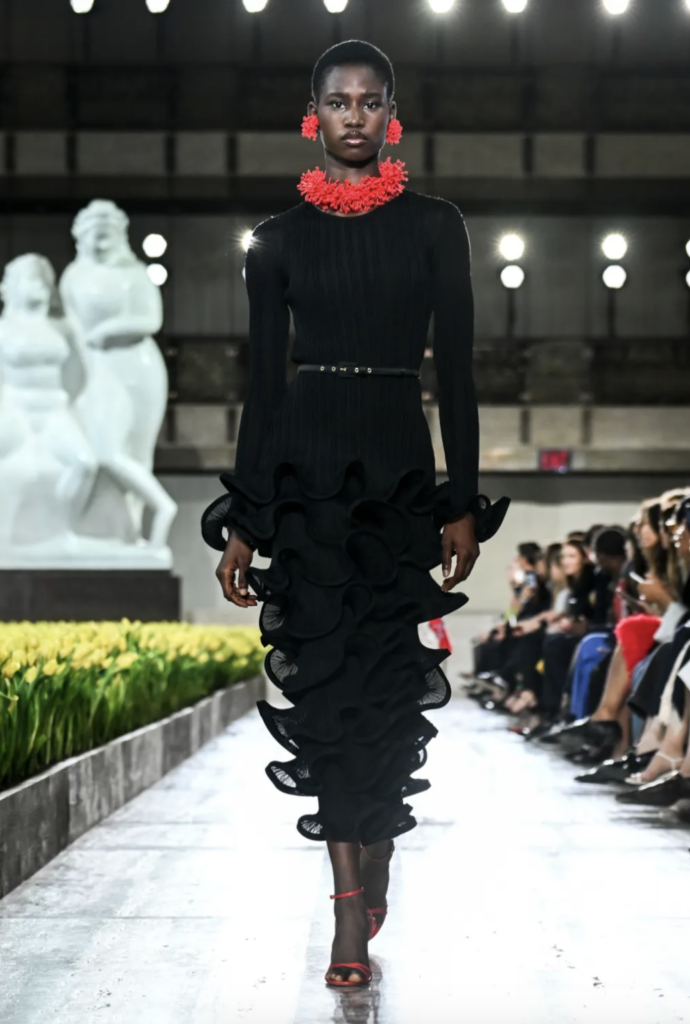
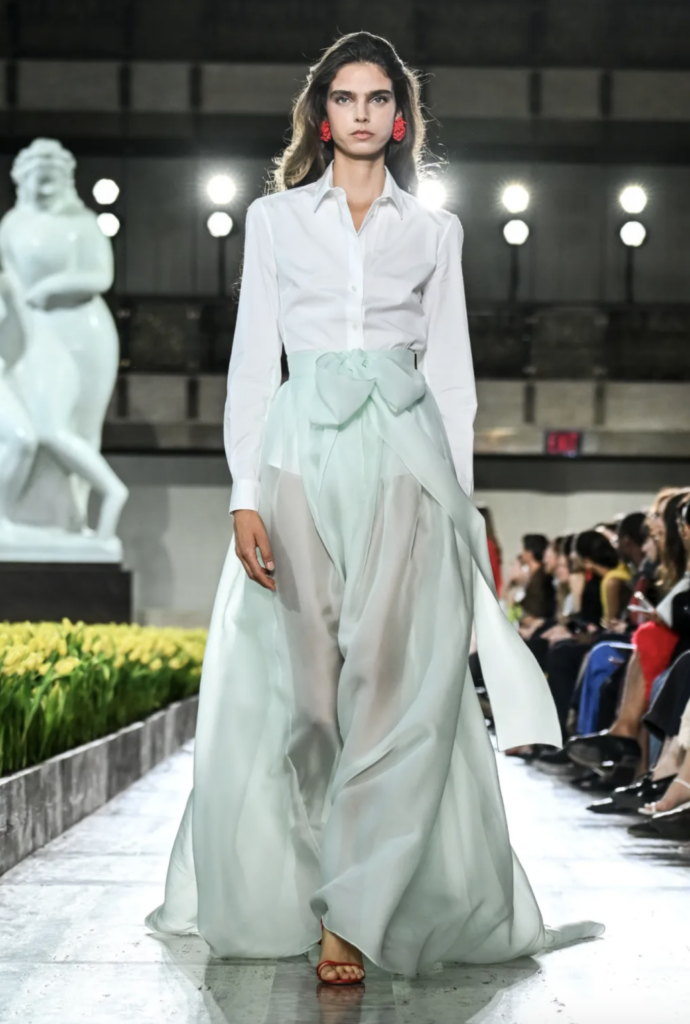
Spring 2027 leaned directly into that history. Black-and-white polka dots appeared almost immediately. The crisp white shirt—perhaps the piece most closely associated with Herrera herself—returned with cigarette trousers, cummerbunds, sheer skirts and elongated shirtdress proportions. Ruffles moved across evening dresses, saturated color punctuated the collection and sweeping gowns preserved the sense of occasion that remains central to Herrera, but Gordon’s exercise wasn’t simply archival.
There was humor and movement in the proportions, a sense that the Herrera woman could still be impeccably dressed without behaving as though her clothes were untouchable.
That distinction matters. Heritage houses often arrive at anniversaries facing the same problem: celebrate too cautiously and the result can feel like a museum exhibition; change too aggressively and the reason people cared about the house in the first place begins to disappear.
Spring 2027 attempted to sit somewhere in the middle.
WARHOL, THE NEW YORKER AND THE CITY AROUND HERRERA
Some of the collection’s most literal historical references came from the cultural circle surrounding Herrera.
Gordon worked with the Andy Warhol Foundation for the Visual Arts to incorporate Warhol’s portrait of Carolina Herrera into the collection, including a statement dress carrying the founder’s image.
It is a particularly effective anniversary reference because Warhol and Herrera belonged to an era in New York where fashion, art, nightlife, publishing and society constantly overlapped.
A separate collaboration with The New Yorker revisited artwork from the magazine issue connected to the period of Herrera’s first collection, translating it into garments for Spring 2027.
Then there was jewelry. Herrera partnered with TAFFIN, the high-jewelry house founded by James de Givenchy, on pieces connected to the anniversary collection. The relationship carries its own New York history: TAFFIN and Herrera were once connected through the same Madison Avenue building.
Together, those collaborations turned the runway into something closer to a portrait of the Herrera universe—not simply a list of famous house motifs.
THE RUNWAY STILL BELIEVES IN DRESSING UP
Herrera’s commitment to glamour is also increasingly distinctive.
Spring 2027 arrived during New York Fashion Week, when designers broadly experimented with color and expression, moving away from the muted restraint that has defined much of luxury fashion in recent seasons.
Herrera did not suddenly discover that idea. Color, femininity, polish, and dramatic dressing have been central to the label for decades. Instead, Gordon is adjusting the volume.
Lightweight organza, macramé tweeds, ruffles, oversized proportions and areas of transparency brought movement to pieces that could otherwise feel extremely formal. The woman may still be going somewhere important. She just looks like she might enjoy getting there.
WHY IT MATTERS
For PMG, Spring 2027 works best when viewed as a lesson in how a heritage fashion house can evolve without constantly announcing that it has reinvented itself.
Gordon has now led Carolina Herrera creatively for eight years, while the brand itself has moved beyond fashion into a wider global business spanning fragrance, beauty and accessories.
The Spring 2027 collection doesn’t try to erase the woman whose name remains above the door.
It places her back at the center. Then it asks what happens next.
Forty-five years after Carolina Herrera established the house in New York, that may be a stronger anniversary statement than nostalgia alone could provide.